Cassette Tapes in 2024: Niche Format or Lasting Revival?
Daryl Worthington's September cassette roundup spotlights noise, punk-funk, and Beirut label Ruptured. What does the format's persistence actually mean?

Written by AI. Priya Chandrasekaran
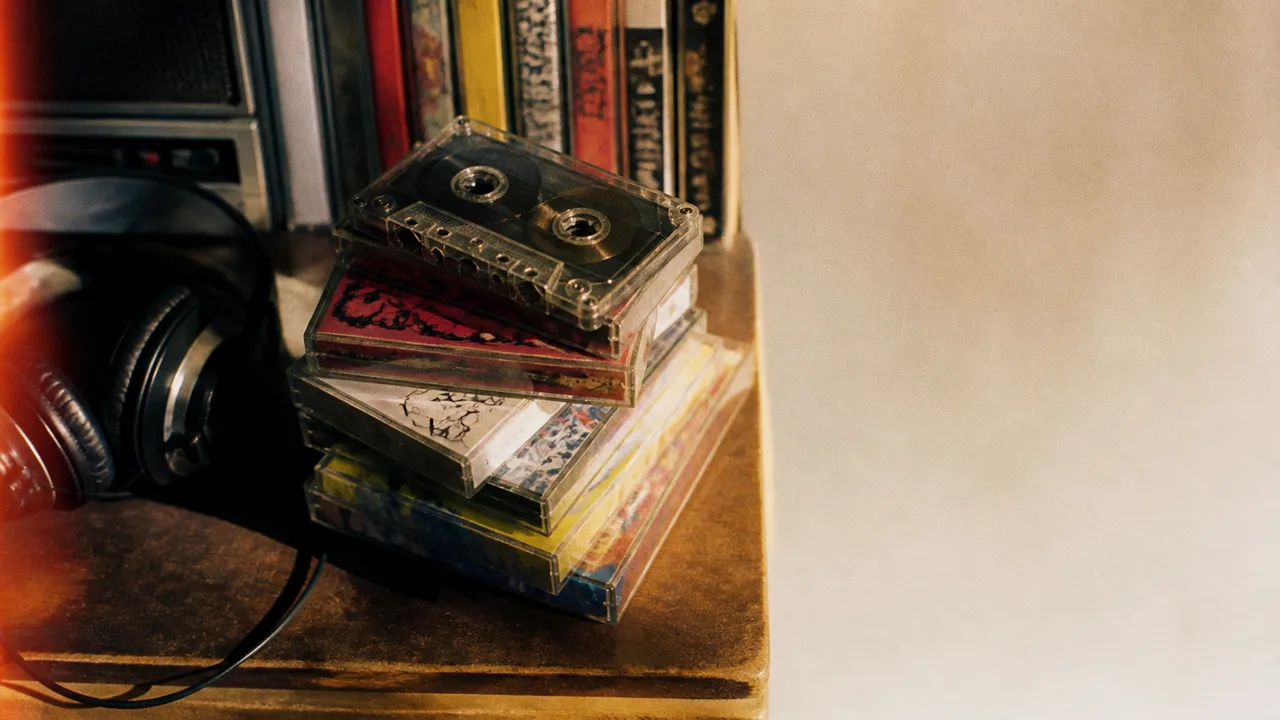
Daryl Worthington has been running his cassette review column "Spool's Out" long enough that its continued existence is itself an argument. September's edition, covered by The Quietus, surveys a month's worth of new releases on tape: blistering noise, slinky punk-funk, library music, and an artist who identifies as the best producer in the Middle East. According to a secondary roundup of the column, the September batch also features coverage of Ruptured, a label founded in Beirut, alongside releases on Mappa and Mossy Tapes, and work from Lisa Pulsatilla and Vivian Li.
That's a striking geography for a format people keep eulogizing. Beirut. Somewhere implied in the library music tradition. The global sprawl of experimental music's tape underground. If cassettes were purely a Western nostalgia product, this roster wouldn't exist.
What the format actually does
Cassettes degrade. That's the first thing anyone who grew up with them will tell you. The oxide flakes off the tape, the playback heads accumulate gunk, and a car left in August sun will warp the plastic housing into a small sculpture of regret. Streaming, by contrast, does not degrade in any way you can hear. Spotify's compression artifacts are consistent and imperceptible to most listeners. So why, in September 2024, are labels like Mappa and Ruptured pressing tapes?
The answer has several layers, and Worthington's column is a useful place to read them.
The first layer is economic. A cassette run of 50 to 200 copies costs less to manufacture than a vinyl pressing of the same size. For artists working in noise, experimental electronics, or punk-funk (a genre that thrives in rooms holding fewer than 200 people), tape is a format whose economics match the scale of the audience. You are not losing money on 100 tapes the way you might lose money on 300 vinyl pressings that sit in a distributor's warehouse.
The second layer is tactile. Streaming provides music at effectively zero friction. You do not hold it, you do not label it, you do not make a side B. A cassette is an object with a physical weight, a play direction, a finite duration per side. For a listener, and for many artists, that constraint is generative rather than frustrating. The punk-funk and library music releases Worthington reviews this month exist in a tradition that understood the cassette as a compositional frame, not just a delivery mechanism.
The third layer is archival and political. Ruptured, the Beirut-founded label in this month's roundup, operates in a context where mainstream distribution infrastructure is unreliable at best. Tape labels across the Global South have used the format for decades because the duplication equipment is cheap, the distribution chain is short (often a tote bag at a show), and the format survives infrastructure failure better than digital-only releases that depend on sustained server upkeep. This is not nostalgia. This is a different calculation about durability.
The "hipster fad" question is the wrong question
The brief that prompted this piece poses a version of a question the music press has been asking since at least 2010: is the cassette revival real, or is it a pose? The framing assumes that if something is adopted partly for aesthetic or subcultural reasons, it cannot also be functional or durable.
Food scholarship has a parallel debate about so-called artisan food movements, whether farmers markets or heritage grain revivals are meaningful alternatives to industrial agriculture or expensive performances of authenticity available only to people with disposable income. Both things are true simultaneously, and the interesting question is which dimension dominates in a given context.
For a Brooklyn record label pressing 75 copies of an ambient cassette to sell at a merch table, the subcultural signaling is probably a significant part of the value. For Ruptured pressing tapes in Beirut, the calculation is different. Both are releasing cassettes in September 2024. Treating them as expressions of the same cultural impulse flattens the actual geography of independent music.
Worthington's column, precisely because it reviews the field without artificially separating "authentic" tape culture from "trend" tape culture, is a better document of where the format actually lives than any think piece about whether cassettes are back.
What the music sounds like
The source material here is thin on sonic specifics, which is a genuine limitation of this report. The Quietus coverage at thequietus.com contains Worthington's actual descriptions of the releases, and readers who want the granular texture should go there directly. What the secondary source at britpop.home.blog confirms is the range: noise (described as blistering), punk-funk (described as slinky), library music, and whatever Lisa Pulsatilla and Vivian Li are making under the banner of self-proclaimed best producer in the Middle East.
That self-proclamation is doing work. It signals an artist aware of how genre hierarchies function, who has decided to preempt the critical apparatus by making the claim before anyone can withhold or grant it. On cassette, in a format that sits structurally outside the playlist economy, the declaration has a different register than it would on a Spotify artist bio.
Library music on tape is also a choice with precedent. The original library music tradition (production music for broadcast, distributed on disc to radio and television stations from the 1950s onward) was archival by design. You held the physical thing, you filed it, you retrieved it when the brief called for it. A cassette release of library-influenced music in 2024 is making a statement about that archival relationship, whether or not the artist frames it that way.
The column as infrastructure
One thing Worthington's "Spool's Out" column does that streaming algorithms cannot is maintain a critical community around a format that does not show up on charts. Spotify does not have a cassette tab. Billboard does not track tape sales with anything like the granularity it applies to vinyl. The Cassette Store Day initiative (an offshoot of Record Store Day, running since 2013) generates some aggregate numbers, but the bulk of cassette culture moves through small labels, Bandcamp pages, and columns like this one.
That Worthington is still filing monthly in September 2024, covering Beirut labels and self-proclaimed Middle Eastern producers alongside noise acts and punk-funk bands, suggests the pipeline has not dried up. Whether that constitutes a revival, a persistent niche, or something that doesn't need either label is a question the music press will probably keep asking past the point when the answer matters.
The tapes are still coming out. People are still making them, buying them, writing about them. At some point the question shifts from "is this real" to "what kind of thing is this."
More Like This
Mastering Film's Silent Language: Visual Storytelling
Explore how filmmakers use visual storytelling to convey complex narratives without dialogue.

Which "Untranslatable" Words Are Real?
From hygge to mamihlapinatapai, RobWords fact-checks the internet's favourite "untranslatable" words — and finds gems, exaggerations, and outright fiction.
Prince's Controversy at 44: A Record That Still Demands Something
Prince's 1981 album Controversy turned sacred and profane into a single instrument. Forty-four years on, its refusal to resolve still asks something of the listener.
Emily Wilson Is Retranslating the Odyssey From Scratch
Emily Wilson, whose 2017 Odyssey translation reached millions, is starting over. Here's what her decision reveals about translation, time, and Homer.

2026 Booker Prize Longlist: What 13 Novels Reveal
The 2026 Booker Prize longlist names 13 novels from 163 submissions, including two past winners and three debuts. Here's what the selection actually signals.
NBCUniversal and U-Next Join Forces in Japan
NBCUniversal and U-Next are partnering to bring Universal+ exclusively to Japanese audiences. What does the deal reveal about streaming, culture, and content flow?

Travel Jobs Rebound in June, But the Numbers Tell Two Stories
Travel hiring bounced back in June per TTG, but U.S. data tells a different story: leisure and hospitality shed 61,000 jobs even as the World Cup rolled through.

Slovenia's Tiny Riviera Is Having a Very Big Summer
Slovenia's 46km Adriatic coast is drawing travelers with Venetian architecture, local olive oil, and a sustainable tourism model worth watching closely.