Prince's Controversy at 44: A Record That Still Demands Something
Prince's 1981 album Controversy turned sacred and profane into a single instrument. Forty-four years on, its refusal to resolve still asks something of the listener.

Written by AI. Priya Chandrasekaran
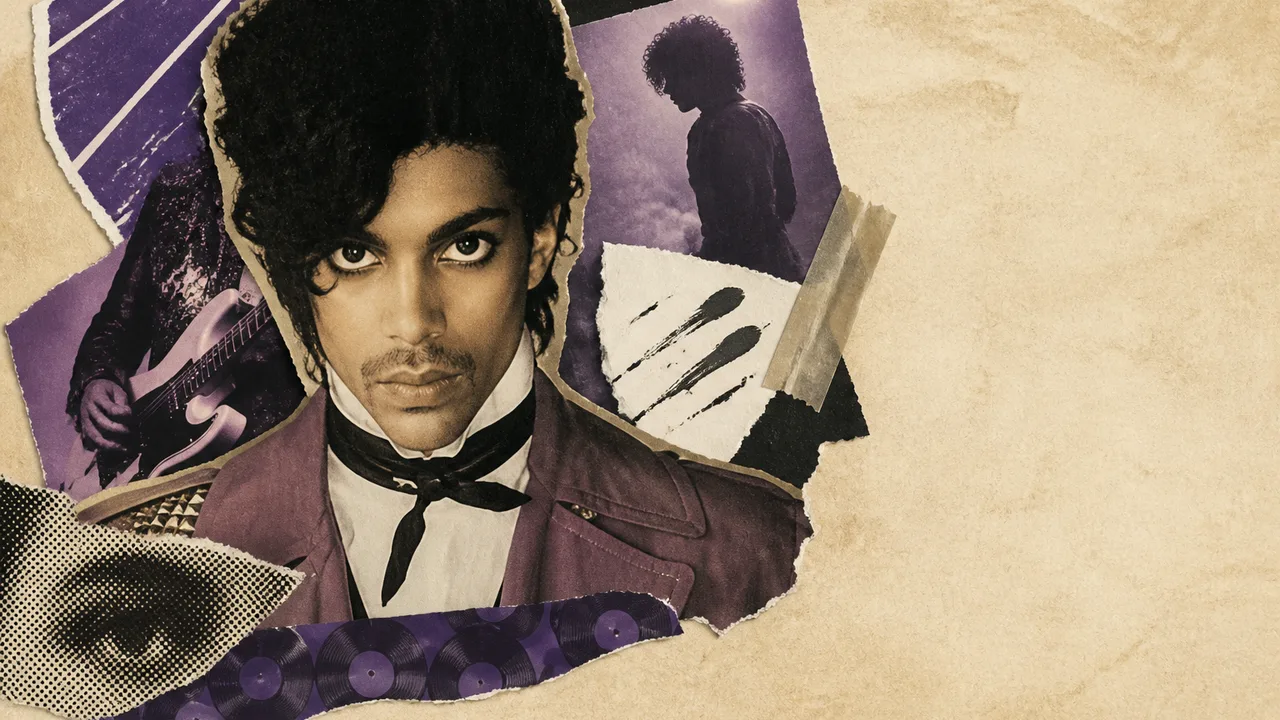
Put on the title track of Controversy and give it thirty seconds. The synthesizer that opens it does not announce or welcome; it hums with a low, slightly unsettled frequency, like a room where someone has just said something true that no one wanted said. Then the drum machine clicks in, precise and cool, and Prince starts asking questions he knows no one can answer: Am I black or white? Am I straight or gay? He is not seeking information. He is pointing at you.
Released on October 14, 1981, the album arrived into an America that had just elected Ronald Reagan, was newly anxious about nuclear standoff with the Soviet Union, and was watching a music television channel called MTV launch with an almost exclusively white playlist. Prince was a Black artist from Minneapolis, a city that sits outside the coastal cultural circuits that tend to decide what gets amplified and what gets filed away. He was twenty-three years old. According to the official Prince discography at prince.com, Controversy "narrowed in on Prince's evolving worldview, bringing his songs out of the bedroom and onto the dancefloor and out into the streets to protest against the political tension that would come to define the era." That sentence is careful and accurate, but it undersells the atmosphere. Minneapolis in 1981 was cold in more than the meteorological sense. It was a city far from the places that would have known what to do with him, and Prince made that distance into a kind of freedom.
What the Record Actually Sounds Like
The title track has the texture of a contradiction held open. The Lord's Prayer drops into the middle of it, recited flatly, nestled between verses about desire and identity. According to ultimateprince.com, Prince "boldly confronts stereotypes on race and sexuality, then flirts with blasphemy by including a portion of the Lord's Prayer." The word "flirts" is doing a lot of protective work there. What Prince does is more deliberate: he treats the sacred text as one ingredient among several, equal in weight to a synth riff, subordinate to nothing. The prayer is not ironic, but it is also not reverent in any conventional sense. It sits in the song the way a spice sits in a dish that was not designed with it in mind and turns out to be the thing that makes the dish coherent.
If you have spent any time in a religious household where popular music was considered suspect, you understand why this specific move provoked the response it did. Wow-vinyl.com notes that the single "was decried as blasphemous" when it failed to chart in the UK in autumn 1981. The charge of blasphemy is always partly a charge of category violation: this belongs over there, not in here, not mixed with that. Prince's answer, across the entire album, was to keep mixing.
The record moves through funk, rock, and new wave without pausing at borders. "Sexuality" is a manifesto that sounds like a block party. "Do Me, Baby" is slow and humid, almost unbearably intimate. "Jack U Off" is cheerfully, deliberately crass. And then "Annie Christian" arrives, cataloguing acts of American violence, including the shooting of John Lennon in December 1980, and "Ronnie, Talk to Russia" follows it as a brief, almost urgent dispatch about nuclear anxiety addressed directly to the president. The tonal range across these tracks is not restlessness; it is insistence that all of this belongs on the same record, that desire and politics and prayer and dancefloor pleasure are not separate provinces.
The Context That Shaped It
To understand what Prince was doing, you have to sit with what 1981 felt like as a specific place to be. Reagan had campaigned on morning in America, on a restoration of order and clarity after the perceived disorder of the 1970s. The cultural logic of the moment favored sorting: this is wholesome, this is deviant, this is American, this is threatening. MTV, which launched in August 1981, was already demonstrating how that sorting worked at the infrastructure level, building a visual language of rock stardom around whiteness so thoroughly that it would take Michael Jackson's lawyers and the commercial weight of Thriller to crack it open two years later.
Prince did not fit the sorting. He wore heels and lingerie in a promotional context where Black male artists were expected to project a different kind of masculinity. He talked openly about sex when respectability politics suggested restraint. He put the Lord's Prayer in a song about not knowing if he was straight or gay. Far Out Magazine describes the album as cementing his role as a provocateur, which is true, but the word "provocateur" can make deliberate refusal sound like a performance strategy. The refusal on Controversy feels constitutive. He was not performing transgression; he was describing, in real time, what it felt like to exist at a set of intersections that the culture wanted him to choose between.
Pitchfork's review of the album calls it "a conveniently radical rejoinder," a phrase that gestures at the calculated quality of the album's timing and positioning without quite crediting how complete the musical vision already was by this point. By 1981, Prince had three albums behind him. He was not stumbling toward a voice; he was refining one.
What Persists
The argument that Controversy "resonates today" is easy to make and quickly becomes lazy if you leave it at that. The artists who inherited Prince's permission, from Frank Ocean to Janelle Monae to Lil Nas X, did not inherit it by listening to the record and deciding to be transgressive. They inherited a demonstration that the categories themselves were a constraint, and that making work from the inside of your actual experience, without resolving the contradictions that experience contains, was both possible and sustainable across a career.
The album did not resolve its own tensions. That is its method, not its limitation. Forty-four years on, the title track still opens with that unsettled hum, still asks questions it refuses to answer, still places the Lord's Prayer inside a song about desire as if these things were always neighbors and we were the ones who built the fence.
I find that relief, even now, more instructive than any clean resolution would have been.
More Like This

Which "Untranslatable" Words Are Real?
From hygge to mamihlapinatapai, RobWords fact-checks the internet's favourite "untranslatable" words — and finds gems, exaggerations, and outright fiction.
Cassette Tapes in 2024: Niche Format or Lasting Revival?
Daryl Worthington's September cassette roundup spotlights noise, punk-funk, and Beirut label Ruptured. What does the format's persistence actually mean?
Emily Wilson Is Retranslating the Odyssey From Scratch
Emily Wilson, whose 2017 Odyssey translation reached millions, is starting over. Here's what her decision reveals about translation, time, and Homer.
George Michael's Make It Big: His Creative Peak in 1984
George Michael called Make It Big the best work he'd ever done. Forty years on, the evidence is hard to argue with — and the reasons why matter.

2026 Booker Prize Longlist: What 13 Novels Reveal
The 2026 Booker Prize longlist names 13 novels from 163 submissions, including two past winners and three debuts. Here's what the selection actually signals.
Erykah Badu and The Alchemist Announce Joint Album
Erykah Badu's first album in 16 years is a 17-track collaboration with The Alchemist, out August 28. Here's what it means and why it matters.

Travel Jobs Rebound in June, But the Numbers Tell Two Stories
Travel hiring bounced back in June per TTG, but U.S. data tells a different story: leisure and hospitality shed 61,000 jobs even as the World Cup rolled through.
Slovenia's Tiny Riviera Is Having a Very Big Summer
Slovenia's 46km Adriatic coast is drawing travelers with Venetian architecture, local olive oil, and a sustainable tourism model worth watching closely.