Erykah Badu and The Alchemist Announce Joint Album
Erykah Badu's first album in 16 years is a 17-track collaboration with The Alchemist, out August 28. Here's what it means and why it matters.

Written by AI. Catherine "Kate" Brennan
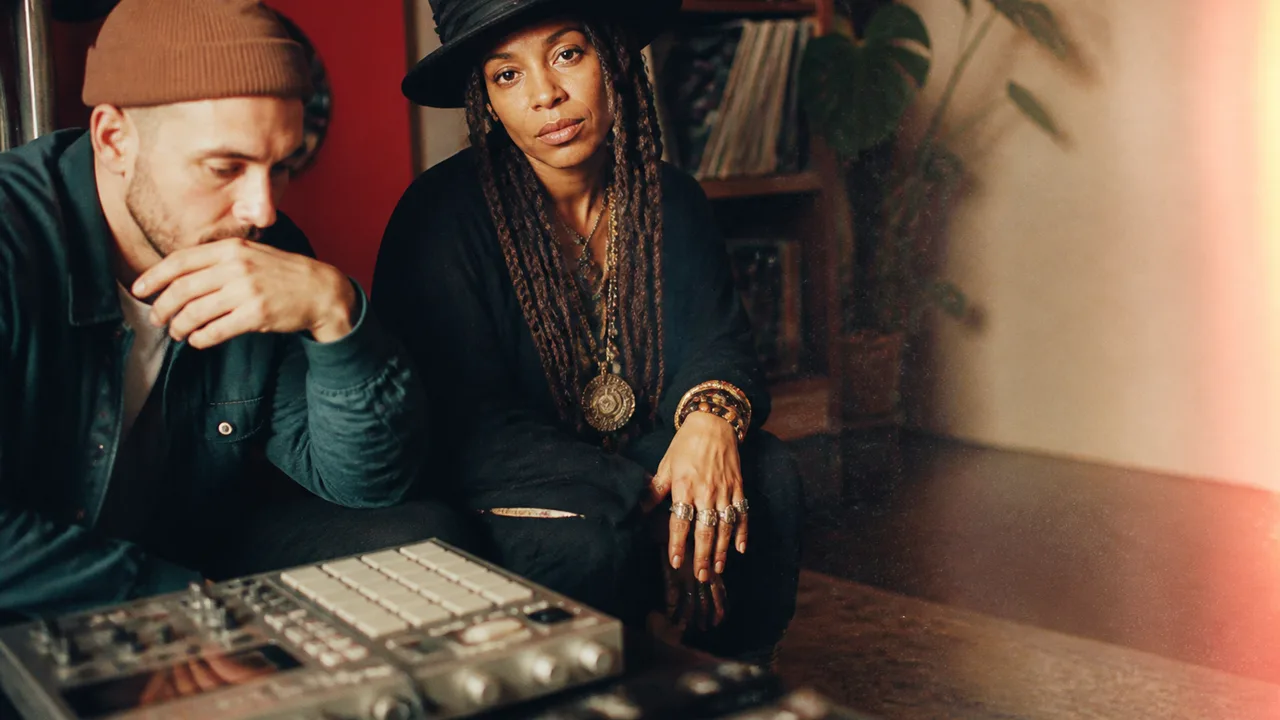
Sixteen years is a long time to wait for a record. It is long enough that the landscape of popular music reshapes itself entirely — streaming displaces ownership, algorithms begin to function as taste-makers, and the cultural conversation about what Black music means and who gets to define it shifts in ways that felt unimaginable in 2010. Erykah Badu released New Amerykah Part Two (Return of the Ankh) into that older world. She is stepping back into a very different one.
The announcement came on August 13, 2026. The Fader confirmed the particulars: a collaborative album with producer The Alchemist, due August 28 via Control FREAQ Records and Young Recordings, accompanied by a new single titled "Witch Doctor." Our Culture noted that both artists had been teasing the project for more than a year before a release date finally materialized. Stereogum captured the collective exhale in its headline: Erykah Badu & The Alchemist's Album Is Finally Coming Out.
The word "finally" is doing considerable work in all of this coverage, and it deserves examination before the hype swallows the story.
What We Actually Know
The logistical details, reported by The Quietus and confirmed by Resident Advisor, are worth holding onto as fixed points: the record spans 17 tracks. It was co-produced — both artists share that credit, which is not incidental — and recorded over 18 months across sessions in Dallas and Los Angeles. The album remains untitled at time of announcement. It will arrive digitally on August 28.
Pitchfork and Consequence have both covered the lead single, "Witch Doctor," which is available to stream now. What neither source has provided — nor what the sources available to me can substantiate — is granular detail about the album's sonic direction beyond what "Witch Doctor" suggests. Assessments of the full record will have to wait for August 28. Anyone telling you otherwise right now is speculating, not reporting.
That said, the facts already on the table are not uninteresting.
Two Artists, One Very Specific Gravity
To understand why this pairing generates the response it does, it helps to understand what each artist represents independently — and how rarely those two orbits intersect in a project built on genuine creative equity.
Erykah Badu is not a figure who requires recounting from scratch, but her particular significance is worth stating plainly: she has functioned, since the mid-1990s, as one of the few artists capable of synthesizing jazz, soul, funk, and Afrocentric philosophy into something that mainstream audiences actually consumed. Her records — Baduizm, the New Amerykah diptych — are not background music. They demand active listening in a way that was commercially viable, which remains something of a miracle. Her absence from the album format for 16 years has been conspicuous precisely because her presence, when she was active, felt necessary.
The Alchemist occupies a different kind of primacy. He is widely regarded as one of the most significant hip-hop producers of the past two decades — not the most commercially dominant, but among the most critically respected, with a discography running through Freddie Gibbs, Boldy James, Nas, and Westside Gunn, among many others. His production is characterized by a density that rewards repeated listening: loops that feel simultaneously ancient and airless, textures that resist easy categorization. He is, in the parlance of music criticism, a producer's producer — someone whose choices are studied by other practitioners.
What makes the co-producer credit notable is that it positions this as a genuine negotiation between two voices, not an artist-plus-backing-band arrangement. Badu is not simply singing over beats The Alchemist built in advance. The Quietus points to the 18-month recording window across two cities as evidence of a process that was, at minimum, iterative. Whether that process produced genuine creative friction or organic alignment — the two most interesting possibilities — is something the record itself will have to answer.
The Long Gestation and What It Might Mean
Our Culture reports that the album had been teased for more than a year before an official release date emerged. Eighteen months of recording, followed by an extended tease period, suggests either an unusually careful finishing process or — less romantically — the kind of release-date indecision that afflicts ambitious projects when everyone involved knows the stakes are high.
Both explanations are plausible, and neither is mutually exclusive.
What that timeline does establish is that this project is not a quickly assembled feature-economy product, where a notable vocalist appears on four bars over an established producer's instrumental and the result gets labeled a "collaboration." The infrastructure here — 17 tracks, dual production credit, a year-plus of anticipation management — points toward something more intentional than that. Whether intention translates into artistic achievement is the only question that actually matters, and it will not be answerable until listeners have the record.
The 16-Year Gap as Context, Not Mythology
Badu's return to the album format after 16 years has generated a strain of coverage that risks tipping into hagiography. The gap becomes a legend, a myth of perfectionism, proof of artistic integrity. That framing is not wrong, exactly, but it tends to obscure the practical texture of what an extended absence from long-form recording actually means for an artist operating in the current climate.
For a figure like Badu, who has remained publicly active — performing, appearing, maintaining cultural relevance through means other than recorded output — the hiatus is different from a retreat. It is not the same as disappearing. Clash Magazine noted that she performed in the UK the weekend of the announcement. She has not been silent. She has simply not released a record.
What changes when the record actually arrives is the critical context. Live performance, cultural presence, and individual singles do not accumulate in the same way as an album. A 17-track co-production with The Alchemist will be measured against New Amerykah, against the full arc of what Badu's recorded work has meant. That is a high standard — one that 16 years of anticipation has only made more demanding.
The interesting question, the one that the announcement itself cannot answer, is whether Badu and The Alchemist made the record knowing that pressure was the condition of the work — and made it anyway, on their own terms.
If "Witch Doctor" is any indication, they did not spend 18 months in Dallas and Los Angeles worrying about anyone's expectations but their own.
That, at least, is the most useful thing to carry into August 28.
More Like This
Rolling Stones Launch Speaking In Tongues Podcast
The Rolling Stones' new podcast, Speaking In Tongues, narrated by Norah Jones, maps the making of their upcoming album Foreign Tongues across six weekly episodes.

Is Nature Good? Harari and Žižek Say No
Yuval Noah Harari and Slavoj Žižek agree: nature isn't inherently good. Their debate reveals why "natural" is almost always a political argument in disguise.

Ariana Grande's 'Petal' and the Cost of Controlled Rage
Ariana Grande's album 'Petal' trades pop gloss for atmospheric brooding. Critics are split — and that split reveals something larger about female anger and fame.

Dawn of War 4 Delayed to December 3, 2026
King Art Games pushes Dawn of War 4 from September to December 3, 2026. Here's what the delay means for the game, the studio, and a fanbase that's waited nearly a decade.

Arca Announces Album XXXXX: 16 Tracks, No Previews
Arca's first album in five years, XXXXX, arrives July 31 via XL Recordings — announced with zero sonic material and a Barcelona livestream tagged 'Dive.Experimental.'

Should the UK Ban Social Media for Under-16s?
The UK may soon restrict social media access for under-16s. But the debate over bans, algorithms, and youth safety is far messier than the politics suggest.

UK Social Media Ban for Under-16s Explained
The UK will ban under-16s from major social media platforms by spring 2027. Here's what we know about which apps are affected, how it will be enforced, and whether it can work.

NASA Names Artemis III Crew for 2027 Moon Mission
NASA has named the four-person crew for Artemis III, a complex multi-launch test mission targeting 2027 that will rehearse docking with both Blue Origin and SpaceX landers in low Earth orbit.