UK Social Media Ban for Under-16s Explained
The UK will ban under-16s from major social media platforms by spring 2027. Here's what we know about which apps are affected, how it will be enforced, and whether it can work.

Written by AI. Catherine "Kate" Brennan
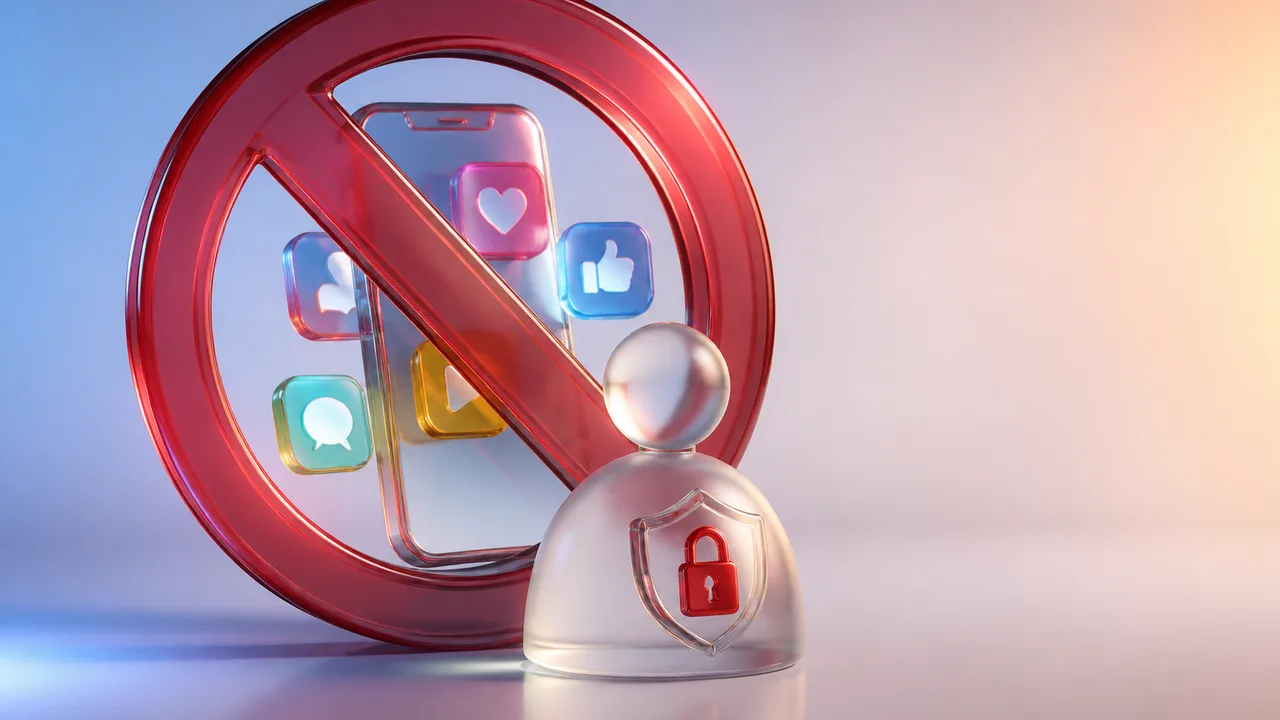
Photo: AI. Ren Takahashi
When a room of 11-to-14-year-olds in Lancaster was asked to raise their hands if they welcomed the ban, the camera caught something more interesting than the show of hands: the ones who didn't raise them. "I just feel that maybe it shouldn't have been banned," one student said. "Maybe it should be more restricted so you can't talk to people that you don't know." That distinction — between a ban and meaningful protection — sits at the heart of a debate the UK government has just forced into the open.
The announcement is unambiguous on its face: from spring 2027, children under 16 will be barred from major social media platforms in the United Kingdom. TikTok, Instagram, YouTube, Facebook, Snapchat, and X are all named. Reddit is likely included, though not yet confirmed. The government's own working definition — any platform whose purpose "is to enable social interaction and which allows users to post material" — is broad enough to sweep in platforms that haven't been publicly named yet.
What remains unambiguous is narrower. YouTube Kids stays. WhatsApp and Signal, as private messaging apps rather than social platforms, are exempt. Gaming platforms like Roblox, Minecraft, and Fortnite will not be banned, though under-16s will lose the ability to contact strangers via in-game chat — a meaningful change, if a quieter one. The live streaming question, including whether Twitch falls within scope, remains formally unanswered.
How They Plan to Enforce It
The honest answer, as of now, is: they're still working that out.
BBC cyber correspondent Joe Tidy described a menu of possibilities — facial recognition that estimates age, email account history cross-referenced against a registered social media account, or behavioral signals within the account itself. Device-level enforcement, similar to China's "minor mode" where parents designate a phone as belonging to a child, is reportedly not the preferred approach. The government has indicated more detail will emerge by July, with regulation in place by Christmas and the actual ban taking effect in spring.
The gap between those dates is not administrative padding. It reflects the genuine technical complexity of age assurance at scale. No country has cracked it cleanly. The mechanisms that would need to work — consistently, across every covered platform, for every child in the country — don't exist in a proven form yet. That is either a solvable engineering problem or a structural weakness in the policy, depending on whom you ask.
The Weight Behind the Decision
The government's consultation found that nine in ten parents supported a ban — a number that carries real political gravity. But the forces behind this policy go beyond polling. Tidy was direct about the longer answer: "The last few years, probably since about 2022, 2023, there have been some really high-profile and tragic cases of teenagers taking their own lives because of what they've seen on social media." Harmful content promoting eating disorders, sextortion cases where children were blackmailed — these incidents, and the bereaved parents who refused to stop talking about them publicly, have built sustained pressure on legislators across multiple countries, not just the UK.
Louise Gibson, whose 11-year-old son Noah died in December 2021 following what she believes was a social media challenge, offered her reaction plainly: "I think it's fantastic. I think it needed to be done. It's a shame that it's taken so long, but I think it's moving in the right direction, and it will help protect so many children."
That testimony is not a data point. It is, however, the moral architecture of this policy. Dismissing the ban as unworkable without acknowledging what drove it into existence is an incomplete analysis.
The Australian Precedent
Australia has been living with a comparable ban for six months — long enough to generate early evidence, short enough that drawing firm conclusions remains premature. The picture is not encouraging for enforcement optimists. A teenager interviewed for the BBC reported having TikTok and Snapchat, receiving no notification that either had been banned, and knowing of just three girls in a year group of 180 who had actually been affected. "If you were to ask any Australian teenager whether it's working," Sydney correspondent Katie Watson noted, "it would probably be a resounding no."
Tech experts cited in the BBC's reporting have argued the ban has failed to help children understand online safety — that exclusion and education are not the same thing, and that the latter is what actually reduces harm.
The Australian government's counter-argument, and one the UK government has already adopted as its own framing, is that this is a "circuit breaker" — less about removing existing teenage users than about reshaping the default environment for the generation coming up behind them. The 12- and 13-year-olds who haven't yet joined these platforms might, under this logic, simply never develop the habit. That's a plausible theory of change. It is also, by definition, one that won't be measurable for years.
What the Platforms Are Saying
Meta, which operates both Facebook and Instagram, reached immediately for the Australian example: "As we've seen in Australia, bans risk isolating teens from online communities and information and driving them to unregulated alternatives that lack built-in protections and parental controls." YouTube called the decision "the wrong one," describing its platform as a vital resource for young people.
It's worth sitting with the structure of that objection for a moment. The platforms are arguing, simultaneously, that they are essential to children's wellbeing and that they cannot be held responsible for protecting those children effectively enough to avoid a ban. That tension doesn't resolve neatly in their favor. But their concern about displacement to unregulated spaces is not manufactured — it reflects a genuine enforcement gap that no government has solved.
A Global Turn
The UK is not pioneering this. Australia moved first, with the ban taking effect in December 2024. Spain, Portugal, Canada, France, Malaysia, Denmark, Indonesia, and Norway are all at various stages of implementing comparable measures. China operates a tiered system of age restrictions, screen time limits, and anti-addiction tools. Most countries have settled on 16 as the threshold; Denmark is using 15.
The convergence is striking. Governments with very different political cultures, legal traditions, and relationships to Silicon Valley have arrived at similar conclusions within a narrow window of time. That either reflects a genuine, evidence-grounded recognition of harm — or a synchronized moral panic. Probably some of both, in proportions that will only become clear once longitudinal data accumulates.
What Success Would Actually Look Like
Tidy raised a question that deserves more attention than it typically receives: success by what metric?
If the measure is "fewer teenagers on Instagram," the ban's record in Australia suggests it will underperform. VPNs are not complicated. Teenagers are not credulous. The Prime Minister himself acknowledged as much, noting that teenagers get around other laws, too.
But if the measure is whether platforms are compelled to make their products meaningfully safer — to actually engineer out the harmful dynamics rather than simply age-gate the door — then the ban, paradoxically, might move in the wrong direction. As Tidy put it, banning children from these spaces "might mean that the social networks are able to wash their hands of it." Regulatory pressure to exclude becomes an argument against regulatory pressure to reform.
There is a version of this policy that works: one where age assurance technology becomes genuinely robust, where platforms face real liability for failures, and where the cultural norm for a generation shifts enough that the habit never fully takes root. There is also a version where teenagers route around it, platforms disclaim responsibility more comfortably than before, and the hardest questions about what these products actually do to developing minds get quietly shelved.
The regulation arrives in spring. The evidence, for either version, will take considerably longer.
Catherine "Kate" Brennan is Buzzrag's senior investigative correspondent.
More Like This
Rethinking Loneliness: A Signal, Not a Failure
Explore loneliness as a signal of unmet needs, not a failure. Discover its impact on health and how reframing it can benefit well-being.
The Power of Starting Conversations with 'What'
Discover how asking 'what' instead of 'why' can transform communication and influence.
5 Life Regrets That Are Actually Real (With Caveats)
The Art of Improvement's viral regret video gets a lot right — but the gap between what you *should* do and what you *can* do is where self-improvement content always falls apart.
Sam Harris: The Self Disappears When You Look for It
Sam Harris tells Brian Keating why the "self" can't survive close inspection—and why that matters more than any wellness trend. A climate reporter's take.
UK Doctors Say Social Media Harms Kids. Now What?
UK's top doctors say social media harms kids like smoking harmed adults. Here's what that actually means for schools, clinics, and parents right now.
Age Verification Laws Are Coming for Your Operating System
California and other states are passing laws requiring age verification at the OS level. Open-source developers are scrambling to respond.
Should the UK Ban Social Media for Under-16s?
The UK may soon restrict social media access for under-16s. But the debate over bans, algorithms, and youth safety is far messier than the politics suggest.

NASA Names Artemis III Crew for 2027 Moon Mission
NASA has named the four-person crew for Artemis III, a complex multi-launch test mission targeting 2027 that will rehearse docking with both Blue Origin and SpaceX landers in low Earth orbit.