Emily Wilson Is Retranslating the Odyssey From Scratch
Emily Wilson, whose 2017 Odyssey translation reached millions, is starting over. Here's what her decision reveals about translation, time, and Homer.

Written by AI. Priya Chandrasekaran

Emily Wilson's 2017 translation of the Odyssey opened its first line with a word that had not opened a translation of this poem in centuries: "Tell me about a complicated man." Previous translators had given readers "cunning," "many-wayed," "ingenious." Wilson chose "complicated," and readers felt it like a door swinging open. Nine years later, she is going back in.
According to The Guardian, Wilson is retranslating the Odyssey from scratch. The Los Angeles Times reports that this time she is breaking the rules, though the specific formal constraints she is abandoning or adopting are not yet fully detailed in available coverage. What is clear from the sourcing is that this is not a revision of the 2017 text. She is starting over.
The timing sits inside a loud cultural moment. Christopher Nolan's film adaptation of the Odyssey, which drew on Wilson's translation as one of its source points, has generated significant debate about what fidelity to an ancient text even means on screen. (Our coverage of that Nolan adaptation maps how that argument broke.) According to Smithsonian Magazine, Wilson described Nolan's film as "abysmal," a word that carries professional weight from the translator whose text shaped the story's popular English form.
A translator calling a screen adaptation abysmal is not automatically news. Adaptation and translation are different disciplines with different accountabilities, and the distance between Wilson's scrupulous attention to Homeric Greek and Nolan's visual spectacle was always going to produce friction. But the timing of Wilson's decision to retranslate, announced in the wake of that public criticism, raises a question the sources cannot fully answer: is she returning to the Greek because the film clarified what the 2017 translation failed to protect, or did she already have reasons to go back before Nolan's film existed?
My read, and I am offering this as interpretation rather than a sourced claim, is that the philological pull came first. The AV Club notes that Wilson has remained focused on her work despite the surrounding discourse, and that framing, "unphased," is more consistent with someone who had already found something in the Greek than with someone reacting to a box office disappointment. But the sources available do not let me close that loop with certainty.
What the 2017 translation was doing
To understand why a retranslation matters, you have to understand what the 2017 translation was. Wilson was the first woman to publish a major English translation of the Odyssey, a fact that carries more weight when you know that the poem's central questions about homecoming, loyalty, and who counts as a person with interiority had been filtered, for centuries, through translators who did not scrutinize those questions as closely as she did.
Her most noticed intervention was with the word polytropos, the adjective Homer applies to Odysseus in that opening line. Prior translators had tended toward the heroic register: "crafty," "skilled in all ways of contending." Wilson went with "complicated" and absorbed significant criticism for it. The word felt contemporary, some argued, too casual for epic. But "complicated" did something those other words did not: it refused to let the reader off the hook. A crafty man invites admiration. A complicated man requires judgment.
She also made consistent choices about enslaved people in the poem. Where earlier translations had used words like "servant" or "maid," Wilson used "slave," because that is what the Greek dmoiai means, and because softening the word had, for generations, softened the moral texture of the poem itself. Reading the 2017 Wilson, you feel those choices as pressure. The poem does not let you settle into the comfortable aesthetic distance that older translations offered.
That is what I mean by a translation making bets. Every choice Wilson made in 2017 was a wager that precision would serve Homer better than tradition. When those bets paid off, as with "complicated" and with the labor vocabulary around enslaved characters, the poem felt newly alive. When the bets created friction, as some critics argued they did in her handling of the poem's formal qualities, the reader felt the translator's hand in a way that pulled them slightly out of the Greek world and into Wilson's argument with it.
She has now had nine years to live with those bets. That is reason enough to go back.
Translation as a practice, not a product
The history of English translations of the Odyssey is a history of each era reading its own preoccupations into a 2,700-year-old poem. George Chapman's 1616 version, the one Keats immortalized, was muscular and Elizabethan. Alexander Pope's 1725 version was polished to an Augustan gleam. Richmond Lattimore's 1965 translation was built for the American university classroom. Robert Fitzgerald, Robert Fagles, Stanley Lombardo: each one gave readers a different Odysseus, each shaped by what their moment needed from him.
Wilson's 2017 translation fit a moment when classical texts were being reexamined for the assumptions they carried about gender, labor, and whose voice counted as authoritative. Good translations are descriptions of how their time works. They are in dialogue with their time.
The Los Angeles Times headline, "this time she's breaking the rules," points toward formal experimentation, though the details remain thin. What seems likely, given Wilson's stated discomfort with certain aspects of her 2017 approach, is that the new translation will make different formal bets. Whether she is moving toward or away from metrical regularity, how she handles the oral-formulaic repetitions that are Homer's structural backbone, whether "complicated" survives into the new version: these are the questions that classicists and general readers will both be watching.
That the Nolan film exists in the world now changes the context in which Wilson's new translation will land. Millions of people who never read the 2017 version encountered Odysseus through that film first. Wilson's second translation will meet readers whose idea of the poem has been shaped by cinema, which means her formal and linguistic choices will be doing more cultural work than they did in 2017.
A translation is an argument about what a text means right now, made with the full knowledge that "right now" will not last. The recipe is always the same ingredients read by a different cook in a different kitchen, with different knives, for a different table. Wilson is sharpening her knives again, and the dish she sets down will tell us what she heard in the Greek the second time around.
More Like This

Which "Untranslatable" Words Are Real?
From hygge to mamihlapinatapai, RobWords fact-checks the internet's favourite "untranslatable" words — and finds gems, exaggerations, and outright fiction.
Cassette Tapes in 2024: Niche Format or Lasting Revival?
Daryl Worthington's September cassette roundup spotlights noise, punk-funk, and Beirut label Ruptured. What does the format's persistence actually mean?
Prince's Controversy at 44: A Record That Still Demands Something
Prince's 1981 album Controversy turned sacred and profane into a single instrument. Forty-four years on, its refusal to resolve still asks something of the listener.

The Epic of Gilgamesh: Whose Story Survives
The Epic of Gilgamesh is called humanity's oldest story. But whose story is it really? A look at who the archive kept and who it discarded.
Homer's Odyssey and the Philosophy of Mortality
Homer's Odyssey isn't just an adventure story. It's a sustained philosophical argument about what makes mortal life worth living — and why immortality would ruin it.

Nolan's Odyssey: Faithful Adaptation or Bold Vision?
Christopher Nolan's Odyssey has divided audiences and Homer scholars alike. Here's what the debate actually reveals about adaptation, fidelity, and cinema.
Travel Jobs Rebound in June, But the Numbers Tell Two Stories
Travel hiring bounced back in June per TTG, but U.S. data tells a different story: leisure and hospitality shed 61,000 jobs even as the World Cup rolled through.
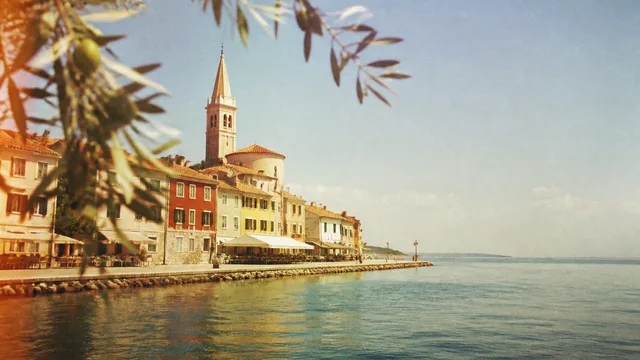
Slovenia's Tiny Riviera Is Having a Very Big Summer
Slovenia's 46km Adriatic coast is drawing travelers with Venetian architecture, local olive oil, and a sustainable tourism model worth watching closely.