Apple's Reference Image Builds a Photo Evidence Chain
Apple's Reference Image proposal could preserve photo provenance through edits and platforms, but its value depends on adoption and careful trust rules.

Written by AI. Zara Chen
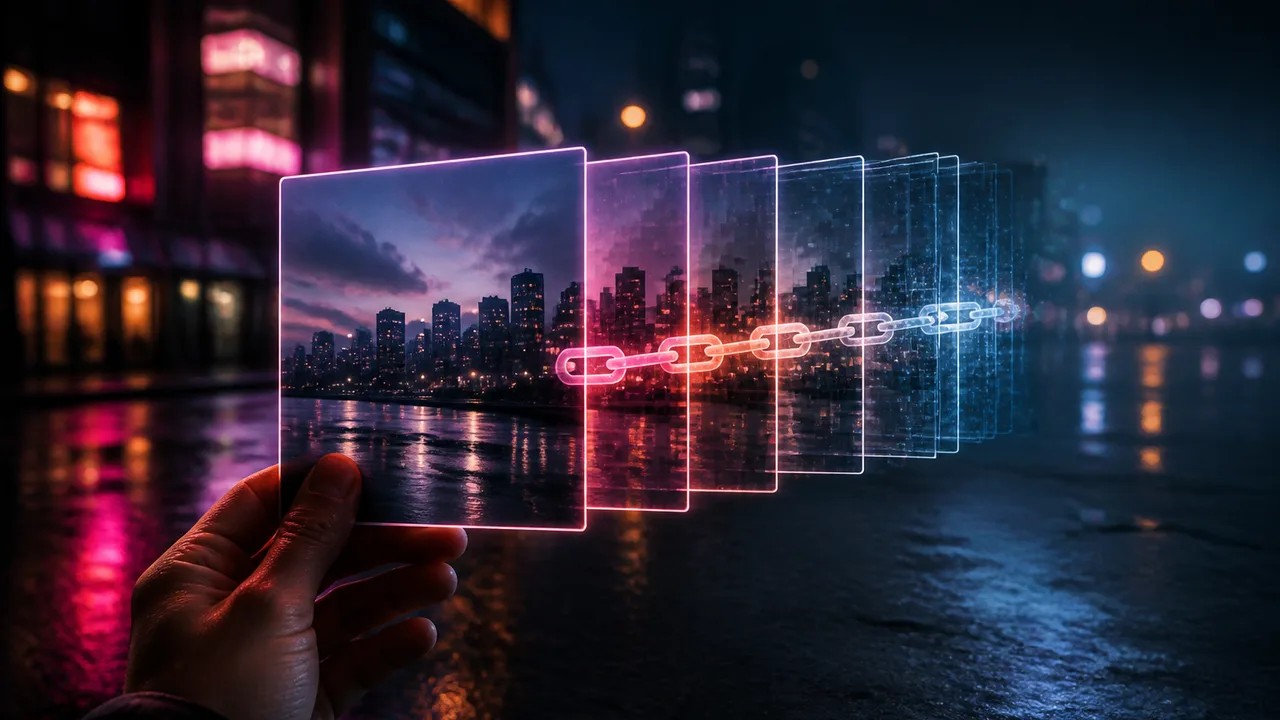
Apple has proposed a system called Reference Image that could give photographs a stronger chain of evidence after they leave the camera.
The proposal addresses a problem that has become painfully normal: a camera can capture a real scene, yet the resulting photograph may lose its verifiable history as it gets cropped, edited, recompressed, screenshotted, or uploaded to services that discard provenance data. By the time the image reaches a group chat or social feed, its origin may amount to one person typing “trust me.” The internet has rarely treated that phrase as a cue for restraint.
According to Apple's security research team, Reference Image would preserve a trusted reference that later versions of a photograph could be checked against. The ambition is larger than attaching another label to a file. Apple is trying to maintain a relationship between an original camera capture and the copies or derivatives circulating afterward.
That relationship could help distinguish a photograph descended from a trusted capture from an altered or synthetic image pretending to have the same origin. It still cannot certify that the scene was presented honestly, that relevant details sit outside the frame, or that the caption tells the truth.
Reference Image deals with lineage. Reality remains annoyingly resistant to a software update.
Why Existing Provenance Signals Break
Many image-authentication systems depend on metadata and cryptographic signatures. In broad terms, metadata records information about a file, while a cryptographic signature can help a verifier detect whether signed information has changed.
Those tools can work well inside a compatible chain of cameras, editors, publishers, and viewing software. The chain becomes fragile when one service strips metadata, another recompresses the image, and a third displays no provenance information even when it survives. Copying, exporting, and screenshotting can further separate visible pixels from the evidence attached to the original file.
This creates an awkward usability problem. A missing signature might mean an image is synthetic or manipulated. It could also mean a messaging app removed the relevant data during an otherwise ordinary upload. Absence alone provides weak evidence when the surrounding ecosystem routinely drops the receipts.
Apple's reference-based approach aims to make comparison more durable. Instead of asking every later copy to carry an untouched bundle of original evidence, a verifier could compare that representation with a trusted reference. The strength of that model depends on how the reference is created, stored, discovered, and protected from substitution.
The available material does not answer every implementation question. That gap matters because security proposals live or die in the details. Who can register a reference? Can two references claim the same visible image? How does a verifier handle crops, color adjustments, noise reduction, or heavy compression? What happens when an authorized editor combines several authenticated photographs?
A system that rejects every edited image would have limited value for journalism, publishing, and ordinary photography. A system that accepts broad changes without explaining them could give heavily altered work an aura of camera-backed authenticity. The useful zone sits between those outcomes, and defining it will require shared rules rather than vibes.
The Product Story is Still Developing
Coverage has framed Apple's proposal with varying levels of certainty. The Verge describes a new iPhone camera mode intended to show that a photograph was not generated by AI. Gizmodo similarly connects the feature to iPhone 18 photos, while Digital Trends says it may make fake images harder to pass off as iPhone captures.
Engadget uses more tentative language, reporting that Apple may introduce a photo-authentication tool in iOS 27. The supplied record therefore supports the direction of Apple's work more clearly than every detail of availability, compatibility, and rollout.
Headlines describing proof that a picture “isn't AI” also compress a more complicated claim. A verified camera lineage could provide evidence that an image originated with a supported capture process. Later edits still need to be represented accurately, and unsupported files remain unresolved rather than automatically fake.
That difference will matter in daily use. If a platform displays a bright authentication badge beside one image and nothing beside another, users may interpret the unbadged image as fraudulent. The actual explanation could be an old camera, an Android phone, an unsupported editing tool, a stripped file, or a publisher that has not adopted the system.
Verification interfaces will need language for “confirmed,” “changed,” “unsupported,” and “unknown.” Collapsing those categories into a green check and a red warning would turn a nuanced evidence system into content moderation by traffic light. Very efficient, very memeable, potentially very wrong.
Apple Cannot Build the Chain Alone
A reference system becomes more useful as more participants recognize it. Camera makers must create trustworthy references. Editing applications must preserve and describe transformations. Publishers need procedures for checking claims. Social networks and messaging services must retain or reconnect the evidence. Viewers need a consistent way to inspect it.
Android Authority frames the proposal against Android and C2PA-based provenance tools. That comparison points to the central strategic question: will Reference Image interoperate with broader standards, or will photo authentication split into vendor-controlled lanes?
Apple can put a feature in millions of pockets through the iPhone, giving it leverage that a standards document alone does not have. A closed or narrowly supported implementation could still create a reliable island for participating devices. Images do not remain on islands, though. They move between operating systems, newsrooms, cloud services, social apps, government archives, and courts.
Cross-platform adoption also involves incentives. Social networks may value provenance when misinformation becomes a public controversy, yet implementing and displaying it adds engineering work and can complicate engagement-driven sharing. Editing companies may support the concept while disagreeing over how transformations should be described. Publishers may welcome stronger evidence but hesitate to depend on a verification process controlled by one hardware vendor.
These are governance questions wearing camera-app clothing.
What a Verified Photograph Still Cannot Prove
A trusted capture can document what reached a sensor at a given moment under the system's rules. It cannot show what happened five seconds earlier, identify who arranged the scene, or confirm the photographer's description.
A political campaign could circulate an authentic photograph with a false date. A cropped image could remove a nearby person who changes the context. A staged scene could pass capture authentication because the camera faithfully recorded the staging. Even lens choice and camera position shape what viewers perceive.
None of those limits makes provenance useless. News organizations, investigators, election officials, researchers, and everyday users can benefit from knowing whether an image has a supported camera origin and how it changed afterward. The evidence simply answers bounded questions.
Privacy creates another unresolved tension. Strong provenance can help photographers establish authorship and help publishers inspect an image's history. Depending on design, persistent references might also reveal information about devices, accounts, locations, or editing activity. Apple's public explanation will need to show what information verifiers receive, who can retrieve it, and whether creators can withhold sensitive details without destroying the authentication chain.
Bad actors will test the edges too. They may try to photograph synthetic images displayed on screens, substitute references, exploit trusted editing paths, or persuade audiences that missing provenance proves suppression. Every authentication system eventually meets the internet's most renewable resource: people attempting weird stuff at scale.
Apple's proposal gives the photo-authentication debate a concrete next step. Its success will depend on whether other cameras, editors, publishers, and platforms can treat Reference Image as shared evidence rather than an Apple-only badge. A chain of evidence is only as useful as the number of links willing to hold it.
More Like This
This Creator Got Shadowbanned on YouTube in 25 Days—On Purpose
A vidIQ creator deliberately shadowbanned their channel with AI-generated content to expose how YouTube's algorithm actually works. The results are wild.

Claude's Invisible Watermark and What It Actually Does
Anthropic's invisible text watermark covers every Claude output globally, raising questions about EU AI Act scope, developer code, and who controls the detector.

Starlink Satellites Are Now Scanning Earth's Atmosphere
Kyoto University researchers repurposed 1,200 Starlink satellites as an accidental atmospheric scanner. Here's what that means for science—and who controls it.
How Claude's AI Text Watermark Actually Works
Anthropic's Claude hides a statistical watermark in word choices, not characters. Here's how tournament sampling works—and why forging beats removing it.
Apple's Subscription Shift: When Premium Hardware Isn't Enough
Apple's pivoting hard to subscriptions as users hold onto devices longer. Creator Studio signals where this is heading—and raises questions about value.
AI and Scientific Photography: Where Ethics Draws the Line
MIT science photographer Felice Frankel explains why AI can generate images but can't replicate the curiosity and ethical judgment behind scientific photography.
GNU Coreutils Now Run Natively on Windows
Microsoft has ported GNU Coreutils to Windows as native binaries. Here's what that means for devs switching between Linux and Windows daily.
iOS 27 Beta 1 Hands-On: Cool Features, No Siri
iOS 27 Beta 1 is here with Photos AI tools, Liquid Glass tweaks, and Wallet upgrades — but the new Siri everyone wants? Still on a waitlist.