Renewables Hit 30% of US Electricity in Early 2026
EIA data shows renewables reached 30% of US electricity in early 2026, up from 27.8% a year ago. Here's what that number actually means—and what it doesn't.

Written by AI. Zara Chen
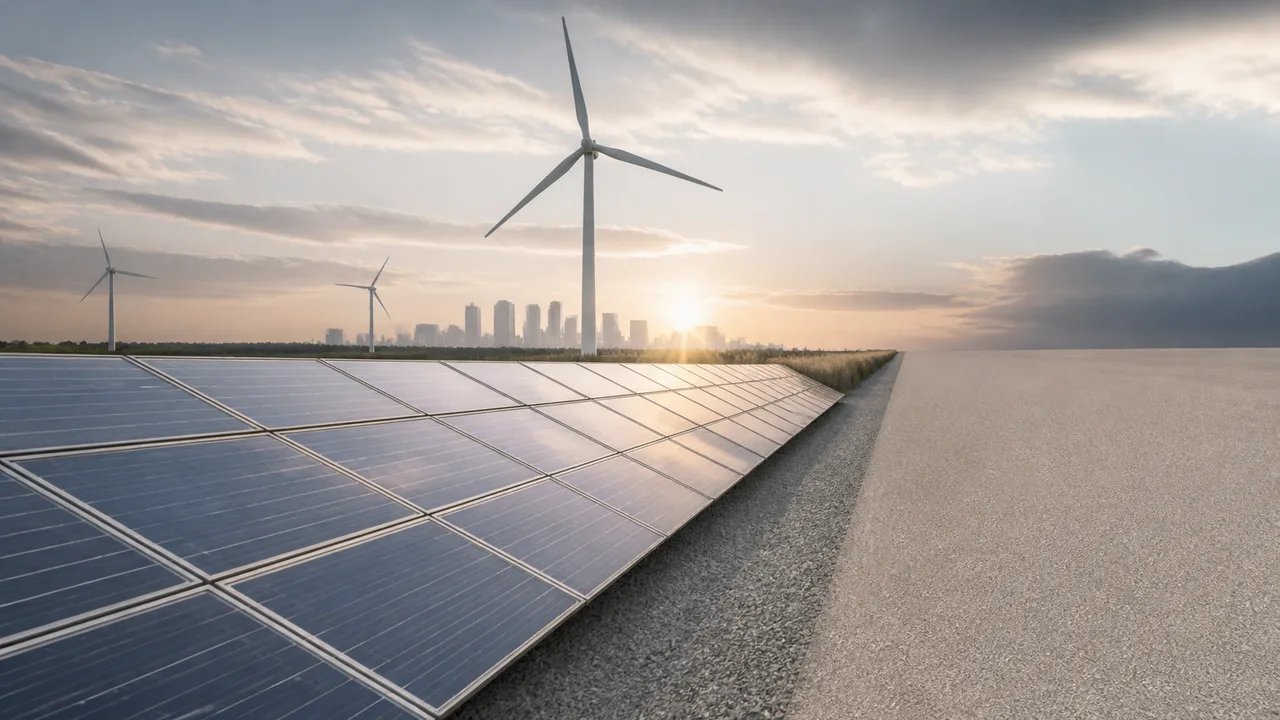
Thirty percent sounds clean. Milestone-y. Worth a press release and a round of applause. And look — it genuinely is. But the number also deserves a closer read than most of the coverage is giving it, because what got us to 30% and what it takes to get significantly past it are two very different problems.
Let's start with what's actually in the data.
According to Electrek, renewables accounted for 30.0% of total US electrical generation during the first third of 2026 — that's the EIA's own number, and it's not soft. SolarQuarter and Renewables Now independently confirm the figure across the first four months of the year, both drawing on the EIA's Electric Power Monthly report. Slashdot notes that the mix includes not just solar and wind but also biomass and geothermal — the whole portfolio — up from 27.8% a year earlier.
That's more than two percentage points of absolute gain in a year. For a system the size of the US grid, that's genuinely fast movement.
Solar Is the Story Inside the Story
The headline figure is renewables collectively, but if you want to understand why this is happening, you need to be looking at utility-scale solar specifically. Solar installation has been running hot — the economics of solar panels have dropped so dramatically over the past decade that large-scale projects now pencil out in markets where they simply didn't five years ago. Energy Central reports that the EIA is projecting 78.5 GW of new solar, wind, and battery capacity coming online in the near term — which is a pipeline number that suggests the buildout isn't slowing down.
Hydropower had a good stretch too, contributing meaningfully to the first-quarter gains. Worth noting: hydro is weather-dependent in ways that make it unreliable as a benchmark for long-term trend analysis. A wet year in the Pacific Northwest moves the national hydro numbers. That doesn't diminish the contribution, but it's part of why energy analysts look at multi-year averages rather than any single quarter's headline.
Sustainability Online flags something else worth tracking: battery storage is accelerating alongside generation. That matters because storage is what turns an intermittency problem into a dispatch problem — a much more manageable engineering challenge. We're not there yet at scale, but the trajectory is moving in the right direction.
The Transmission Problem Nobody Wants to Talk About
Here's the thing that doesn't show up in the generation numbers: you can build all the solar and wind you want, and if the transmission infrastructure isn't there to move that power from where it's generated to where it's needed, the electrons just... sit there. Or get curtailed. Or both.
The US grid is, to put it charitably, an inheritance from a different era of energy economics. It was designed around large centralized power plants — coal plants and nuclear facilities that sit close to population centers and run continuously. Renewables, by contrast, tend to get built where the sun shines and the wind blows, which is often not where the demand is. Texas wind farms. Mojave solar arrays. Montana hydro. Getting that power to Chicago or Phoenix or the mid-Atlantic requires new transmission lines, and new transmission lines require navigating a permitting process that makes building a power plant look streamlined.
This isn't a knock on renewables — it's a system design problem that the 30% number doesn't capture. The generation capacity is growing; the delivery infrastructure is lagging. That gap is the real policy challenge of the next decade, and it's one where federal and state governments have been notably slow to act relative to how fast the generation side has moved.
AI Data Centers Just Complicated Everything
Timing-wise, the 30% milestone lands in the middle of a demand surge that nobody fully saw coming. The explosion in AI infrastructure has turned data centers into enormous electricity consumers — the kind that run 24 hours a day, 365 days a year, and need guaranteed uptime. That's a load profile that renewables, absent sufficient storage, struggle to serve on their own.
What this means in practice: tech companies are simultaneously making ambitious clean energy pledges and quietly signing long-term contracts for natural gas-backed power to ensure reliability. That's not hypocrisy so much as physics — you can't run a data center on intermittent supply without a backup. But it does put pressure on the idea that renewable growth alone solves the demand-side equation.
The 30% figure reflects where supply has gotten to. The AI demand surge is a reminder that the denominator is also changing, and it's changing fast.
So What Does 30% Actually Require to Become 50%?
Going from 27.8% to 30% meant building a lot of solar panels and wind turbines and letting them run. That part — the generation part — has gotten genuinely cheap and fast.
Going from 30% to 50% means something harder. It means solving storage at scale so that nighttime and low-wind periods don't require fossil fuel backup. It means building transmission infrastructure across state lines with all the jurisdictional fights that entails. It means figuring out how to keep the lights on during extreme weather events that simultaneously spike demand and reduce generation — exactly the conditions that have caused the most serious grid stress events in recent years.
None of those are insurmountable. But they're not "install more panels" problems. They're political, financial, and engineering problems that require coordination across utilities, regulators, and governments that don't always agree on much.
The buildout pipeline — that 78.5 GW figure from Energy Central — is real and it's encouraging. The question isn't whether renewables will keep growing. They will. The question is whether the rest of the system grows with them fast enough to keep pace.
Here's what I keep coming back to: the people who understand this tension best are probably the grid operators — the ones running models of what happens when a high-pressure system stalls over the Southwest in August and solar output drops just as air conditioning load spikes. Or the ones gaming out what a major wildfire does to transmission lines serving a population of a million people. That calculation — not the generation percentage — is where the real work of the energy transition lives.
The teenager in a brownout during a heat wave doesn't care what percentage of the grid is renewable. They care whether the power stays on. Getting to a grid that's both clean and reliable enough to pass that test is the actual challenge. Thirty percent is a real step toward it. It's just not the finish line people sometimes want it to be.
More Like This
This Creator Got Shadowbanned on YouTube in 25 Days—On Purpose
A vidIQ creator deliberately shadowbanned their channel with AI-generated content to expose how YouTube's algorithm actually works. The results are wild.
Master Remote Access with Comet Pro KVM
Explore the Comet Pro KVM for seamless remote PC access: Wi-Fi 6, out-of-band management, and Tailscale security.
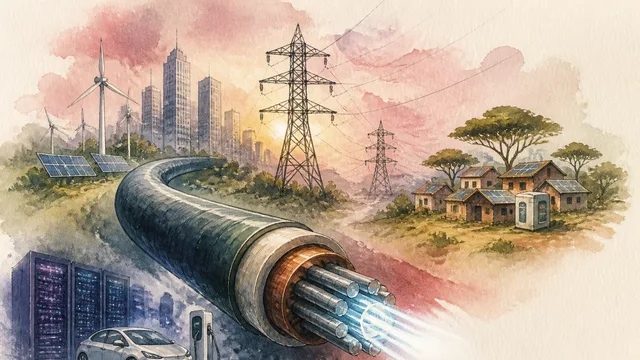
The Electrical Grid Is Being Rebuilt for AI—Now What?
AI and EVs are forcing a complete grid overhaul. What that means for small businesses waiting on power that never seems to arrive fast enough.

Fusion Energy Is No Longer Just a Physics Problem
Fusion reactors have cleared their core scientific hurdle. What remains are hard engineering challenges—and a tight race against the clock and other clean energy sources.
![Man in Laravel cap looking thoughtful beside phone displaying "Debounce for [301]" hashtag on pink background](https://static.buzzrag.com/articles/laravel-13-6-drops-debounceable-jobs-and-json-health-checks/thumb-5e646253.webp)
Laravel 13.6 Drops Debounceable Jobs and JSON Health Checks
Laravel 13.6 introduces debounceable jobs, JSON health check responses, and Cloudflare email support. Here's what developers need to know.
Heroku Is Really Dead This Time, and Here's What Happened
Heroku has entered full maintenance mode after mass layoffs and leadership exodus. How did Salesforce let a developer platform die at the finish line?

Google Nano Banana 2 Lite Makes AI Image Generation Cheap
Google's Nano Banana 2 Lite generates images in 4 seconds at $0.034 per 1,000—and that price point changes who gets to build with AI image tools.
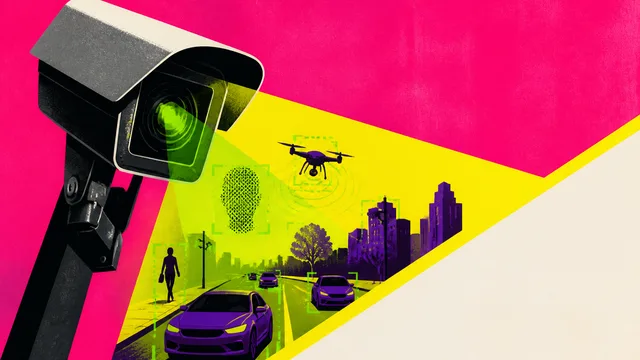
Flock Cameras Track Far More Than License Plates
Flock Safety's AI-powered cameras are spreading fast across U.S. cities—and they're capturing far more than license plates. Here's what's at stake.