SS United States Heads for a New Life as a Florida Reef
The SS United States is headed for an artificial reef off Florida. Its next chapter raises questions about ship preservation, marine habitat and cleanup at sea.

Written by AI. Zara Chen
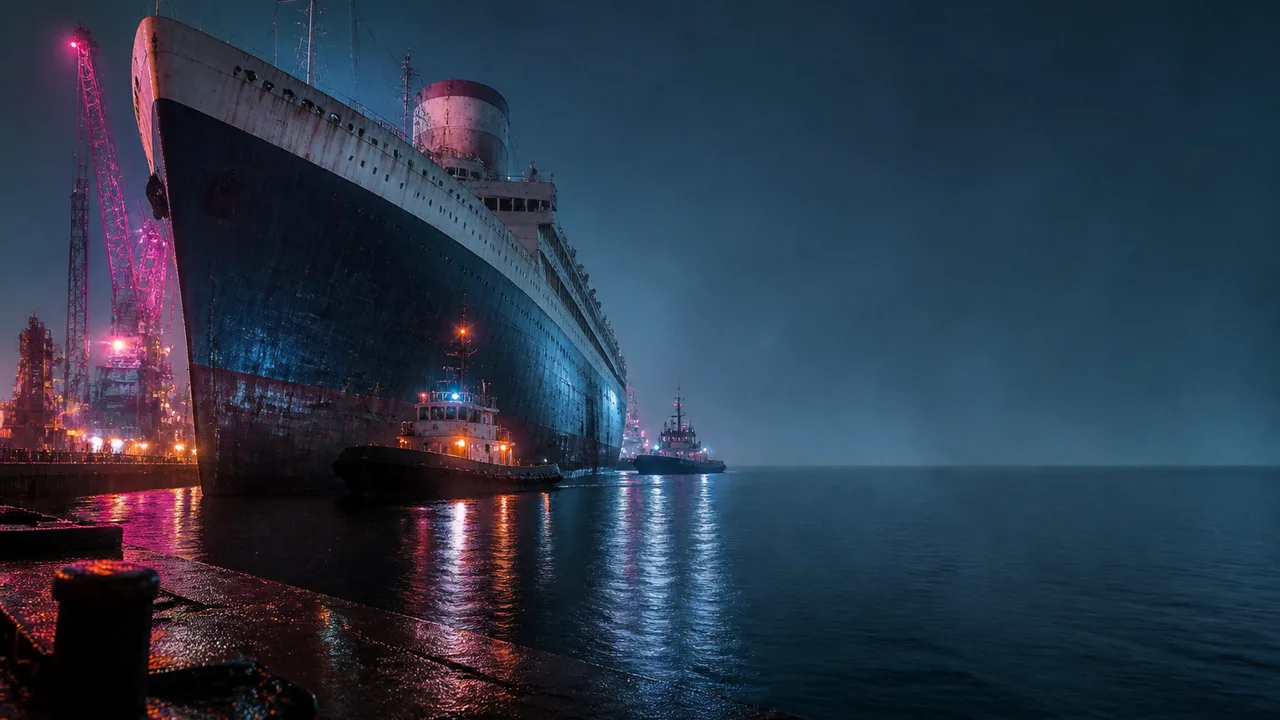
The SS United States, once celebrated for its speed across the Atlantic, is headed for an intentional sinking off Florida’s Panhandle. The plan would turn the retired ocean liner into an artificial reef: a destination for divers and, potentially, habitat for marine life.
That’s a remarkable change of assignment for a ship built to cross an ocean quickly. The liner’s reputation as the world’s fastest passenger liner came from an era when speed at sea could stand for engineering ambition and national prestige. Its proposed future asks a different question of the same enormous object: What can it do after its original job has disappeared?
The appeal of the reef plan is easy to see. It gives a vessel that has struggled to find a viable post-service future a continuing physical presence. Divers could visit it; marine organisms could colonize its surfaces. But the ocean isn’t a free storage unit with fish. Sinking a ship for a public purpose requires preparation, careful placement and attention to what happens after the cameras leave.
From Speed Record to Seafloor Landmark
The SS United States was designed for a world in which an Atlantic crossing was itself a showcase. A fast passenger liner put engineering on display every time it made the trip. That history helps explain why its proposed reef conversion carries more weight than the routine disposal of an obsolete vessel.
A ship, though, is a difficult object to preserve. It occupies space, requires upkeep and cannot simply be put in a box beside the photographs and plans that document it. Keeping the hull intact on land or at a dock would preserve one form of access to it. Turning it into a reef would preserve another: the ship’s recognizable shape and scale, encountered underwater.
Those experiences serve different audiences. A dockside visitor might be able to examine a ship as an artifact of passenger travel. A diver could encounter the hull as a vast structure with a new ecological role. The latter might create a compelling encounter with maritime history, but access would depend on diving conditions and ability. The choice changes who gets to experience the ship, and how.
That’s the preservation dilemma beneath the striking headline. The planned reef conversion offers a way to keep the liner in public imagination after a long search for a workable future. It also ends the possibility of presenting the intact vessel in the way its builders intended: above the waterline, carrying people.
What a Ship Can Offer Marine Life
An artificial reef creates hard surfaces and sheltered spaces that organisms may use. Over time, a large hull could become a place where marine life settles, feeds or takes cover. Its size could also make it a draw for divers. Coverage has described the SS United States project as a bid to create the world’s largest artificial reef, though size alone cannot tell us how well it will function as habitat.
Picture the difference between a busy restaurant and a thriving neighborhood. A shipwreck may draw fish into one visible spot, making a dive memorable, without necessarily increasing the number of fish in the surrounding area. Habitat can also support growth and shelter. Working out which effects dominate would take observation over time, not a spectacular image of the sinking.
Location would shape that outcome. The conditions around the hull, the species already present and the way the structure settles would all affect how the reef develops. Divers and marine life could also value different features. An open, recognizable ship may make for a striking visit, while the smaller surfaces and spaces that organisms use may receive less attention in photographs.
Preparation is the less photogenic half of the project. Materials that could harm the marine environment need to be addressed before a vessel goes down, and the structure needs to be readied for its new setting. How the SS United States will be cleaned, deployed and monitored remains unclear, so claims about its eventual environmental performance would be premature.
That uncertainty doesn’t make the ecological ambition empty. It makes the follow-through central to judging it. The reef’s success would depend on the work before sinking and on what researchers and managers can observe afterward, when the hull has become part of a changing marine environment rather than a finished attraction.
Who Gets an Afterlife, and on What Terms?
There is a public choice tucked inside the plan. A landmark ship has historical value to people who may never dive it. A reef can bring visitors to the Panhandle and provide new underwater structure. Those benefits overlap, but they aren’t interchangeable: an engaging dive site does not by itself preserve the full experience of an ocean liner, and a preserved ship does not by itself create marine habitat.
The SS United States also illustrates a familiar problem with large pieces of industrial heritage. Their scale is part of what made them extraordinary, and part of what makes keeping them difficult. A photograph can preserve the look of a fast liner. Plans can preserve its design. Neither puts a person beside the hull and lets them grasp the size of the thing. A reef could retain that physical encounter, under conditions few of the ship’s original passengers would have imagined.
That change deserves more than an easy slogan about giving the liner a second life. For someone drawn to the ship’s history, the sinking may feel like a loss even if the hull remains recognizable. For a diver, it could make that history newly accessible. For people concerned about the Gulf’s marine environment, the relevant question is how the project handles risk and whether the site delivers lasting ecological value. Each is looking at the same ship and asking it to do a different job.
The planned sinking brings those expectations together in one place off Florida. The SS United States once had to prove itself by moving across the Atlantic faster than other passenger liners. On the seabed, speed will count for nothing. Its next record, if it earns one, will be written slowly by the life that gathers around it and by the people responsible for watching what happens.
More Like This
America Wants Nuclear Cargo Ships by 2028: The Real Obstacles
A MARAD-Core Power agreement targets nuclear merchant ships laid down from 2028. The reactor is the easy part; lawyers, insurers and ports are not.

This Creator Got Shadowbanned on YouTube in 25 Days—On Purpose
A vidIQ creator deliberately shadowbanned their channel with AI-generated content to expose how YouTube's algorithm actually works. The results are wild.

Flock Cameras Track Far More Than License Plates
Flock Safety's AI-powered cameras are spreading fast across U.S. cities—and they're capturing far more than license plates. Here's what's at stake.

Renewables Hit 30% of US Electricity in Early 2026
EIA data shows renewables reached 30% of US electricity in early 2026, up from 27.8% a year ago. Here's what that number actually means—and what it doesn't.

Apple's Reference Image Builds a Photo Evidence Chain
Apple's Reference Image proposal could preserve photo provenance through edits and platforms, but its value depends on adoption and careful trust rules.
andBeyond Amazon Explorer Yacht: Luxury on the River
andBeyond launches the Amazon Explorer yacht in the Peruvian Amazon in 2026. A look at the specs, the route, and what eco-luxury really demands here.

Chinese Bots Targeted AI Data Centers. Real People Did Too.
X found 200 Chinese bot accounts targeting AI data center debates. OpenAI and Republicans ran with it. Wired and others say the outrage was already real.

UK's Phantom Data Centers Are Straining the Power Grid
Speculative 'phantom' data centers are clogging the UK's grid connection queue. Ofgem is pushing back—but the fix isn't simple when AI ambition is this loud.