Shoeless Joe Jackson and the Black Sox Ban That Endured
Shoeless Joe Jackson was acquitted, banned and later reinstated. The Black Sox scandal still tests how baseball weighs court verdicts against its own authority.

Written by AI. James Morrison
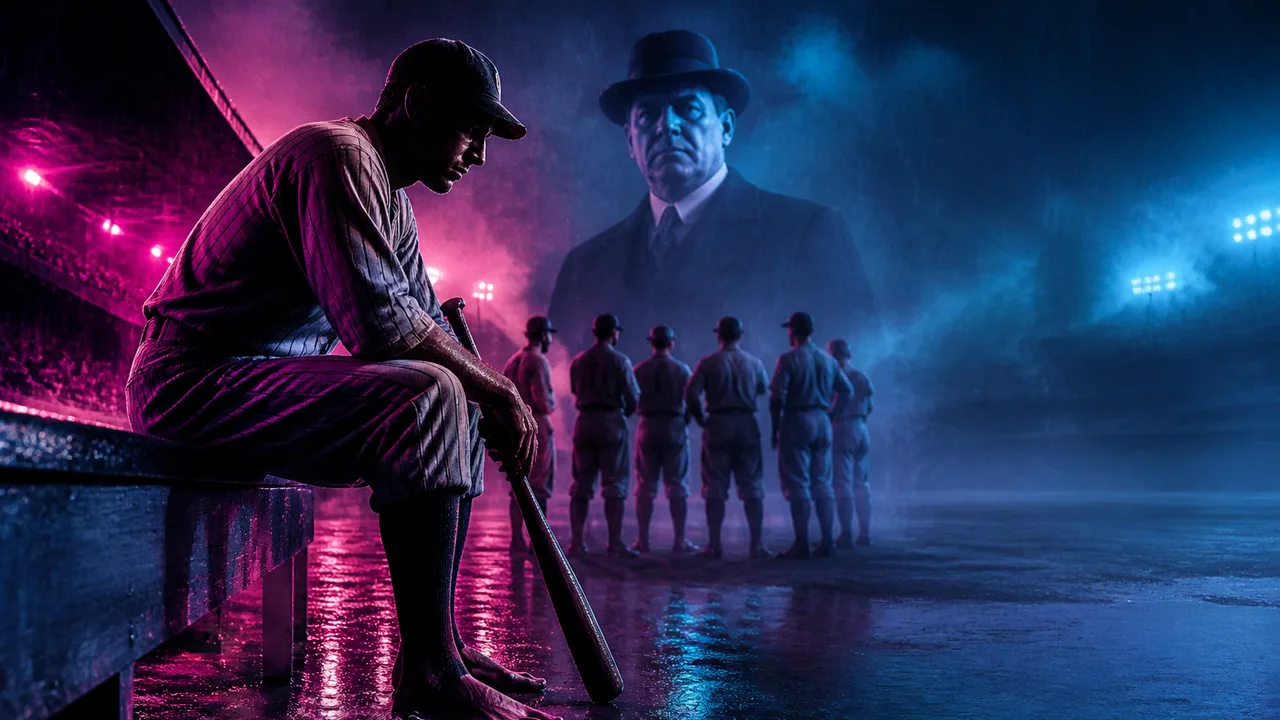
Shoeless Joe Jackson left a Chicago courtroom acquitted in 1921 and remained barred from professional baseball. For a player whose career batting average was .356, the fourth highest in major league history, that separation between a court’s verdict and a sport’s judgment became the defining fact of his life in baseball.
Jackson was one of eight Chicago White Sox players accused of conspiring with gamblers to throw the 1919 World Series. After the players were acquitted in a criminal trial, baseball’s newly appointed commissioner, Kenesaw Mountain Landis, banned them. The scandal forced a question that has outlived both the courtroom and the men who entered it: when a sport depends on public confidence that its contests are honest, how should it judge players whom a jury has not convicted?
The question has a new dimension. Major League Baseball has reinstated Jackson and the other seven banned players. Reinstatement changes their standing with the sport. It does not change the 1921 acquittals, erase Landis’s decision or settle Jackson’s individual role in the 1919 affair. Those are separate judgments, made for different purposes and at different times.
The Court and the Commissioner
The basic sequence remains striking. Eight White Sox players faced allegations that they worked with gamblers to lose the World Series. A criminal trial ended in acquittal. Landis then imposed a professional penalty that kept them out of baseball. The history of Jackson’s ban begins with that collision of authorities, rather than with any single play on the field.
A jury’s acquittal meant the prosecution had not secured a criminal conviction. It did not require baseball to continue employing the players. Landis, charged with governing a sport whose results people had to trust, treated the affair as an institutional crisis. His decision gave baseball a clear public answer: the accused players would have no place in its professional ranks.
That was the strongest case for the ban. A contest cannot ask spectators to invest in its outcome while appearing indifferent to allegations that participants arranged it in advance. Baseball’s response also raised a harder question. An institution protecting its reputation has an incentive to act decisively; an individual facing that institution has an interest in having his conduct judged on its own terms. The same sweeping action that assured the public baseball had drawn a line left eight men under one enduring label.
The criminal and professional decisions therefore answer different questions. The trial addressed whether the defendants should be convicted of crimes. Landis decided whether the players could continue in baseball. Readers may agree that he had authority to make the second decision while questioning how that authority was exercised in each player’s case. Acquittal and a ban can coexist without either judgment explaining everything about 1919.
Why Jackson is the Hardest Case
Jackson’s hitting makes him difficult to reduce to the familiar image of a player throwing a championship. His .356 career average places him among the game’s most accomplished batters; Britannica describes him as one of baseball’s great players. A man capable of that sustained performance attracts a different kind of scrutiny from one remembered only for a scandal.
The numbers also invite an inference they cannot bear alone. A strong batting performance can cast doubt on a simple account of deliberate failure at the plate. It cannot tell us everything a player knew, agreed to or did beyond his recorded hits. Jackson’s precise part in the scheme remains disputed because surviving accounts and later testimony have drawn conflicting interpretations.
That leaves room for two serious arguments. Those who regard the ban as justified can point to baseball’s obligation to protect the integrity of the competition, including against conduct that a batting average could never measure. Those who question Jackson’s treatment can point to the acquittal, his play and the cost of folding an individual into a group punishment. Neither argument needs a sentimental portrait of Jackson to stand on its own.
His talent sharpened the penalty. Baseball excluded a player whose performance ordinarily would have kept his name prominent in any account of its best hitters. The sport could still celebrate the statistical achievement while withholding the professional standing that would have allowed him to add to it. That is an unusually severe form of institutional judgment, and severity demands attention even from readers who believe the governing authority was right to act.
A Sport Defining Its Own Authority
The Black Sox affair arrived while baseball was consolidating its authority and presenting itself as a civic institution. A fixed championship threatened more than the reputation of the eight accused players. It challenged the premise that the season’s decisive games were contests at all. Landis’s ban told the public that baseball would defend that premise under its own rules, regardless of the criminal trial’s outcome.
That choice put considerable weight on the commissioner’s office. An organization can set standards of participation that differ from criminal law, particularly when the trust of spectators and competitors is at stake. It can also impose consequences that last far longer than public attention to the facts of an individual case. Baseball’s claim to govern itself carried a responsibility to distinguish protecting the game from protecting its image. The two aims may overlap, but they need not always lead to the same treatment of a player.
Jackson’s case is where that tension becomes visible. His acquittal did not oblige baseball to restore him. His ban did not establish that every allegation against him had been proved in court. The sport made a consequential decision in the space between those propositions, and generations of fans have tried to close the gap by choosing one judgment as the final word. The gap is part of the history.
There was also a cost beyond Jackson’s career. The scandal left spectators with a durable suspicion about what a team’s result could conceal. For honest players, an allegation that teammates had conspired with gamblers could place their own effort under a shadow. For baseball’s leadership, delay or indecision risked allowing that shadow to spread. None of those pressures tells us precisely what Jackson did. They explain why the response was so forceful and why its fairness still attracts scrutiny.
What Reinstatement Changes
MLB’s later reinstatement reverses the players’ exclusion from baseball’s rolls. It invites a reassessment of what an old penalty should continue to do after the people it punished are gone. It does not retroactively turn an acquittal into proof of innocence, nor does it require anyone to treat Landis’s original decision as a mistake. Reinstatement is another exercise of institutional authority, this time directed at the continuing effect of a ban rather than at the immediate crisis of a World Series scandal.
It also asks readers to keep two clocks in view. In 1921, baseball’s leadership faced a threat to confidence in the game and chose a penalty meant to be decisive. Today, the question is what purpose that penalty serves more than a century later. A person can believe the first decision protected the sport and still see reason to revisit its indefinite reach. Another can welcome reinstatement while continuing to regard the 1919 allegations as grave.
Jackson’s .356 average survives every ruling. So does the record of his acquittal, the ban and baseball’s eventual decision to lift it. The Black Sox legacy remains unsettled because no one of those judgments can do the work of all three.
More Like This

The KGB's Cyanide Newspaper Gun That Almost Worked
How a KGB poison weapon hidden in a rolled newspaper killed Ukrainian nationalist Stepan Bandera in 1957—and why one mistake unraveled the whole operation.

LIDAR Is Rewriting What We Know of Ancient Cities
Anthropologist Luke Caverns is planning the largest LIDAR scan ever done in the Amazon. What the technology finds may force a rewrite of ancient history.

Bodmin Moor's Bronze Age Village and Its Neolithic Cairn
Archaeologists confirm a Bronze Age village on Bodmin Moor—and find a 6,000-year-old cairn that may have outlasted the community that built it.
The Medici and the Borgia: Power, Banking, and Renaissance Italy
The Medici-Borgia rivalry was no simple feud. A look at how banking, papal power, marriage, and armies shaped Renaissance Italy's contested politics.

Ghost DNA Found in All Humans From Unknown Ancestors
New genetic research has detected an unidentified 'ghost' population in the DNA of every living human — a people with no name, no bones, and no recorded history.

Colossal Marble Statue Unearthed at Ancient Sardis
A 2.2-meter marble statue found at Sardis, Turkey, raises sharp questions about art, power, and identity in Persian-occupied Lydia circa 500 BC.