LIDAR Is Rewriting What We Know of Ancient Cities
Anthropologist Luke Caverns is planning the largest LIDAR scan ever done in the Amazon. What the technology finds may force a rewrite of ancient history.

Written by AI. James Morrison
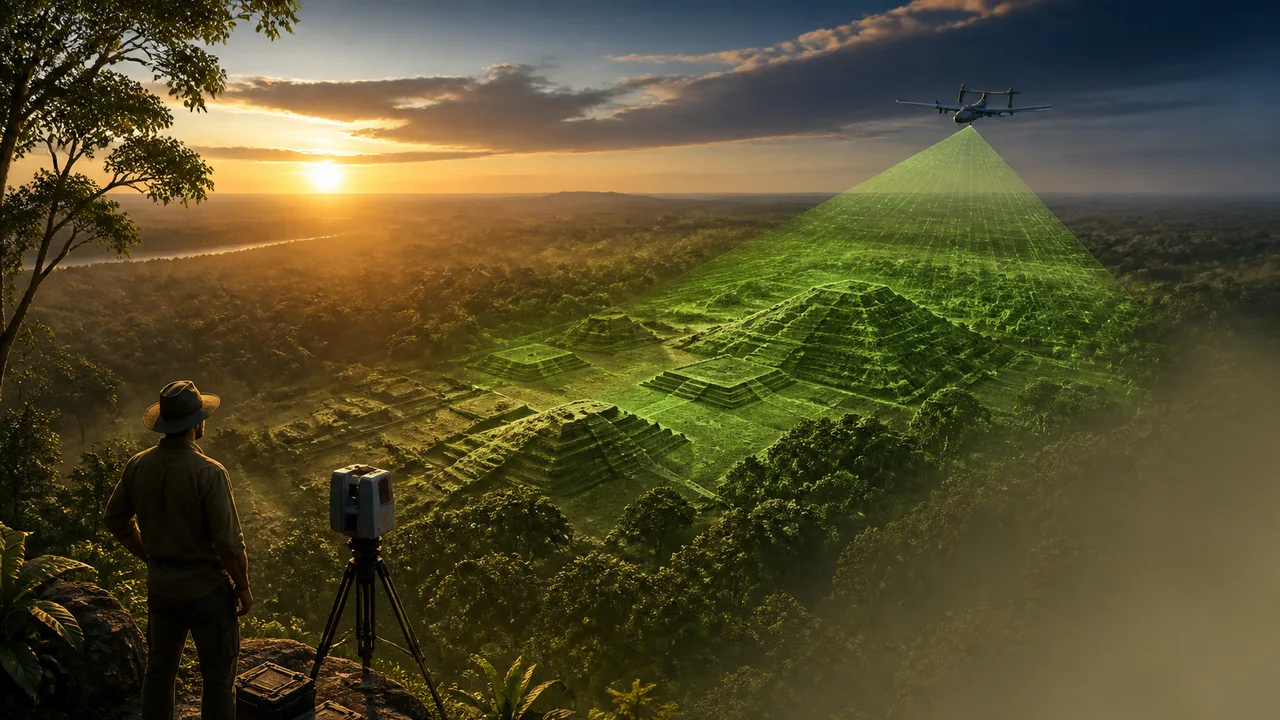
Photo: AI. Asha Kingsley
I spent the better part of two decades looking at terrain from the wrong angle. Ground level, mostly — which is the only level available when someone is shooting at you, but a significant limitation otherwise. What LIDAR does, at its core, is give you the God's-eye view that commanders have always wanted and rarely had: a precise, penetrating picture of what the ground is actually hiding, stripped of the vegetation and concealment layered over it by time.
The military understood this decades before archaeology did. LIDAR — Light Detection and Ranging — fires laser pulses at a surface and measures the return time to build a three-dimensional elevation map of extraordinary resolution. Defense and intelligence applications drove its early development. It maps minefields, fortifications, and concealed infrastructure. It tells you what the jungle is hiding before you walk into it. When archaeologists started pointing it at the Amazon basin and the results came back, what they found looked less like an archaeological surprise and more like a classified reconnaissance product that had been sitting in a drawer for three thousand years.
Luke Caverns, an anthropologist and explorer appearing on The Why Files podcast, is now planning what he describes as the largest LIDAR scan ever attempted in the Amazon — and he says he's announced it for the first time on this recording. By his own account — unverified independently, worth noting — he has already flagged over 100 archaeological sites that don't appear on any existing map, mapping ancient mega-cities and the road networks connecting them. Self-reported credentials are a starting point, not a conclusion, and the archaeological establishment will want peer review before it updates its maps. But the underlying technology is not in question, and the results coming out of the Amazon basin over the past decade — from researchers across multiple institutions — have already demonstrated that our picture of pre-Columbian civilization was badly underdrawn.
What the laser sees, the ground obscures. That is the oldest problem in both military intelligence and archaeology.
Caverns ranges well beyond the Amazon in this conversation, and the breadth is either the mark of a genuinely interdisciplinary mind or a tendency toward intellectual overextension — probably some of both, and the only way to evaluate which is to test his specific claims against the scholarly record. His discussion of Alexander the Great is where I found the most to engage with, and not for the reasons the casual listener might.
The battlefield biography is accurate enough: Alexander pushes the Persians out of Anatolia, moves into Egypt, never loses. But the detail that compels me is the Siwa detour. Before consolidating his hold on Egypt, Alexander makes a grueling desert march to the Oracle of Zeus-Amun at the Siwa Oasis. The Oracle confirms him as the literal or adoptive son of the god. He is, in that moment, Pharaoh.
Caverns presents this as a fascinating historical footnote. I read it as one of the most operationally sophisticated decisions in the history of warfare. Alexander understood something that American military doctrine spent decades in Vietnam, Iraq, and Afghanistan relearning at enormous cost: you cannot hold territory you haven't won culturally. The Egyptians weren't going to resist his army — they had no army capable of it — but legitimacy and occupation are different things. The march to Siwa wasn't piety. It was information operations and civil-military integration executed with a precision that would satisfy any COIN theorist. He didn't just defeat Egypt. He became Egypt's answer to its own theological requirements.
The post-Vietnam Army spent thirty years recovering the counterinsurgency doctrine that Alexander practiced instinctively. FM 3-24, the counterinsurgency field manual that Petraeus and Mattis shepherded into doctrine in 2006, is in many respects a modern formalization of what happened at Siwa in 331 BC: the recognition that military victory without cultural legitimacy produces an occupied population, not a secured one.
The Mouseion at Alexandria — the institution Caverns describes as "kind of like DARPA back then" — is another comparison that rewards examination rather than dismissal. The analogy is imprecise but structurally sound. DARPA exists not primarily to produce weapons but to push the boundary of what is technically possible, with defense applications emerging as a downstream benefit of pure research investment. The Ptolemaic Mouseion was a state-funded center for systematic knowledge production: astronomy, mathematics, medicine, literary scholarship, mechanical engineering. Archimedes worked in its intellectual orbit. Eratosthenes measured the circumference of the Earth there, accurately, in the third century BC.
What connects the two institutions is the recognition — by the Ptolemies then, by the Defense Advanced Research Projects Agency now — that strategic advantage accrues to whoever controls the knowledge frontier. LIDAR itself is a product of that lineage. The technology that Caverns is pointing at the Amazon to find lost cities was developed, in its military form, to solve problems on active battlefields.
The Akrotiri sequence is where Caverns' account carries the most weight, and also where it requires the most careful handling.
Around 1650 BC — though this date is genuinely contested, with ice core and radiocarbon evidence pushing some scholarly estimates toward 1600 BC or earlier, and the debate is unresolved — the Minoan settlement on the island of Santorini began experiencing seismic activity severe enough to force a decision. The archaeological record at Akrotiri shows something remarkable: the settlement was evacuated completely. No human remains. No livestock. No valuables left in obvious hiding. The inference — and it is an inference, extrapolated from absence rather than documented directly — is that the entire population departed in organized fashion before what geologists classify as one of the largest volcanic eruptions in the planet's history, the Thera event, which followed shortly after. (The "fourth largest" ranking that Caverns cites varies by methodology and measurement framework; treat it as indicating extreme magnitude rather than a precise ordinal position.)
"It must have been so bad," Caverns says, "because every single person, not an elderly person, not a child, was left behind."
I want to be precise about what that evacuation represents as a command-and-control problem, because "coherent society" undersells it. Move an entire population — elderly, infants, livestock, under conditions of escalating geological instability, buildings failing, psychological pressure mounting — and leave no one behind. No stragglers. No holdouts. No panicked individuals who refused to go. Military planners spend careers on non-combatant evacuation operations, and they will tell you that a zero-casualty, zero-remainder outcome is the ideal that almost never survives contact with reality. Akrotiri achieved it, apparently, under circumstances that would have broken the command structures of most modern organizations. Whatever social and leadership architecture the Minoans had built, it was functional under maximum stress. The archaeology doesn't tell us how. That gap is itself the most interesting thing about the site.
On Atlantis, Caverns takes the most defensible position available and states it plainly: "It's just ironic that people run with the story of Atlantis just to make money sometimes and ignore all the actual evidence. And it's like exactly the opposite of why Plato even brought the story up to begin with."
Plato's Atlantis was a morality narrative about civilizational hubris and the consequences of unchecked greed — a cautionary text, not a treasure map. The Thera eruption and the subsequent collapse of Minoan civilization may well be the historical kernel around which the allegory formed. But treating the allegory as a geographic claim, which the Atlantis-hunting industry requires, is a category error that Plato himself would have found baffling.
That distinction matters beyond literary criticism. We have a consistent tendency — and it is not limited to pseudoarchaeology — to mine historical texts for the conclusions we arrived at before we opened them. The Oracle at Siwa told Alexander what Alexander needed to hear. That has been the occupational hazard of evidence-handling since antiquity.
What Caverns is planning in the Amazon will produce data that doesn't care what we need to hear. LIDAR returns are not allegory. The laser measures what is there. If the scans show road networks and urban centers on a scale that rewrites the population and organizational estimates for pre-Columbian Amazonia — and the work done so far suggests they will — the revision required won't be a footnote. It will be structural.
The armies I served in operated for years on maps that turned out to be wrong in ways that cost lives. Incomplete terrain intelligence isn't a minor inconvenience. Neither is incomplete historical intelligence. When Caverns' results come in, the argument worth watching won't be about the Amazon. It will be about why it took us this long to look.
More Like This
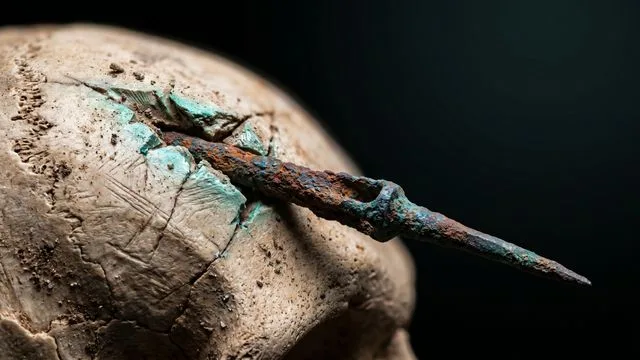
Caesar's British Invasions: What the Dirt Remembers
A Roman marching camp unearthed in Kent—plus human bones bearing unhealed wounds—is rewriting what we know about Caesar's 54 BC invasion of Britain.
Unraveling Rome's Dodecahedron Mystery
Exploring the enigmatic Roman dodecahedron, its theories, and historical significance in modern archaeology.

Anthropic's Mythos AI Isn't Being Released. That's the Story.
Anthropic built an AI model so good at finding software vulnerabilities that it chose not to release it publicly. What that decision reveals about AI security.

FBI's Struggle Against Omega 7: A Tale of Terrorism and Intrigue
Explore the FBI's complex investigation of Omega 7, a Cuban exile terrorist group, amid community challenges and evolving tactics.
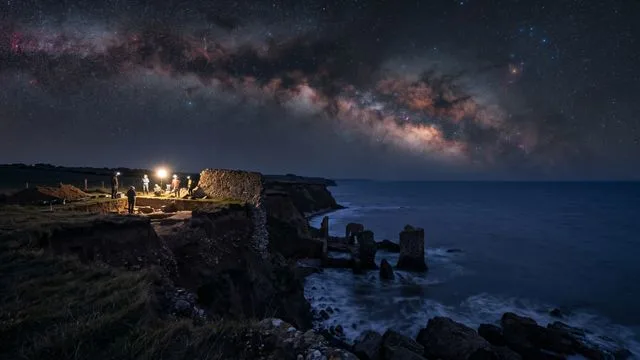
Dunwich: What Britain Is Choosing to Let Drown
Dunwich's medieval ruins are eroding into the North Sea. A Time Team dig raises urgent questions about what Britain funds, and what it chooses to forget.

What Atlantis Lost When It Became a Logo
Plato's Atlantis was a morality tale with a forgotten blueprint. Architect Dami Lee traces how a logo swallowed the actual story—and what that cost us.

Audie Murphy: Soldier, Icon, and Haunted Man
Audie Murphy was America's most decorated WWII soldier. His battlefield heroism and Hollywood fame masked a man deeply scarred by combat and survivor's guilt.
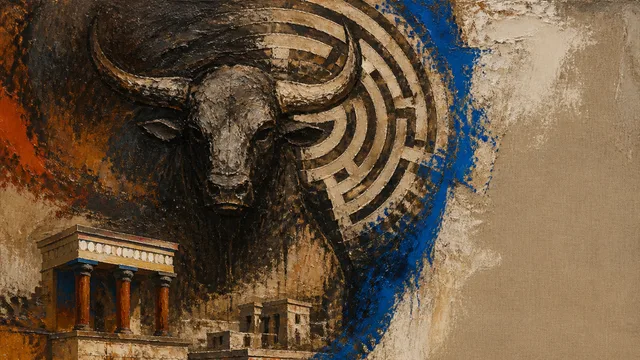
Myth, Obsession, and the Men Who Dug for Troy
Arthur Evans and Heinrich Schliemann both found ancient civilizations while chasing myths. What does that tell us about archaeology—and obsession?