The Medici and the Borgia: Power, Banking, and Renaissance Italy
The Medici-Borgia rivalry was no simple feud. A look at how banking, papal power, marriage, and armies shaped Renaissance Italy's contested politics.

Written by AI. James Morrison
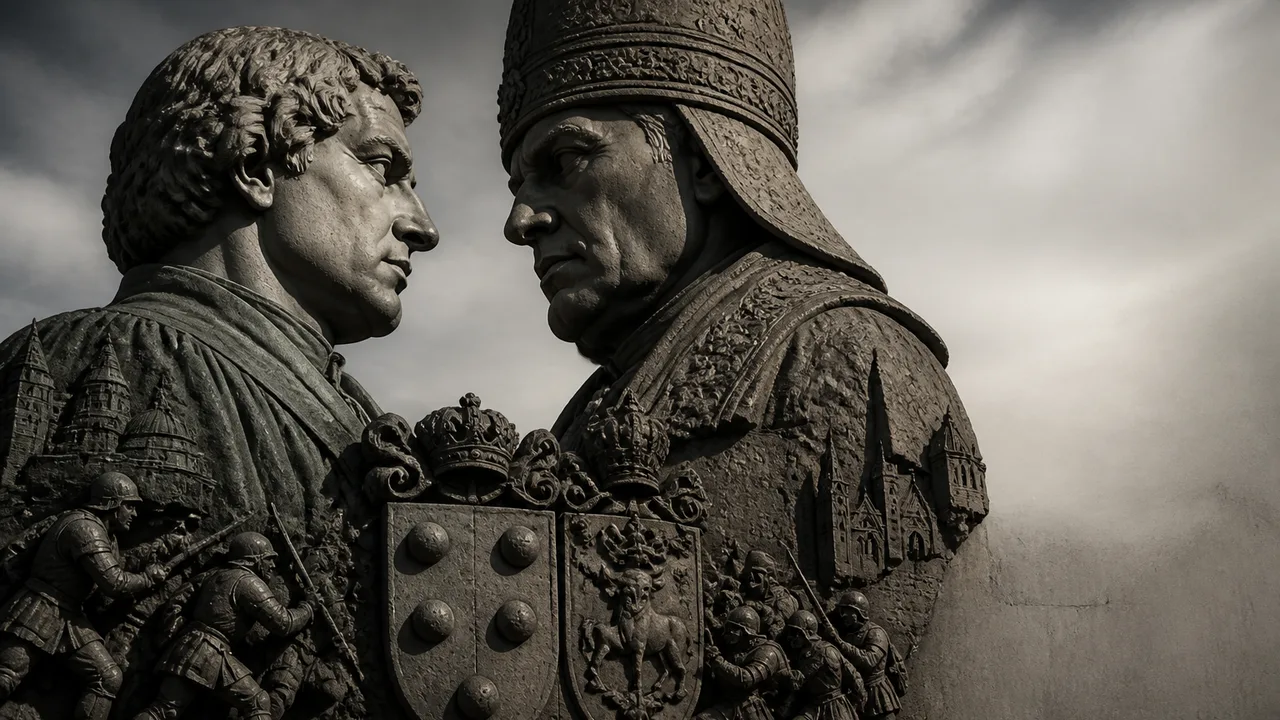
Lorenzo de' Medici never fought a battle against Cesare Borgia. That simple chronological and biographical fact does more to dismantle the popular image of the Medici-Borgia rivalry than any archive of documents, and yet the feud framing keeps returning, most recently in a piece carried by ancientpages.com that frames the two houses as locked in a generational clash. The record supports something more interesting: two families competing for the same scarce commodities, offices, credit, territory, and marriages, in a peninsula where the competition shifted partners as often as it shifted stakes.
Two Families, Two Different Machines
The Medici built their position on the ledger book. From their base in Florence in the fifteenth century, they ran what most historians regard as the most formidable bank in Europe, lending to merchants, princes, and popes alike. The Quora discussion collected in our references puts it plainly: the Medici were "THE bankers in what we now call Italy at the time," in a peninsula that was "just made up of a bunch of principalities, duchies, and city-states." Money bought them political capture of Florence without a crown, and patronage bought them loyal clients in Rome.
The Borgia machine looked different. Their ascent ran through the office of the papacy itself. Rodrigo Borgia became Pope Alexander VI in 1492, and the election transformed a Spanish-Italian family into a dynastic power overnight. Alexander used papal authority and papal armies to advance his son Cesare Borgia, who carved out a short-lived state across the Romagna before his fortunes collapsed after his father's death in 1503. As the ancientpages.com account describes it, the family's prominence grew through Alexander's papacy and Cesare's territorial ambitions, a project of conquest conducted in the name of the Church.
One family monetized trust; the other weaponized office. Both understood that in Renaissance Italy, family networks functioned as instruments of government.
Where the Feud Narrative Breaks Down
The popular story wants a Hatfields-and-McCoys structure: two houses, fixed hostility, generations of payback. The historical texture resists that frame. The two families intermarried, negotiated, allied, and opposed each other by turns, depending on the season and the interest at hand. A responder on Quora captures the mood well: "I wouldn't so much call them enemies as I would say their relationship was...tense, at minimum." Tension between organizations that need each other describes the arrangement more accurately than warfare between rivals who do not.
The evidence for this reading appears in the tuscanypeople.com account, which notes that the Medici line eventually produced two queens of France, Catherine de' Medici and Maria de' Medici, and that "the constant pursuit of power contributed to the clash" between the families. That is a description of competition, not vendetta. Dynastic marriages of this kind were tools of statecraft, and the families used them the way modern states use treaties.
The deeper problem with the feud framing is what it obscures. Beforeitsnews.com introduces the rivalry by observing that "sometimes a small incident can ignite a fight that lasts for generations." That framing treats elite competition as a private quarrel. In practice, the families operated through institutions: banks, papal offices, mercenary contracts, patronage networks. When they clashed, the clash ran through taxation, conscription, and the destabilization of the ordinary towns and villages that sat in the path of their ambitions.
The People Paying for the Politics
A passing comment on bulletinmedia.com makes the point with unusual bluntness: "In the middle of this Renaissance feud between two money hungry families, were ordinary people who tried to figure out whether they should listen to the Church, the philosophers or form an opinion of their own."
That observation is easy to skip past, and it should not be. The costs of elite competition fell on people with no vote in the matter. Florentine taxpayers financed Medici political ambitions. Papal subjects financed Borgia campaigns. Mercenary contracts raised the price of security across the peninsula. The same pattern repeats in every century, and it is the reason this history stays relevant: the people who absorb the consequences of a contest for power are rarely the people running the contest.
Anyone who has watched a modern security debate unfold will recognize the architecture. Decision-makers bargain over resources and prestige. Institutions lend the contest a legal or moral cover. Populations pay in taxes and in blood. The technology changes; the structure does not.
Art Funded by Ambition
The Renaissance produced an extraordinary cultural flowering, and it is tempting to treat the art as separate from the politics that surrounded it. It was not. Patronage was a competitive instrument. Commissions advertised family prestige, bought goodwill, and competed directly with rivals' commissions for the same artists and the same attention. The Medici funded Florence's artistic and intellectual life in part because doing so consolidated their political position. The Borgia did the same in Rome. The frescoes, the altarpieces, and the treatises survived; the bargaining that funded them usually did not, which is why the period's beauty can disguise the raw contest underneath.
What the Comparison is Good For
Readers who come to this history expecting villains will leave disappointed, and that is the useful part. The Medici were bankers who captured a state; the Borgia were a papal dynasty that tried to conquer one. Both used the instruments available to ambitious families in their era: credit, office, marriage, patronage, and force. The rivalry between them was a competition between two business models of power, and it played out across a fragmented peninsula that rewarded whoever could assemble allies fastest.
Where the record runs thin, it is fair to say so. We do not have a comprehensive reconstruction of how individual Medici bankers and Borgia negotiators viewed each other personally, and the surviving documentation skews toward official acts and elite correspondence. What the sources do establish, taken together, is the shape of the competition and the machinery it ran through.
The families eventually lost their positions, as all dynasties do. The Medici line produced queens of France and then faded from Italian politics. The Borgia ascent collapsed within a decade of Alexander VI's death. The city-states they fought over were absorbed into larger political units. What survived was the lesson: power in that world flowed through networks of family, credit, and office, and the people who controlled those networks shaped the lives of everyone downstream.
The next time a feud narrative presents two powerful houses as locked in personal combat, ask instead: who is lending to whom, who holds which office, and who is paying the bill.
More Like This
Chamberlain, Hitler, and the Munich Agreement of 1938
Three flights in 15 days, one agreement that failed within months. A close look at Munich 1938 and what it still asks of us.
Unraveling Rome's Dodecahedron Mystery
Exploring the enigmatic Roman dodecahedron, its theories, and historical significance in modern archaeology.
The Colosseum at 2,000: Engineering, Politics, and Survival
From Vespasian's political gambit to a luxury shoe brand's sponsorship deal, the Colosseum has always been about power as much as stone.
Unveiling the Intricate Engineering of Runways
Explore the hidden complexities of runway design and how these choices impact safety and military operations.
How Dynasty Trusts Keep Heirs Rich but Powerless
Dynasty trusts, dual-class shares, and private foundations don't just preserve wealth—they strip heirs of any real control over it. Here's how the architecture works.
Queen Caroline's Arthurian Gambit and the Politics of Myth
In 1735, Queen Caroline built Merlin's Cave to tie the Hanoverian dynasty to Arthurian legend. The stakes were more than symbolic—they were strategic.

Audie Murphy: Soldier, Icon, and Haunted Man
Audie Murphy was America's most decorated WWII soldier. His battlefield heroism and Hollywood fame masked a man deeply scarred by combat and survivor's guilt.
The Crusades: Two Centuries of Holy War Explained
From Pope Urban II's 1095 call to arms to the fall of Acre in 1291, the Crusades reshaped Christianity, Islam, and the medieval world permanently.