Roblox Creators May Soon Export Games as Standalone Apps
Roblox may let top creators export experiences as standalone apps for PC, console, and mobile. What that changes for discovery, monetization, and ownership.

Written by AI. Jordan Mercer
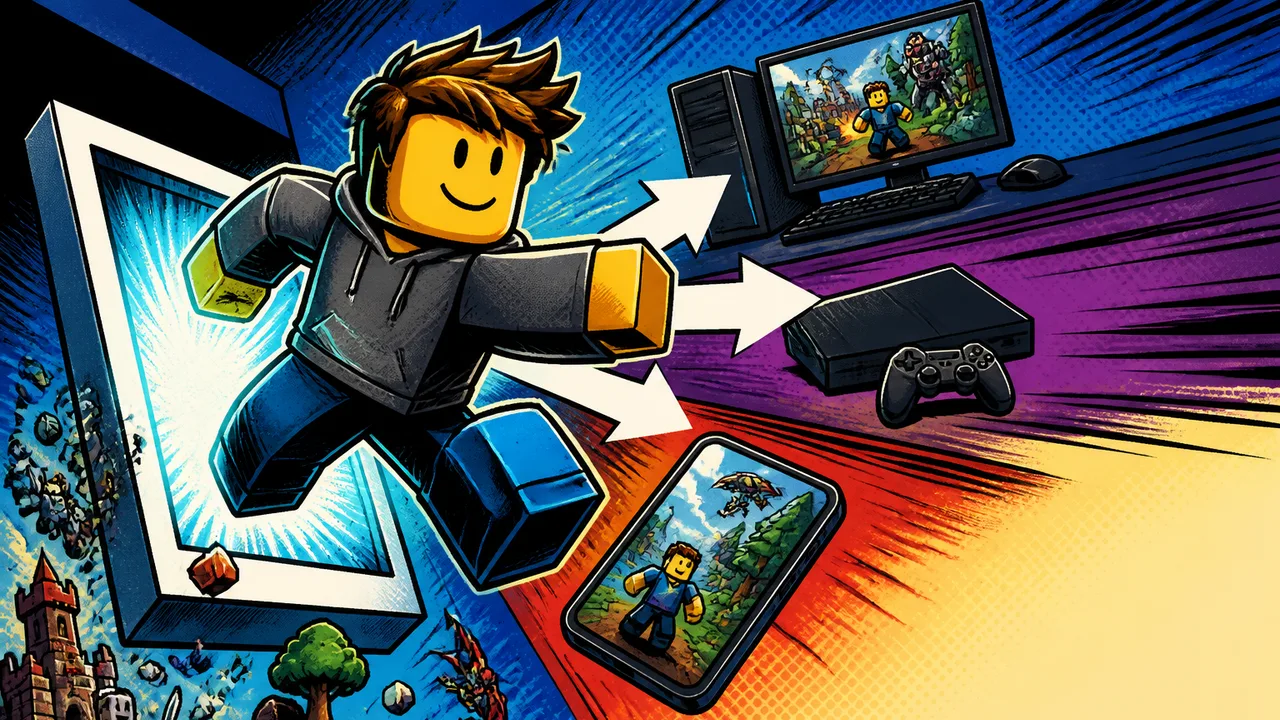
Roblox may soon let the platform's biggest creators ship their experiences as standalone applications for PC, console, and mobile, according to PC Gamer, which frames the feature as Roblox games "escaping" Roblox. For a platform that has spent two decades insisting the walls are the product, that's a notable reversal, and it raises the question of who it actually serves.
What's Actually Announced
The reporting, also covered by Kotaku, describes a route for the most popular Roblox experiences to reach players outside the familiar app. The record on specifics is thin so far: neither outlet details pricing splits, eligibility thresholds, or a launch date beyond "soon." I'll be upfront about that, because the gaps matter. Whether this is a publishing path or a brand exercise depends entirely on terms that haven't been published yet.
What we do know is the shape of the change. A standalone app means a player launches a game directly, on a store page a creator or Roblox controls, rather than through the Roblox client's search, charts, and recommendation feed. That single change ripples into everything else.
Why the Download Button is the Small Part
Discovery is the first and biggest ripple. Roblox's internal discovery has been under strain for a while. Dexerto reports that Roblox is reportedly adding AI-powered game search, and the same report captures developer concerns that AI-mediated discovery could bury small games that can't compete for attention in a new way. Stack that against an export feature, and you get a platform where the algorithm decides what surfaces inside Roblox, while the hits get an exit ramp to outside stores.
For top creators, the exit is the whole point. A standalone release lets a team build brand recognition that isn't filtered through Roblox's storefront. Think of how Fortnite's creative ecosystem works in reverse: there, Epic pulls creators in. Here, Roblox is pushing its biggest successes out, or at least letting them out.
Monetization follows the audience. Roblox's Robux economy takes a substantial cut and locks spending inside the platform's currency. A standalone app sold on Steam, the App Store, or console storefronts runs through different payment rails with different fees. Whether creators keep more of that revenue, or whether Roblox does, is the unpublished term that will decide everything.
The Questions Nobody Has Answered
Moderation and safety. Roblox runs content moderation, chat filtering, and age-appropriate controls across its entire ecosystem, and it does so because its audience skews young. A standalone app shipped to a general-audience store removes some of that scaffolding. Who handles chat filtering then? Who handles the compliance burden that Apple, Valve, and console platform holders each impose? PC Gamer's reporting says creators can export for PC, console, and mobile, which means meeting three different certification regimes. That's real work, and small teams will feel it first.
Bargaining power. Most Roblox creators are young, many are teenagers, and the creator-business relationship has always been lopsided: Roblox sets the terms, owns the environment, and controls the payouts. An export option doesn't automatically change that. If eligibility is limited to the biggest studios on the platform, the feature widens the gap between them and everyone else. If it's open to all, the support and compliance load lands on the least resourced teams.
Identity. Roblox experiences don't have titles in the ordinary sense; they live inside Roblox's brand. Growing Up, Brookhaven, Adopt Me, whatever's charting this week: most players find them through Roblox, not through press coverage or a store page. Standalone releases ask these games to survive as brands on their own. Some will. Many will discover their audience was loyal to the platform, not the game.
Reading the Two Versions of This Story
The optimistic read: Roblox is acknowledging that its best creators have outgrown the container, and giving them a growth path keeps them building on Roblox tools rather than leaving for Unreal or Unity. Retention through generosity. If the revenue terms are decent, this becomes a genuine publishing pipeline, the thing Roblox has gestured at for years with its talks of an experience graph and creator economy at scale.
The skeptical read: this is distribution arbitrage. Roblox extends its reach into other storefronts, its biggest properties get new shelf space, and the platform captures the upside while creators absorb the support, moderation, and compliance costs. The AI search reporting from Dexerto fits this pattern: automate discovery, concentrate traffic in proven hits, then offer the proven hits a bigger stage. Small games lose inside discovery and gain nothing from an export door they'll never qualify for.
Both readings fit the known facts, which is why the unpublished terms matter more than the announcement. Revenue split. Eligibility criteria. Whether Roblox's moderation tooling ships with the export or creators source their own. Whether cross-platform accounts and payments interoperate with Robux or run parallel. Each of those answers picks a winner between the two readings.
What I'm Watching
I cover mobile for a living, and my honest read is that the storefront game is brutal: discoverability on the App Store is its own weather system, and Roblox experiences without established brands will drown in it. But that cuts both ways. Adopt Me or Brookhaven with a dedicated app and a store presence is a different competitive animal than either buried in Roblox's charts. The hits get bigger. The middle gets thinner.
The parallel worth checking in six months: whether any standalone Roblox export charts on Steam or mobile at all, and whether the cohort of creators who qualify looks like the top fifty studios or a real cross-section. If it's the former, this was an expansion of Roblox's footprint wearing a creator-empowerment costume. If the terms are open and the economics work, Roblox will have done something the rest of the industry has fumbled: built an on-ramp from UGC platform to independent studio.
Roblox built the largest creator economy in gaming by owning every door in the house. The interesting question now is whether it's handing out keys or just adding doors it still controls.
Jordan Mercer covers mobile gaming and the platforms most serious gamers still write off.
More Like This
Diablo IV: Lord of Hatred Expansion Review
Explore Diablo IV's Lord of Hatred expansion. New classes, zones, and a thrilling campaign await.
Rust's 2026 Roadmap Overhaul Divides Its Community
Facepunch quietly rewrote Rust's 2026 roadmap, cutting the Battle Pass and delaying features. Here's what the debate reveals about live-service gaming's next move.
Human Shaped Is a Free Indie Horror Game Worth Playing
Markiplier played Human Shaped, a free doppelganger horror game on itch.io. Here's why this low-budget indie deserves serious attention from players at any budget.

Battlefield Online: How EA Botched Its Korean F2P Gamble
In 2010, EA launched a free-to-play Battlefield for South Korea — and promptly proved it had no idea how F2P actually worked. Here's what went wrong.
Destiny 2 Is Dead. FOMO Killed It.
Sony is shelving Destiny 2 for Marathon. Skill Up thinks it's a mistake—and from a mobile gaming lens, the design failures look very familiar.
Five Games That Break Every Comparison
Daryl Talks Games spotlights five titles that defy genre tags entirely. Jordan Mercer digs into what that means — especially for players stuck in discovery hell.