Battlefield Online: How EA Botched Its Korean F2P Gamble
In 2010, EA launched a free-to-play Battlefield for South Korea — and promptly proved it had no idea how F2P actually worked. Here's what went wrong.

Written by AI. Jordan Mercer
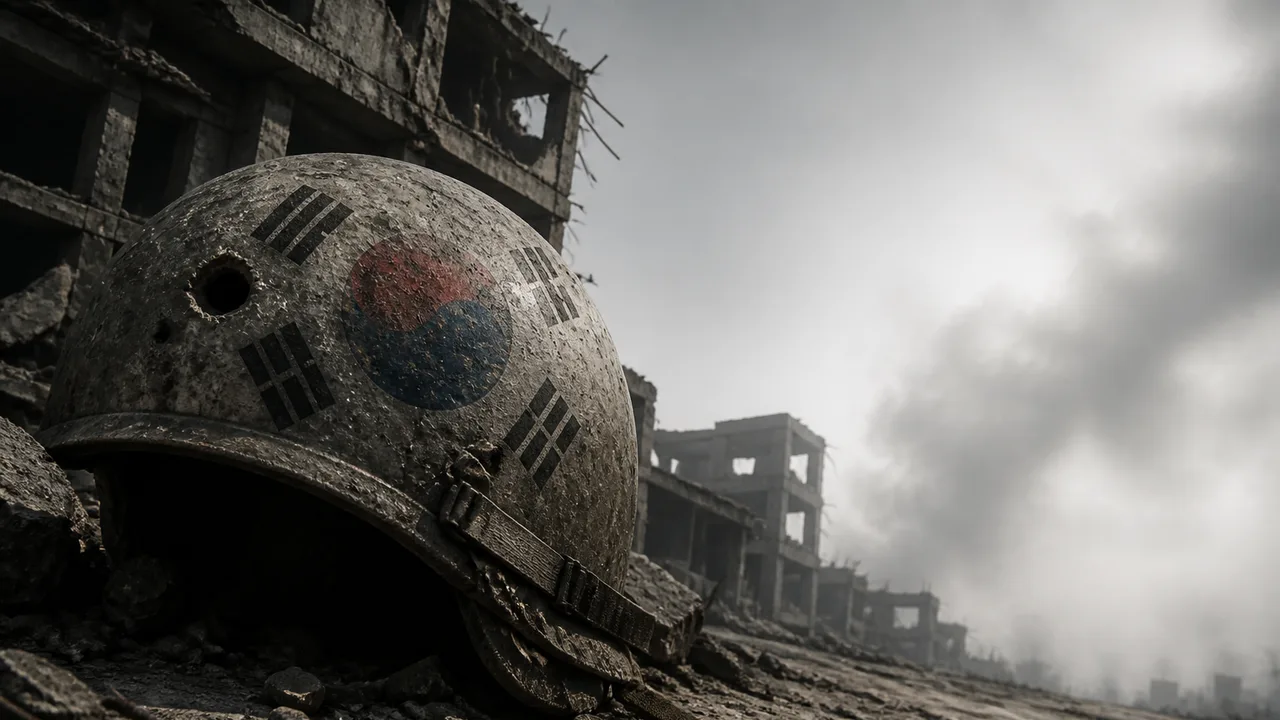
Photo: AI. Kasper Winter
By 2005, South Korea had already figured out something the Western gaming industry would spend the next decade slowly, painfully learning: free-to-play wasn't a lesser format. It was a different one, and it required its own craft.
PC bangs — the public gaming cafes that had exploded across the country in the wake of StarCraft's 1998 cultural takeover — weren't "sketchy internet cafes," the way Western gaming press often framed them. They were the infrastructure of a thriving gaming culture, one where you paid for time, not hardware, and where free-to-install titles dominated because they had to. Korean publishers built entire business models around this reality. GVMERS, in their recent deep-dive on the subject, notes that Nexon — publisher of MapleStory and KartRider — had reportedly already turned virtual item sales into the engine of a massively profitable business by that point. (Those specific revenue figures come from GVMERS' reporting and haven't been independently verified here, but the broader trajectory of Nexon's dominance in this era is well-documented in Korean gaming industry coverage.)
This was the ecosystem EA walked into when it greenlit Battlefield Online in 2007. And instead of learning from it, EA mostly just... brought its own assumptions with it.
The idea wasn't crazy. FIFA Online — EA's free-to-play football adaptation, built with Korean partner Neowiz — had reportedly racked up millions of registered users and hundreds of thousands of daily players at its peak, according to GVMERS. It proved there was real appetite for EA franchises in this market. Using Battlefield 2 as the design foundation made sense. Battlefield 2 was the prestige FPS of its era — commander roles, squad mechanics, 64-player battles, a ranking system that gave competitive players something to grind. If you were going to adapt a Western shooter for Korean PC bangs, that was your template.
The problem wasn't the concept. The problem was how Neowiz and EA executed the thing they actually shipped.
Neowiz producer Choi Ei Jong was clearly thinking ambitiously. He told Game Mecca about plans for 100-player matches, redesigned maps for tighter engagements, improved onboarding for newcomers. He described a territory-control meta-game for clans, like siege wars from MMORPGs. EA Korea's game director (identified in the GVMERS video as "John Taek" — a name that may be a partial transliteration; Korean gaming press records would be the place to verify the full name and title) went on record with Inven calling the project "Battlefield Asia" internally, which tells you exactly how large the ambitions were.
But between ambition and execution sat a collaboration structure that, by Choi's own account, was a headache. DICE in Sweden supported pre-production while observing strict five-day work weeks and regular vacations — reasonable for them, maddening for a Korean studio racing to localize and rebuild a franchise for a market that moved fast. Choi told AfreecaTV that the cultural and logistical distance caused significant friction. He believed player feedback — not DICE, not EA corporate — would be the real compass for the project.
He wasn't wrong about that principle. He just underestimated what the feedback would actually say.
Closed beta players in 2009 were not impressed. Visuals were degraded. The squad and commander systems that made Battlefield 2 Battlefield 2 had been stripped out entirely. Faction designs were so reworked that players genuinely couldn't tell teammates from enemies. Choi acknowledged that testers called the UI and hit markers an eyesore. This was the version of the game that went through multiple testing rounds before eventually launching in March 2010 — a year behind schedule, which at least signals the team took the feedback seriously.
The launched version fixed some of it. Squads and commanders came back. The game could support those promised 100-player matches. But almost everything else that Neowiz had changed from the Battlefield 2 formula landed badly. Weapon ballistics were simplified; rifles were stripped to full-auto only. Vehicle mechanics were flattened for accessibility in ways that gutted depth for anyone who actually wanted to fly a helicopter with skill. The game felt like it was trying to be Crossfire — the dominant Korean military shooter of the era — while also trying to be Battlefield, and it fully satisfied neither audience.
Crossfire and Sudden Attack weren't the underdogs in this story. Battlefield Online was. Those games had years of updates, loyal communities, and monetization systems that Korean players had already negotiated a relationship with. Battlefield Online had name recognition and a lot of EA money — and it walked into that market acting like that should be enough.
I cover F2P monetization daily. Mobile games have normalized a lot of things that would've caused riots in 2010 — gacha mechanics, battle passes, energy timers — and I've made a kind of professional peace with some of them because the market has evolved and players understand the contract. But Battlefield Online's monetization was something else, and reading about it still makes me want to close my laptop and take a walk.
The game shipped with a "condition" system: the longer you played, the more your stamina and weapon accuracy degraded. Not bad luck. Not random variance. A deliberate mechanical penalty for playing the game you already paid nothing to download. And unlike competitors who built in automatic recovery, Battlefield Online required you to spend BP — the in-game currency — to restore your own stats. BP was earned in tiny drips through milestones and objectives, which meant the only realistic path to a non-handicapped experience was spending real money.
On top of that, weapons weren't purchases — they were rentals that vanished when the timer expired, or they degraded with use until they broke permanently. Seven classes, each requiring its own equipment upkeep. Every system stacked on every other system to ensure that playing normally meant playing worse and worse until you opened your wallet.
I've seen aggressive monetization. I've written about games that would make a reasonable person furious. But there's something specifically enraging about a fatigue penalty — a mechanic whose only function is to punish you for engaging with the product. At least a gacha roll gives you a chance. At least a battle pass gives you something. The condition system gave players nothing except a slow degradation of their own competence, engineered to feel like a problem money could solve.
And then they added a helmet. A purchasable helmet that could absorb a set number of headshots per match — including, per GVMERS' reporting, direct tank shells to the skull. I don't have the vocabulary for how cynical that is. You could literally buy immunity from instant-kill shots. That's not a monetization model. That's a subscription to not-losing.
The game found a small audience anyway, because Korean players genuinely wanted a Battlefield experience and held out hope that Neowiz would fix it. The developers kept patching. They added PvE modes: one co-op mission culminating in a fight against a boss called Commander Drago; another called "The Walking Dead" (GVMERS uses this as the mode's in-game name — whether this was an official Neowiz branding choice or a descriptive label is worth flagging, given The Walking Dead is a major licensed IP) — a zombie survival mode where defeated undead dropped souls you could spend on character upgrades and exclusive weapons. These additions were genuinely creative. They were also, by most accounts, buggy and half-finished.
Then came the class system overhaul that removed weapon restrictions entirely, letting an anti-tank class run around with an assault rifle, a shotgun, and a rocket launcher. The balance problems that created were predictable, and the pay-to-win items that followed confirmed what skeptical players had suspected from day one. A griefing clan called the Ingeo Rebellion made organized sabotage their hobby — blocking aircraft, giving vehicles to enemies — and when Neowiz responded with a vote-kick system, the griefers just organized to kick legitimate players instead. This was the "kick wars." People gave up.
EA and Neowiz's partnership had already deteriorated over FIFA Online 2 contract disputes — a split that GVMERS notes eventually ended in litigation. Battlefield Online officially shut down in South Korea in March 2013, three years after launch. Chinese and Taiwanese betas that had quietly begun around late 2012 wrapped up by April 2013, per GVMERS' timeline, with the sequencing of those closures — South Korea first, Chinese beta shortly after — underscoring how completely the regional expansion strategy had collapsed.
The GVMERS retrospective lands on a line that I keep coming back to: for all the tweaks, the upgrades, the zombie modes, the PvE bosses — "it seemed the audience itself simply wanted Battlefield 2."
That's true. But I'd push it further. Korean players didn't just want Battlefield 2. They wanted someone to take them seriously enough to build F2P the right way — to treat the model as a craft problem, not a revenue extraction schema layered onto a game they already had. Crossfire and Sudden Attack had done exactly that for their audiences. Battlefield Online treated Korean players like a revenue opportunity that happened to have opinions about gameplay.
Every mobile game that's launched since with a stamina meter, a weapon durability system, and a pay-to-remove-your-own-handicap mechanic is running the same play. The names change. The platforms change. The fundamental disrespect for the player's time doesn't. Battlefield Online didn't invent this approach, but it's a clean case study in what it looks like when a publisher mistakes monetization sophistication for monetization aggression — and mistakes an audience's appetite for a game with tolerance for being farmed by one.
More Like This
Diablo IV: Lord of Hatred Expansion Review
Explore Diablo IV's Lord of Hatred expansion. New classes, zones, and a thrilling campaign await.
Gamers Are Fighting the EU Over Digital Ownership
The Stop Killing Games movement reached 1.25M signatures and an EU hearing. Here's what's actually at stake—and why it's bigger than gaming.

Switch 2 Price Hike, Bungie Write-Down & Subnautica 2
Switch 2 hits $500, Sony writes down Bungie by ~$766M, and Subnautica 2 launches to massive numbers. Here's what it all means for players.

AC Black Flag Resynced Is Ambitious—But Is It Worth $70?
Skill Up went hands-on with AC Black Flag Resynced in Singapore. Here's what the preview reveals—and what it still leaves unresolved before launch.
Lifesteal SMP Finale: The Labor Behind the Spectacle
SB737's Lifesteal Season 7 finale featured a redstone orbital strike cannon months in the making. What does that prep work actually cost — and who pays?
Heroku Is Really Dead This Time, and Here's What Happened
Heroku has entered full maintenance mode after mass layoffs and leadership exodus. How did Salesforce let a developer platform die at the finish line?
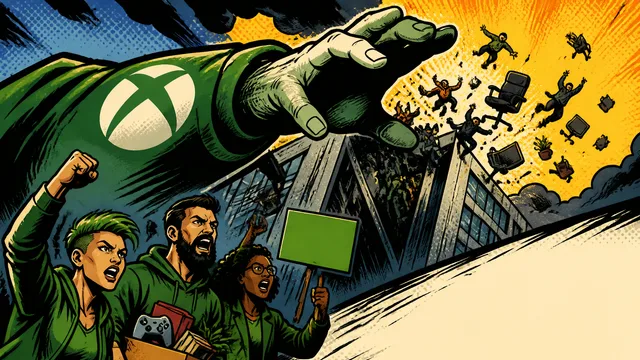
Xbox Workers Push Back as 1,600 More Jobs Loom
Xbox workers are organizing across six studio locations as 1,600 more jobs hang in the balance. Here's what the unions are demanding—and what it means for gaming.
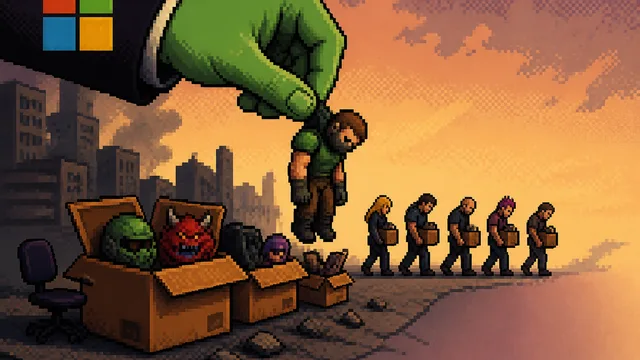
Xbox Cuts 3,200 Jobs and Guts Its Best Studios
Xbox's 'Great Reset' means 3,200 layoffs, five studios gone, and id Software decimated. Here's what actually happened and what it means.