Puebla's 2,500-Year-Old Solar Observatory Under Study
A 2,500-year-old complex in Puebla may have tracked the Sun and seasonal dates. Its layout raises questions about calendar keeping, dating and daily life.

Written by AI. David Oyelaran
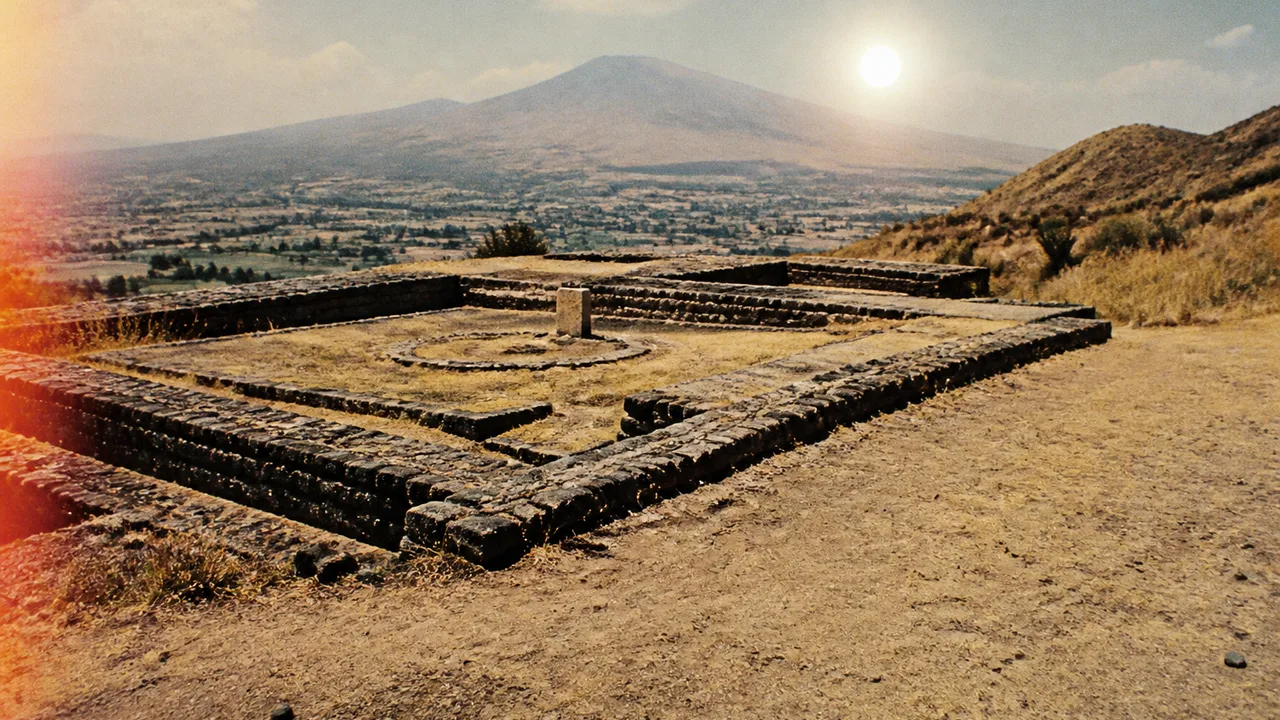
At Teteles de Ávila Castillo, in Mexico’s Sierra Norte of Puebla, archaeologists have identified a monumental complex they say people used to observe the Sun roughly 2,500 years ago. Mexico’s National Institute of Anthropology and History, known as INAH, identifies the structure as a solar observatory and calls it “Grupo E.” The name belongs to an archaeological category.
A person watching a sunrise from the complex would have seen the Sun appear at different points along the horizon as the year passed. That movement is predictable. Build a reliable sightline into a place people return to, and a passing morning can become a date the community recognizes. INAH project director Alberto Diez Barroso Repizo links the complex to a calendar beginning in February and a harvest period in October. He also says its eastern platform allowed observers to follow the rising Sun at equinoxes and solstices.
Those details give the proposed observatory a purpose beyond facing east. They also open a more interesting picture of astronomy: a structure could connect repeated observations of the sky with dates people used on the ground. A calendar does not need to be written on a wall to organize a community. It can live in a route through a building, a place to stand and a horizon people learn to read.
A Calendar on the Horizon
The Sun rises at different points over the course of a year because Earth’s axis is tilted. Its most northerly and southerly rising positions mark the solstices; the equinoxes fall between them. Across generations, those positions offer recurring reference points. They do not require an observer to know the physics behind them. They require attention, memory and a way to pass on where to look.
That last step gives architecture a role. A platform can hold a crowd as well as an observer. A built feature can preserve a line of sight after the person who first noticed it is gone. If a structure also marks dates useful for seasonal work or ceremony, the same sunrise may carry several meanings at once. The proposed February and October associations at Teteles de Ávila Castillo invite questions about how dates entered community life; they do not assign a single purpose to everyone who used the place.
February and October are modern labels for positions in an annual cycle. Read them here as a way of locating the dates for present-day readers, rather than as words the builders themselves used. Likewise, “harvest” names an activity, not a complete account of which crops people grew, who worked the land or how a ceremony may have been conducted.
How an Alignment Becomes Evidence
An eastward-facing building will encounter the rising Sun. That fact alone cannot make it an observatory. To support the interpretation, researchers have to identify where someone could stand, what feature that person would sight across and which point on the horizon the line reaches. They then have to ask whether the same arrangement works on the dates proposed, rather than on a date chosen after the structure caught their attention.
The eastern platform enters that test as a physical place, not a metaphor. If it allowed people to track equinox and solstice sunrises, the sightlines should make sense from plausible viewing positions. Changes in the building would matter too. A platform repaired, extended or altered over centuries might preserve one alignment while changing another. The complex named “Grupo E” has been identified as a structure designed to track important calendar dates; the name alone cannot tell us which of its features served that function at every stage of its life.
The test now is a published plan showing measured sightlines and dated construction phases. Without those details, other researchers cannot independently assess the proposed observations or how the roughly 2,500-year age relates to the period when people used the complex to watch the Sun.
That is a demanding standard because the interpretation asks the building to answer more than one question. Its shape can suggest where someone looked. Its construction history can place that view in time. Evidence from the wider setting could show how the complex related to other places people gathered, worked or performed rituals. Each answer would sharpen the next; none should be assumed simply because the overall idea is compelling.
The Age of a Practice
A date for a building and a date for a practice can overlap without being identical. A community might have watched the horizon before constructing a monumental platform. Another might have kept using a structure after its original builders were gone. If archaeologists date one phase of construction to roughly the middle of the first millennium BCE, they still have to trace which features belonged to that phase and how later users encountered them.
The Puebla location adds weight to those questions. The site sits in the Sierra Norte, while archaeological discussion of Group E complexes has often centered on the Maya region. A solar interpretation here would place a substantial example of built astronomical knowledge in another part of Mesoamerica. That does not require a story in which one region taught another, or one building represents every community around it. Similar problems can invite different solutions; connections between places require their own evidence.
Calling the complex an observatory can also make modern readers picture a separate institution devoted to science. The proposed calendar and harvest associations point toward an arrangement in which observing the sky could belong to public, seasonal and ceremonial life together. People who needed to anticipate recurring dates had a practical reason to watch the Sun. People who gathered to mark those dates had a reason to build somewhere recognizable. The architecture could have served both needs.
Whose Time Did It Keep?
Monumental buildings survive more readily than the names and conversations of the people who used them. Teteles de Ávila Castillo gives archaeologists walls and platforms to examine, but the daily decisions around those places have to be reconstructed with care. Who decided that a sunrise marked the start of a cycle? Who taught someone else where to stand? A precise alignment could show a shared system of observation without naming its keepers.
There is a temptation to let the scale of the building stand in for the whole community. Monumental work certainly asks for labor and coordination. It does not tell us, on its own, whether access was broad or restricted, whether an observation announced a date to many people or informed a smaller group. Those are questions about social life, and they deserve more than an imagined crowd assembled to make a discovery sound complete.
For now, the most concrete claim is also the most human one: at a place in Puebla, people built with the changing position of the Sun in mind. The next account of the complex can bring us closer to knowing where they stood and which dates they marked. The building may never give us their words, but its sightlines can still help recover a little of what they knew together.
More Like This
Middle Platonism's Hidden Role in Western Esotericism
ESOTERICA's new crowdfunded seminar argues Middle Platonism built the foundations of Hermeticism, Gnosticism, and early Christian theology. Here's what that means.
How Omens Entered the Politics of the Thirty Years' War
A comet in 1618 drew competing interpretations as war spread across Europe. Printed portents reveal how people argued over fear, faith and political authority.
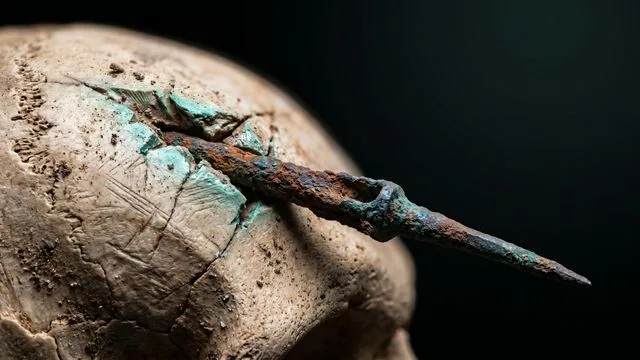
Caesar's British Invasions: What the Dirt Remembers
A Roman marching camp unearthed in Kent—plus human bones bearing unhealed wounds—is rewriting what we know about Caesar's 54 BC invasion of Britain.
Why October's Name Still Carries the Number Eight Today
October is the tenth month, but its name means eight. The mismatch preserves an older Roman calendar and reveals how societies reorganize public time.
Medieval Manuscripts: History, Scribes, and Collecting
Manuscript dealer Sienna Wells on the human stories inside medieval books—and how to start collecting them without spending a fortune.
Homer's Odyssey and What Mortality Means Today
Homer's Odyssey is more than epic adventure — it's a philosophical argument for why a finite life matters, and why immortality might be the real curse.