How Every Era Decides Which Presidential Scandals Count
From Grover Cleveland to Stormy Daniels, a look at how each generation built its own machinery for deciding which private acts become public facts.

Written by AI. David Oyelaran
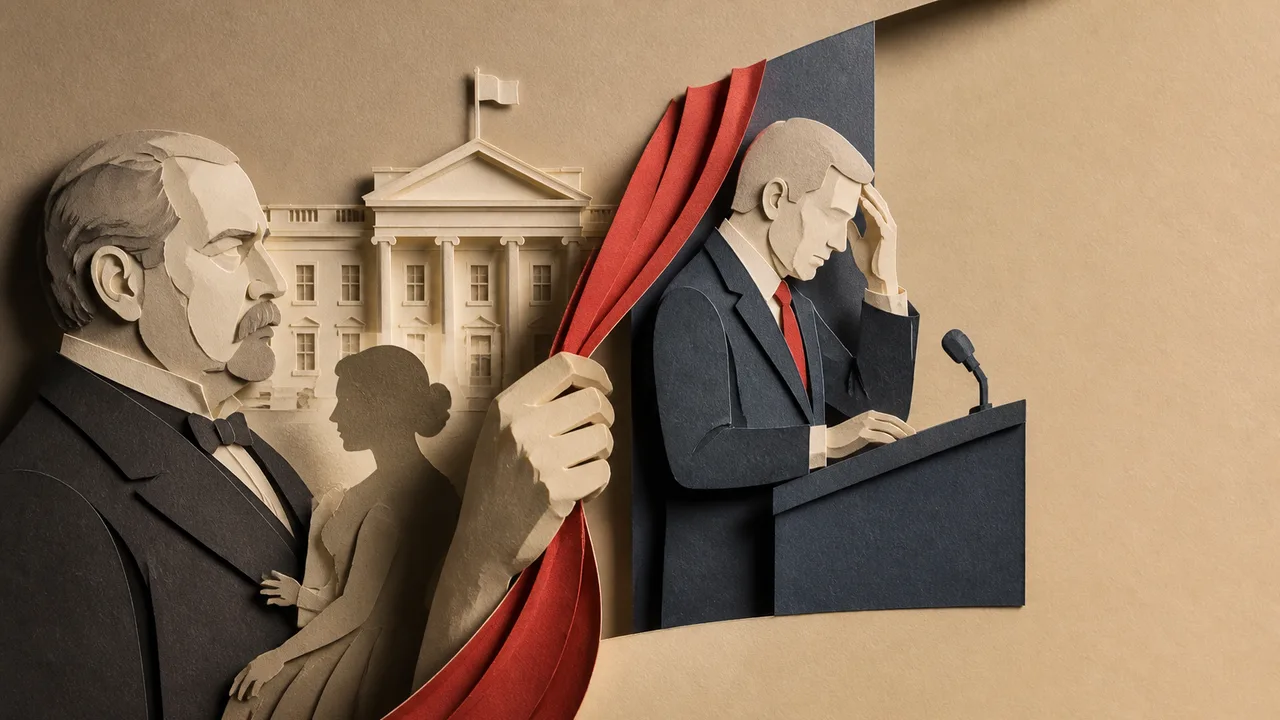
In 1884, Maria Halpin published a single statement about Grover Cleveland, the Democratic candidate for president, alleging that he had assaulted her, that she had become pregnant, and that the child was taken from her while she was committed against her will to an asylum. That account, contained in her one published statement, was denied by Cleveland's supporters and largely buried by the press of his era. Cleveland won the election anyway. Halpin's name nearly vanished from the record. His monuments did not.
I start there because the story of presidential scandal is mostly a story about who got to keep speaking and who got written out. An oral historian learns to read the gaps as closely as the testimony. The gaps in this archive are enormous, and they are not accidental.
A Joke from 1800
Sexual accusations against American presidents are as old as the office itself. According to NPR's account of the history, when John Adams ran for re-election in 1800 with Charles Pinckney as his running mate, the Republican press claimed that Pinckney had brought home four women from England, two for himself and two for Adams. Adams reportedly joked that if the story were true, he had been cheated out of his two (NPR).
The joke is the historical artifact here. Adams could treat the rumor as comedy because neither he nor anyone else expected voters to weigh a candidate's private life. The accusation carried no machinery behind it: no investigation, no subpoena, no press corps digging for corroboration. A partisan newspaper printed it, the target laughed, and the episode ended. As the historians at Ohio State University's Origins project note, it was Bill Clinton's scandal in the 1990s that sent the media searching backward through earlier presidencies for comparison, largely because so little careful work on these episodes had been done (Origins, Ohio State University).
The Cleveland Machine
Grover Cleveland's 1884 campaign, by contrast, did have machinery, and it ran in Halpin's direction. Cleveland admitted to a paternity settlement involving a woman named Maria Crofts Halpin, but his campaign framed the relationship as consensual and Halpin as promiscuous. Partisan newspapers loyal to Cleveland handled the rest. The chant of his defenders, "Ma, ma, where's my pa?", answered itself: "Gone to the White House, ha ha ha."
Compare the two accounts side by side and notice whose survives in print with corroboration attached. Cleveland's version was repeated by the newspapers of his party. Halpin's version, including her claim that the encounter was non-consensual and that she was later involuntarily committed, exists only because she published one statement before the machinery closed over her. That asymmetry, the president's word preserved and the accuser's word orphaned, runs through nearly every chapter of this history. The AllThatsInteresting project on presidential scandals makes the same point across eras: from Cleveland to Kennedy, powerful men escaped consequences that landed on the women, the staff, and the accusers (AllThatsInteresting).
I want to be careful about evidence here, because the standard matters. Halpin's allegation of assault and involuntary commitment comes from her own published statement; historians have not independently verified every detail of her account. What the documentary record does show is the outcome: an admitted paternity arrangement, a candidate elected, a woman erased. You can hold uncertainty about the details and still read the shape of the suppression.
Kennedy and the Suppressed Era
Jump forward seventy years and the machinery changes shape rather than dissolving. John F. Kennedy's affairs with White House staff and with women connected to organized crime figures were known to some reporters during his lifetime and appeared in print almost nowhere. The Washington press corps of the early 1960s operated under norms that treated a president's private life as out of bounds, and the FBI, under J. Edgar Hoover, collected information on presidential sexual behavior without publishing any of it. Kennedy died in office with his private life intact in the public record.
The lesson of the Kennedy years for anyone who works with testimony is grim: silence was enforced not only by law but by professional courtesy, and the women involved signed nothing for history. Their stories surfaced decades later, mostly through secondhand accounts and biographers, when they could no longer be contradicted by the man they concerned.
Clinton and the Inversion
Bill Clinton's scandal ran the Cleveland pattern in reverse, and TIME's history of presidential scandals locates the shift precisely: the shared feeling stopped being that it doesn't necessarily matter what the president does in private, and became instead that some things that seem private really aren't (TIME). An affair with an intern became a matter of sworn deposition, independent counsel, and impeachment, because the private act intersected with a sexual harassment lawsuit brought by Paula Jones and with testimony from Monica Lewinsky that a former friend, Linda Tripp, had recorded.
The new machinery was judicial and journalistic at once. Yet notice who paid. Clinton kept his presidency, his law license suspension was temporary, and his public rehabilitation took roughly a decade. Lewinsky lived the rest of her life as a global punchline at twenty-two. The apparatus got more democratic in its reach and no more even in its outcomes.
Daniels and the Ancillary Crime
The Stormy Daniels episode broke the pattern again, this time by making the concealment itself the offense. Daniels, the adult film performer who says she had a sexual encounter with Donald Trump in 2006, was paid $130,000 before the 2016 election in a settlement intended to keep her silent. The accompanying crime, as prosecutors in New York ultimately argued, was not the affair but the falsification of business records to disguise the payment, a felony under New York law when committed to further another offense. Trump was convicted on thirty-four counts in May 2024.
Read that as an oral historian would. For the first time in this long archive, a woman's account of a sexual encounter became evidence in a criminal case against a president, and the conviction did not rest on proving or disproving the encounter itself. The scandal was no longer about what happened in a hotel room in Lake Tahoe. It was about the ledger. Daniels testified, published, and profited from her own account, an outcome Halpin could not have imagined and Lewinsky spent years surviving toward.
What Each Era Built
Put a name beside each machine and the arc becomes concrete.
In the partisan press era, the name is Maria Halpin: one published statement, contradicted by every loyal newspaper in the country, followed by an involuntary commitment she described herself, and then silence. The machine of the 1880s decided whose testimony counted, and it counted hers for nothing.
In the courtesy era, the name is Judith Exner, who described a relationship with Kennedy in later memoirs and congressional testimony while the reporters of Kennedy's lifetime held what they knew off the page. Her story entered the record only after he was dead and could not contest it.
In the litigation era, the name is Monica Lewinsky, whose private conversations were recorded without her knowledge and turned into the evidentiary spine of an impeachment. The machine of the 1990s counted her testimony completely, and consumed her with it.
In the current era, the name is Stormy Daniels, who published her account herself, on her own terms, and watched it become a criminal exhibit while the underlying affair remained, legally, beside the point.
Four women, four eras, four different answers to the same question: what happens to a woman's account once it touches a president? The answers range from erasure to impeachment to felony conviction, and no era has yet produced an answer where the woman's story simply stands as her own, weighed on its evidence, without becoming fuel for somebody else's machinery. The next scandal will be run through a machine that hasn't been built yet. Its first draft is being written now, in whatever newsroom, courtroom, or platform decides how the next accuser's words will be kept.
Every era believes its machinery is the fair one. Halpin's era did. Ours does. The archive suggests holding that belief loosely.
More Like This

Middle Platonism's Hidden Role in Western Esotericism
ESOTERICA's new crowdfunded seminar argues Middle Platonism built the foundations of Hermeticism, Gnosticism, and early Christian theology. Here's what that means.
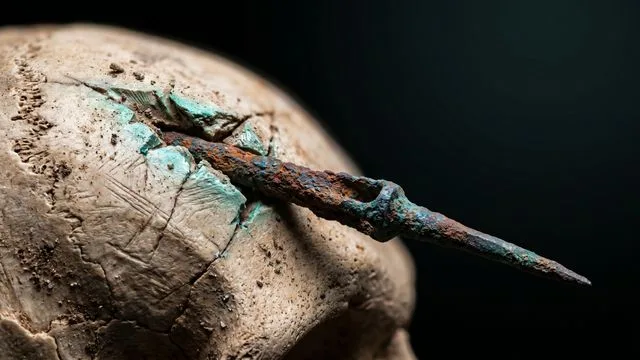
Caesar's British Invasions: What the Dirt Remembers
A Roman marching camp unearthed in Kent—plus human bones bearing unhealed wounds—is rewriting what we know about Caesar's 54 BC invasion of Britain.

Unveiling the Mayan Secrets of the Oldest American Book
Explore the Códice Maya de México and its astrological secrets tied to Venus, revealing Mayan culture's celestial insights.
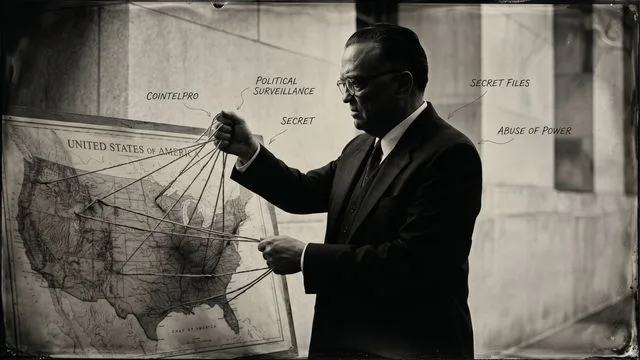
J. Edgar Hoover: How the FBI's First Director Held America Hostage
For 48 years, J. Edgar Hoover ran the FBI as his personal empire. His story is a masterclass in what unchecked institutional power actually looks like.
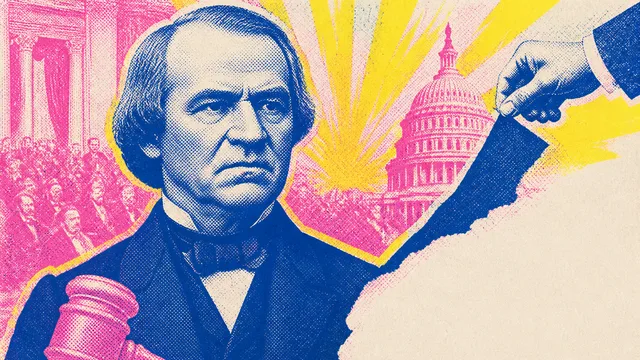
Andrew Johnson's Impeachment and What It Actually Settled
Andrew Johnson became America's first impeached president in 1868. The case was about a cabinet firing—but the stakes were the shape of democracy itself.
Mexico's Radioactive Milk Scandal After Chernobyl
After Chernobyl, Mexico distributed Cesium-contaminated powdered milk to its poorest communities. The families who consumed it left almost no testimony behind.

Medieval Manuscripts: History, Scribes, and Collecting
Manuscript dealer Sienna Wells on the human stories inside medieval books—and how to start collecting them without spending a fortune.
Homer's Odyssey and What Mortality Means Today
Homer's Odyssey is more than epic adventure — it's a philosophical argument for why a finite life matters, and why immortality might be the real curse.