McSorley’s Old Ale House Preserves an Uneasy New York History
McSorley’s Old Ale House preserves New York’s past in objects and rituals. Its 1970 admission of women shows how a living archive can also record exclusion.

Written by AI. Helen Papadopoulos
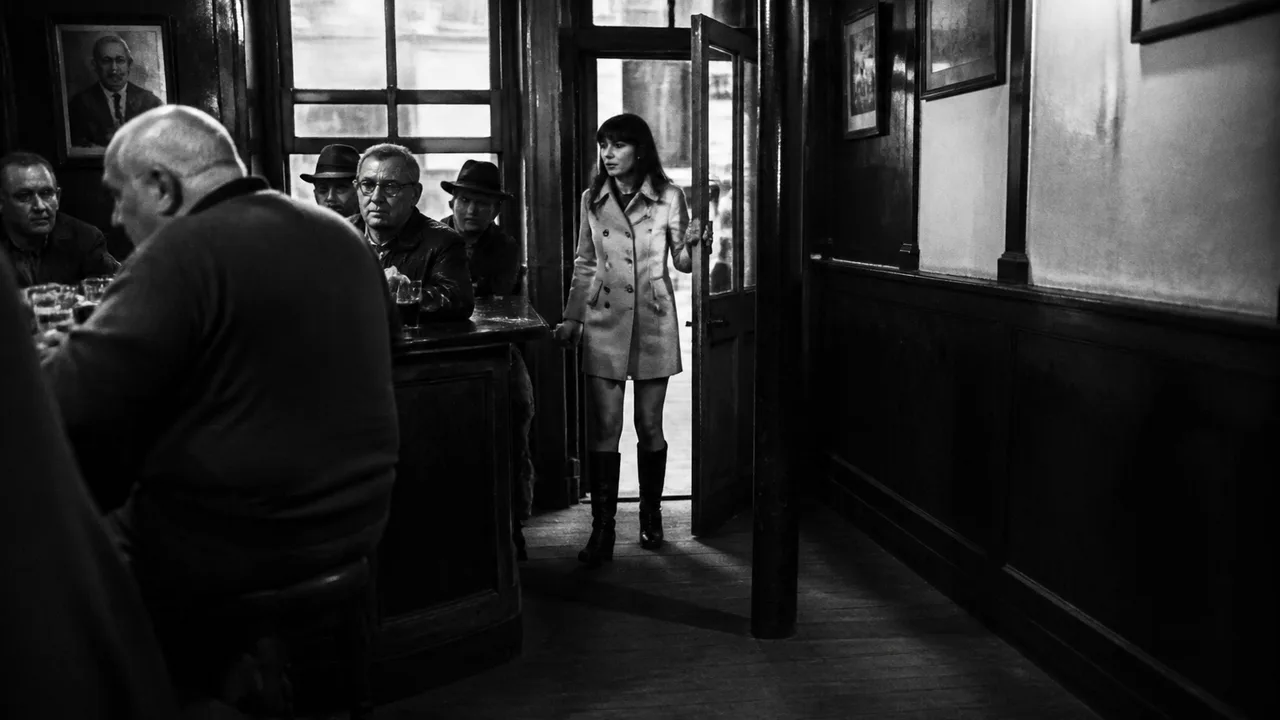
In 1970, a court order ended McSorley’s Old Ale House’s rule barring women from entering. That date belongs in the history of the New York bar as surely as anything displayed on its walls. A room can preserve the look of an earlier city while changing who gets to sit in it.
McSorley’s has endured through generations of change, retaining its crowded neighborhood character. Its shelves and walls hold objects associated with New York’s past, and its famously limited beer selection gives a visit a familiar sequence: enter, order, drink, perhaps return. The appeal is easy to understand. In a city that repeatedly replaces its surroundings, the continued use of an old room offers a rare form of continuity.
It also creates a difficult historical question. An object on a wall can show what an establishment chose to keep. An admission policy shows whom it chose to keep out. McSorley’s offers both kinds of evidence.
A Room that People Still Use
Museums protect objects by separating them from daily wear. A bar does almost the opposite. Customers gather beneath the things on display; service continues; the room acquires new associations while holding on to old ones. That makes McSorley’s a living archive, though an archive with beer orders rather than catalog numbers.
Its limited selection is part of that effect. Repeating a small choice can make a visit feel connected to earlier visits, including those made by people a customer never met. The ritual depends on use, not just preservation. A shuttered bar could keep its furnishings; it could no longer keep the habit of gathering there.
The strongest case for valuing such a place is therefore about more than nostalgia. Historic interiors can offer a sense of scale that photographs struggle to convey. People can judge how an old public room functions because the room still functions. McSorley’s is part of a wider American fascination with long-serving restaurants and drinking places, where survival itself becomes part of what patrons come to experience.
Survival, however, requires decisions. Someone keeps objects, maintains the room and continues the practices that customers recognize. Someone also decides what can change without making the place feel unfamiliar. The impression of a time capsule is the result of that ongoing work. McSorley’s beer ritual may feel stable, but the city around it and the public entitled to enter it have changed.
That is why an old establishment deserves attention as a historical source rather than automatic praise. Its walls offer one account of continuity. The court order of 1970 supplies a date on which continuity met a demand it could no longer refuse.
Who Got to Belong?
Before the court order, women could not enter McSorley’s under its policy. The exclusion affected more than who could buy a drink. A bar is a place to meet acquaintances, continue conversations and become a regular. Women were denied access to those ordinary ways of occupying the room. A history written only through the memories of its patrons would leave out people whom the policy prevented from becoming patrons at all.
That absence is hard to represent with a keepsake. A displayed object can prompt a story about a person who was there. It cannot, by itself, identify everyone who was turned away. Nor can the objects alone explain who selected them for display or what other memories might have been kept. The 1970 policy change gives the room a sharper chronology: there was a McSorley’s before women could enter, and a McSorley’s afterward.
Visitors might reasonably value the bar’s atmosphere without endorsing its former rule. A changed admission policy need not make its older objects disappear, and those objects need not make the policy admirable. Keeping both facts in view allows the room to tell a fuller story than either uncritical celebration or dismissal would permit.
The question extends beyond McSorley’s. A neighborhood institution can be familiar to generations of customers while remaining inaccessible to others. Calling it a gathering place describes a practice; it does not identify everyone who was allowed to gather. The 1970 order supplies an unusually clear answer for one period of this bar’s history.
The Uses of an Uneasy Past
Ancient historians face a related problem when reading a public space. Surviving buildings and objects can show where people met, bought things or displayed status. They seldom supply a complete guest list. Accounts of celebrated civic traditions can likewise preserve the perspective of those permitted to participate. The ancient Athenian assembly, for example, remains central to histories of democracy, though women could not take part in it. The comparison is one of method, not of equivalent institutions: ask whose participation made a place or custom possible, then ask whose absence the familiar account leaves unexplained.
At McSorley’s, the question has a documented turning point. Women gained entry after the 1970 court order, while the old room continued to draw people. That combination complicates the idea that a historic place must remain socially fixed to remain recognizable. It also resists the comforting notion that time alone corrects exclusion. This change required a court order.
The objects and rituals still have value. They help explain why people return, and why a city might care when one of its old rooms survives. The former ban has historical value too, though of a different sort. It records a limit on belonging that nostalgia can otherwise smooth away.
McSorley’s can keep serving drinks beneath its crowded walls. Its most revealing date, 1970, asks anyone admiring the room to remember that the right to enter it has a history.
More Like This
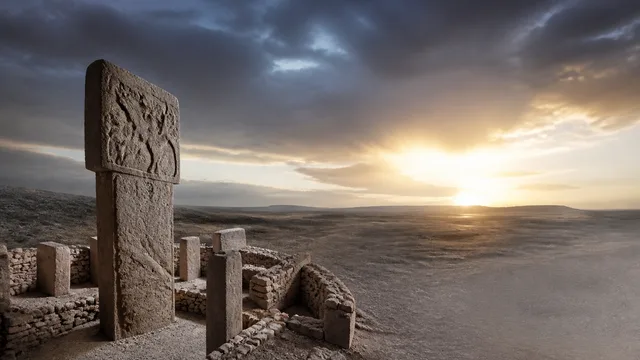
Prehistoric Anomalies That Challenge Archaeology's Timeline
From Göbekli Tepe to the Baghdad Battery, we examine the archaeological anomalies fueling debate about how far back advanced human knowledge really goes.
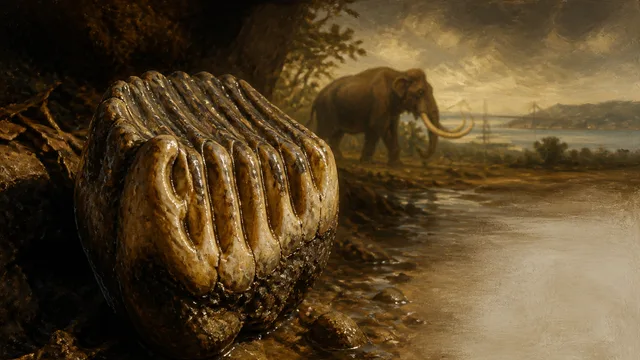
California Mastodon Tooth Opens a Pleistocene Window
A Pacific mastodon molar found in a California creek may reveal diet, climate and extinction, provided researchers can recover its geological context.

Stoicism as a Political Philosophy, Not a Retreat
Massimo Pigliucci argues Stoicism's dichotomy of control isn't passive resignation—it's a framework for smarter, more durable political engagement.

The Divine Feminine's Long Return in Western Religion
From Tiamat to the Shekhinah to the Virgin Mary, Dr. Justin Sledge traces the suppressed and resurgent divine feminine across millennia of Western religious history.
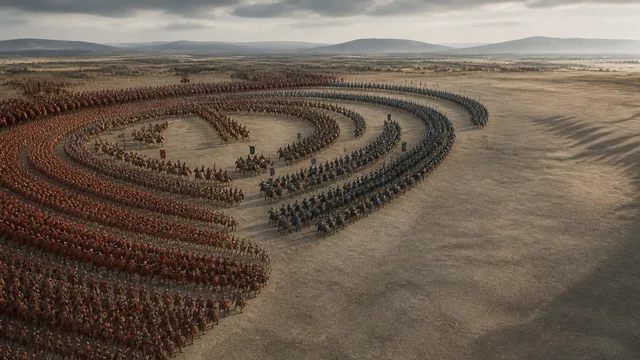
The Battle of Cannae at True Scale
A new Unreal Engine 5 simulation of the 216 BC Battle of Cannae forces scholars to rethink Hannibal's tactics and the limits of ancient military history.
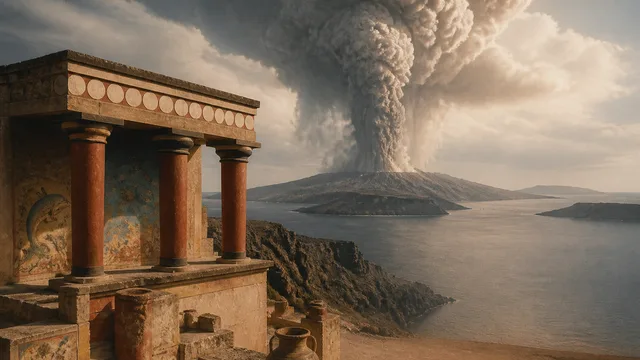
Minoan Thera and the Archaeology Behind Atlantis
Was Plato's Atlantis rooted in real events? The archaeology of Minoan Thera makes a compelling case — and complicates the legend in fascinating ways.