Mathematics: The Unsung Hero of Healthcare Innovation
Explore how math, AI, and interdisciplinary collaboration are revolutionizing healthcare solutions.

Written by AI. Amelia Nwofor
In an era where technological advancements are the cornerstone of progress, mathematics is emerging as a formidable force in healthcare innovation. Becky Shipley, a prominent figure in computational modeling, recently highlighted how mathematical tools are reshaping the landscape of healthcare, particularly in diagnosing and treating chronic diseases. Shipley's discourse at the Royal Institution serves as a reminder of the potential that lies in the intersection of mathematics and healthcare.
"We need to think differently about how we solve these really big complex problems," Shipley asserts. This isn't just a call for innovation—it's a call for interdisciplinary collaboration. The complexity of healthcare challenges today cannot be tackled by a single discipline. Instead, they require a symphony of expertise from medics, data scientists, mathematicians, engineers, and more, each contributing their unique perspective.
The Power of Mathematical Modeling
Mathematical modeling is not a new concept, but its application in healthcare is gaining unprecedented momentum. Shipley describes mathematics as a language—a tool to decode the intricate balance of physics, chemistry, and biology that governs our bodies. This approach is crucial for understanding health dynamics and modeling biological systems. For instance, the structure and function of blood vessels, which vary across different tissues and health conditions, can be mathematically modeled to predict physiological responses and disease progression.
Emerging Technologies: AI and Genomics
The advent of AI and genomics is amplifying the capabilities of mathematical models. These technologies enable the analysis of vast datasets, offering insights that were previously unattainable. Shipley envisions a future where these tools, combined with mathematical modeling, transform healthcare from a reactive to a proactive discipline, allowing for earlier interventions and personalized treatments.
A Real-World Application: The COVID-19 Pandemic
Shipley's work during the COVID-19 pandemic underscores the real-world impact of these mathematical tools. She led a team that rapidly developed non-invasive breathing aids, a testament to the power of multidisciplinary collaboration. Such innovations highlight the potential of mathematical modeling when integrated with engineering principles to address urgent healthcare needs.
Beyond the Numbers: The Human Element
While mathematics provides the framework, the human element is indispensable. Shipley emphasizes the importance of passion and curiosity in pursuing scientific endeavors. "I never had a plan for what I wanted to do," she admits, yet her journey from studying mathematics at Oxford to leading healthcare innovations at UCL exemplifies how following one's interests can lead to groundbreaking discoveries.
As we navigate the complexities of modern healthcare, the role of mathematics becomes increasingly evident. It is not merely a tool but a bridge connecting diverse disciplines, enabling us to tackle some of the most pressing challenges of our time. The question remains: how can we further harness the power of mathematics to continue transforming the healthcare landscape?
More Like This
Exploring Math's Role in Understanding the Universe
Delve into the need for new math to solve universe's mysteries with insights from Terence Tao on StarTalk.
Decoding Logic: Marriage Puzzles and Irrational Numbers
Explore the intersection of logic puzzles and mathematics, revealing insights into irrational numbers and everyday reasoning.
How Nanoparticles Are Already Changing Everyday Life
From self-cleaning glass to cancer detection, UCL's Professor Ivan Parkin maps what nanoparticle science can actually do right now — and where it still falls short.
The Birth of Calculus: A Tale of Change and Conflict
Explore how calculus transformed math and science, from Newton to AI, amid historical rivalries and philosophical debates.
How Math is Transforming Medicine: Insights from Becky Shipley
Explore how mathematics is revolutionizing healthcare through Becky Shipley's innovations in ventilators and vascular mapping.
NVIDIA's AI Revolutionizes Self-Driving Cars
NVIDIA's open AI improves self-driving cars by reasoning and handling rare scenarios, paving the way for safer autonomous driving.
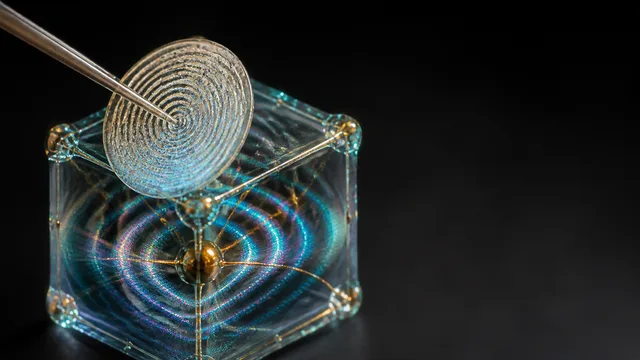
Hannah Cairo Disproved a 40-Year-Old Math Conjecture at 17
At 17, Hannah Cairo overturned the Mizohata-Takeuchi conjecture using a hypercube and a coin diagram. Here's what she actually did—and why it matters.
How Language Shapes Thought, According to Lera Boroditsky
Cognitive scientist Lera Boroditsky explains how the language you speak shapes memory, color perception, and thought—and what's lost when languages disappear.