How Math is Transforming Medicine: Insights from Becky Shipley
Explore how mathematics is revolutionizing healthcare through Becky Shipley's innovations in ventilators and vascular mapping.

Written by AI. Mei Zhang
How Math is Transforming Medicine: Insights from Becky Shipley
Imagine your body as a bustling city, with blood vessels as highways transporting vital resources to every neighborhood. Now, imagine using math to manage traffic flow and optimize delivery routes. That's the kind of innovation Becky Shipley, a healthcare engineering professor at UCL, is pioneering—using mathematics to revolutionize medical innovation.
From Equations to Innovations
Shipley's journey from pure mathematics to healthcare engineering is like going from abstract art to a mural that matters to the community. She didn't just want to solve equations; she wanted to solve problems that impact people's lives. From mapping blood flow in tiny capillaries to developing non-invasive ventilators during the COVID-19 pandemic, her work shows how math can be more than just numbers on a page.
"I was really passionate about medicine and healthcare," Shipley shares, highlighting her motivation to apply mathematical concepts in real-world healthcare scenarios.
The Ventilator Challenge: A Race Against Time
Let's talk about those ventilators. During the COVID-19 pandemic, the need for non-invasive ventilators became urgent. Shipley and her team didn't reinvent the wheel; they reverse-engineered an existing device, the Philips Respironics WhisperFlow, to meet the demand. Within 100 hours, they had a prototype. By April 2020, they delivered 10,000 ventilators to the NHS. 🏥
This isn’t just a tale of engineering prowess; it’s a story of collaboration. Shipley teamed up with clinical experts and even the motorsport industry to pull this off. According to Mercedes-AMG, their collaboration with UCL was a key element in this effort. This is where Shipley's multidisciplinary approach shines—she's like a conductor orchestrating a symphony of expertise.
Mapping the Human Kidney: A Mathematical Blueprint
Now, onto another fascinating aspect of Shipley’s work—mapping the arterial vascular network in the human kidney using advanced X-ray techniques. This research allows for a detailed understanding of blood vessel architecture, which could lead to breakthroughs in treating conditions like diabetic retinopathy. The Royal Institution's podcast episode, where Shipley shares her insights, gives a glimpse into how computational models can pinpoint drug targets by simulating complex physiological processes.
But why kidneys? Well, the kidney is a microcosm of vascular health, and understanding its intricate network can ripple out to broader medical applications. Verified studies, like those published in Nature, show that such vascular mapping is crucial for developing targeted therapies.
Ethical Considerations: The Unseen Variables
While Shipley's work is undoubtedly groundbreaking, it also brings ethical questions to the fore. How do we ensure that such innovations are accessible to all, not just a privileged few? This isn't just a mathematical puzzle; it's a societal one. As Shipley’s innovations make their way into clinical settings, ensuring equitable access becomes as important as the science itself.
A New Horizon for Healthcare
Shipley’s work is more than the sum of its parts. It’s a blueprint for how mathematics can transform healthcare, addressing crises and chronic conditions alike. Her story is a reminder that sometimes, the solutions to our most pressing problems come not from new inventions, but from reimagining what we already have. So, as we look to the future, let's keep asking: What other hidden potential lies in the math we already know?
More Like This
Mapping the Invisible Paths of Knowledge Transfer
Explore the dynamics of knowledge transfer and its principles, from Silicon Valley success to forgotten technologies.
Ultrasound's New Role in Engineering Safety
Explore how ultrasound tech uncovers hidden structural flaws, preventing disasters in engineering.
The Riemann Hypothesis: Math's Greatest Mystery
Explore the Riemann Hypothesis, the $1M question linking prime numbers and quantum physics.
Exploring Infinity: Big, Bigger, and Beyond
Dive into the mind-bending world of infinity with mathematician Joel David Hamkins, as he unpacks the complexities and paradoxes of infinite sets.
Riemann Hypothesis: Cracking Prime Mysteries
Explore how the Riemann Hypothesis might reveal the hidden order of prime numbers and its implications for the universe.
Mathematics: The Unsung Hero of Healthcare Innovation
Explore how math, AI, and interdisciplinary collaboration are revolutionizing healthcare solutions.
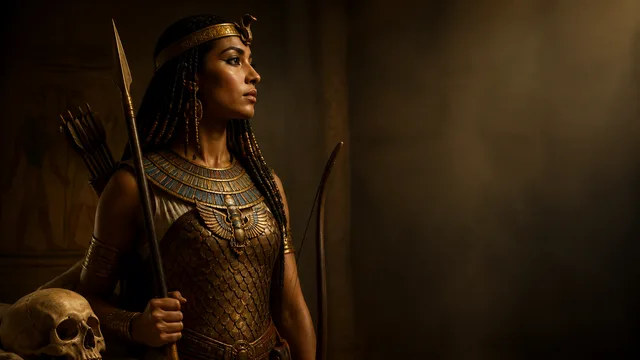
Ancient Egyptian Princesses Were Trained Weapon Users
New skeletal analysis of five Middle Kingdom mummies reveals ancient Egyptian princesses used bows and daggers — and a bias that buried that fact for decades.
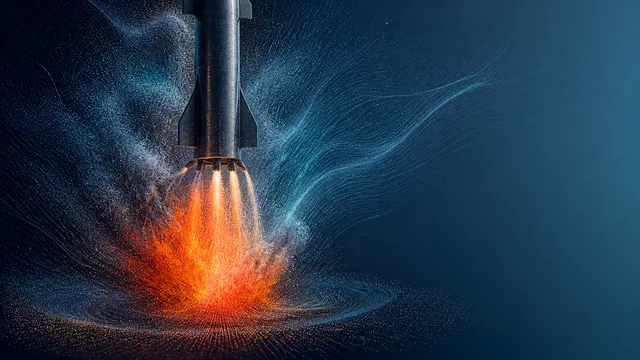
SpaceX Starship Flight 13 Aborts at Launch
SpaceX's Starship Flight 13 aborted at the last second when engines failed to ignite. What the scrub reveals about iterative testing, redundancy, and real stakes.