Riemann Hypothesis: Cracking Prime Mysteries
Explore how the Riemann Hypothesis might reveal the hidden order of prime numbers and its implications for the universe.

Written by AI. Mei Zhang
Picture a world where math isn't just numbers on a page, but a musical score with primes playing the notes. That's the kind of symphony mathematicians hope to uncover with the Riemann Hypothesis. It's like the ultimate treasure map, promising to reveal the hidden order behind prime numbers—those sneaky little building blocks of our number system. But there's a catch: no one's proven it yet. And there's a cool $1 million reward from the Clay Mathematics Institute for whoever finally does.
Prime Numbers: Not So Random After All?
Prime numbers are the atoms of arithmetic—small, indivisible, and crucial for building everything else. But unlike a well-organized pantry, primes seem to be scattered randomly throughout our number line. Enter the Riemann Hypothesis, which suggests that primes follow a hidden pattern, a kind of cosmic dance governed by a mathematical rule.
This all hinges on the Riemann Zeta function, a mystical formula that turns the chaos of primes into something a bit more orderly. Basically, if you know where the zeros of this function sit, you can predict where prime numbers will pop up. It's like having a recipe that tells you exactly when your cake will rise.
The Search for Proof
Mathematicians have been chasing proof of this hypothesis for over 160 years, like trying to find the perfect avocado at the grocery store—difficult but oh-so-rewarding if you succeed. From ancient Greeks to modern mathematicians, the quest to decode prime numbers has been relentless. And while computers have verified trillions of cases where the hypothesis holds true, that's not the same as proof. Imagine verifying every step of a dance routine but still needing to prove the routine always works, no matter what.
Recently, mathematicians James Maynard and Larry Guth decided to take a different approach. According to the source, they didn't try to prove every zero lies on the 'critical line,' but instead asked how many could stray from this path. Their findings suggest that even if some zeros wander a bit, they’re extremely rare. It’s like finding out that, yes, you might occasionally find a lumpy potato in your batch, but most will be smooth. This work opens new doors for understanding the Riemann Hypothesis, even if it doesn’t fully solve it.
Why It Matters: Beyond Numbers
So why does all this matter to those of us not living in a world of equations? Here’s the scoop: proving the Riemann Hypothesis could transform fields like cryptography and quantum physics. In cryptography, prime numbers are like secret keys, crucial for securing data. A better understanding of primes could lead to more robust encryption methods, safeguarding everything from your personal emails to national secrets.
On a grander scale, the Riemann Hypothesis could bridge gaps between math and physics, revealing connections that might explain the very structure of our universe. It’s like finding a hidden passage between two massive libraries of knowledge—each with its own secrets to unlock.
Ethical Considerations and Real-World Impact
Let’s not forget the ethical implications here. If the Riemann Hypothesis is proven, who benefits? Does it level the playing field, or does it widen the gap between those with access to advanced mathematical tools and those without? Science should be a tool for equality, not division. As I always say, with great power comes great responsibility—especially when that power is mathematical in nature.
The Riemann Hypothesis is like the ultimate puzzle, a challenge that combines intellectual curiosity with profound implications for our digital and physical worlds. Whether you're a math whiz or someone who just likes a good mystery, keep your eyes on this one. Who knows, maybe the next big breakthrough will come from an unexpected place.
More Like This
The Simplest Question Mathematics Still Can't Answer
Fields Medal winner James Maynard explains why prime numbers—the atoms of arithmetic—remain deeply mysterious despite centuries of study.
Decoding the Riemann Hypothesis and Prime Regularity
Explore the Riemann Hypothesis and its implications for the distribution and regularity of prime numbers.
The Hairy Ball Theorem: Math's Fuzzy Conundrum
Explore the Hairy Ball Theorem and its surprising applications in game development and physics, revealing the beauty of continuous vector fields.
The Riemann Hypothesis: Math's Greatest Mystery
Explore the Riemann Hypothesis, the $1M question linking prime numbers and quantum physics.
Exploring Infinity: Big, Bigger, and Beyond
Dive into the mind-bending world of infinity with mathematician Joel David Hamkins, as he unpacks the complexities and paradoxes of infinite sets.

How Math is Transforming Medicine: Insights from Becky Shipley
Explore how mathematics is revolutionizing healthcare through Becky Shipley's innovations in ventilators and vascular mapping.
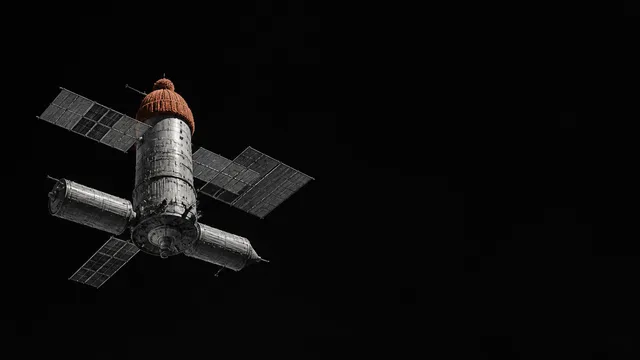
Space Stations Beyond the ISS: A Forgotten History
From a Cold War spy base to a Soviet ice rescue to China's chicken-wing oven in orbit — the real history of space stations is wilder than you think.
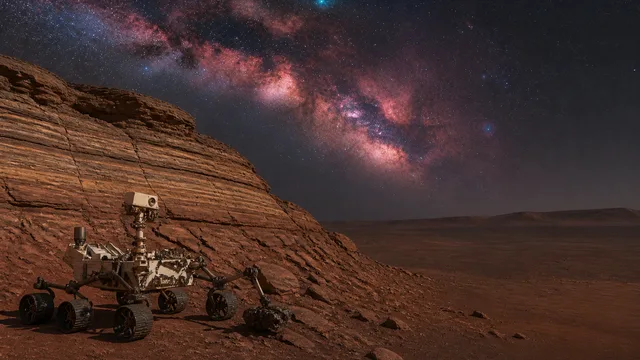
Curiosity at Sol 4948: Reading Mars Like a Genome
Curiosity Rover hit Sol 4948 in Gale Crater. What its mineralogy tells us about Mars' chemical autobiography—and why that question is getting urgent.