The Simplest Question Mathematics Still Can't Answer
Fields Medal winner James Maynard explains why prime numbers—the atoms of arithmetic—remain deeply mysterious despite centuries of study.

Written by AI. Nadia Marchetti

James Maynard was up a ladder painting when he got the email. The International Mathematical Union president wanted a Zoom call. Maynard tried to convince himself it was about some tedious committee assignment, but there weren't many other reasons the IMU president would be reaching out personally. When the call came, the president cut straight to it: Maynard had won the Fields Medal, mathematics' highest honor for researchers under 40.
"I remember my heart was racing," Maynard recalls. He'd heard about a previous winner declining the award, so the president asked directly: Do you accept? "I was somehow totally paranoid in that moment that I was going to accidentally blurt out 'no I want the Fields Medal' or something like that. So I remember just saying it so slowly: Yes, I accept the Fields Medal."
That was 2022. Maynard won for his work on prime numbers—those whole numbers divisible only by themselves and one. And here's the thing that makes his achievement both impressive and humbling: despite winning mathematics' top prize for studying primes, he still can't answer some of their most basic questions.
The Atoms That Won't Behave
Prime numbers are fundamental in a way that's hard to overstate. Every whole number can be written uniquely as a product of primes multiplied together, which makes them the atoms of arithmetic. Want to understand whole numbers? Understand primes first. Except we don't understand primes. Not really.
"Even though they're these fundamental basic building blocks of whole numbers, they remain very mysterious to pure mathematicians," Maynard explains. "Lots of the most basic questions about prime numbers remain unsolved today, even if they've been studied by the greatest minds of mathematics for hundreds or thousands of years."
Take the twin prime conjecture, one of the problems Maynard has worked on. The question is deceptively simple: Are there infinitely many pairs of prime numbers that differ by exactly two? Like 3 and 5. Or 5 and 7. Or 11 and 13. We find these pairs constantly as we count upward, so it seems reasonable to guess they continue forever. But reasonable guesses aren't proofs.
In 2013, mathematician Yitang Zhang made a breakthrough—not by proving the twin prime conjecture, but by proving something weaker. He showed there's infinitely many pairs of primes that differ by no more than 70 million. Which sounds absurdly far from two, until you realize it was the first time anyone had proven any finite bound. Prime gaps typically grow as you move up the number line. Zhang proved they don't grow inexorably—that primes keep coming unusually close together, forever.
Maynard developed a different method soon after, and through collaborative optimization, mathematicians have now shrunk that bound to 246. Still a long way from two. "We've been stuck now on 246 for about a decade," Maynard notes. Getting below 100 seems out of reach with current techniques. And even the most optimistic version of the entire approach has a fundamental barrier: it can get down to six, but not to two.
"It needs a big new idea to get to the twin prime conjecture itself."
The Mystery Isn't Random
What makes prime numbers particularly strange is that they show up in nature and art despite being abstract mathematical objects. Certain cicadas allegedly time their hibernation cycles to prime-number years, staying perpetually out of sync with predators. Musicians use prime-number beats to create maximally dissonant effects—things that stay out of phase for as long as possible. When numbers divide evenly, patterns align. When they're prime, patterns clash. That tension between order and disorder is embedded in the structure of multiplication itself.
And mathematicians still can't predict where the next prime will appear.
What It Actually Feels Like to Do Mathematics
Maynard describes his work process in a way that might surprise people who imagine mathematics as purely logical symbol-manipulation. Yes, there are blackboards full of equations. But there's also something that looks a lot like experimental science.
"I'm often playing around with mathematical objects and doing essentially mathematical experiments," he explains. "I'm looking at a simple case and trying to work out things that are happening explicitly in one simple case and trying to extract from that and guess patterns and notice things to try and build up an intuition."
He also walks. A lot. Colleagues at Oxford's Mathematical Institute regularly see him doing laps around the building, sometimes with a slightly glazed look that means don't interrupt. The walking isn't procrastination—it's method. "The act of walking is distracting enough for my active brain that it allows my active brain to calm down a little bit and let my subconscious work," he says. He'll spend all day actively trying to prove something and make zero progress, then realize how it works on the walk home.
The other critical component: embracing confusion. "I spend virtually all my day trying to think about objects that are completely confusing to me and I really don't understand. And occasionally there'll be small moments of insight where I gain a little bit of understanding. But it means that the vast vast majority of the time I really don't understand what's going on at all."
If you want to be a research mathematician, Maynard says, "you have to embrace that uncertainty and that lack of knowledge." So much of his day is spent not solving problems. He's become comfortable with that.
Why This Matters Beyond Puzzles
The twin prime conjecture isn't just an isolated curiosity. Questions about prime distribution connect to fundamental problems in other areas of mathematics and have practical implications for cryptography. Our digital security infrastructure depends on properties of large prime numbers. Understanding their distribution better could reshape how we think about computational security—or break it entirely.
But there's also something compelling about the pursuit itself. These are questions a child could ask. How far apart do primes get? How close together do they come? Will we keep finding twin primes forever? And despite millennia of human intellectual effort, despite Fields Medals and collaborative breakthroughs and computational power that would have seemed godlike to ancient mathematicians, we still don't know.
Maynard doesn't feel like a Fields Medal winner most days. "In my day-to-day life, I just feel like I'm a normal mathematician," he says. "My real pride is in my research results. The theorems are the bread and butter of mathematics. And so my drive is always to prove more theorems."
He's currently stuck on several problems. Walking helps. The subconscious does heavy lifting. Eventually, if he's lucky and the problem is tractable, something clicks.
But the twin primes? That gap of 246, stubbornly refusing to shrink further? That's going to take something different. A new idea. A perspective shift that makes everyone wonder why they didn't see it before. The kind of breakthrough that can't be forced, only prepared for.
Maynard will keep walking. The primes will keep appearing, in their mysterious pattern that isn't quite a pattern. And somewhere in that space between what we know and what we don't, mathematics continues.
More Like This
Decoding the Riemann Hypothesis and Prime Regularity
Explore the Riemann Hypothesis and its implications for the distribution and regularity of prime numbers.

The Real Story Behind the 1925 Nome Serum Run
The 1925 Nome serum run wasn't just Balto—it was 9,500 years of sled dog evolution, desperate medical crisis, and mushers who knew the odds.

The Most Sensitive Dark Matter Detector Might Find Nothing
LUX-ZEPLIN sits a kilometer underground, waiting for dark matter. But success might look like silence—and that would tell us something huge.

The Elusive Nature of Mathematics
Exploring math as a cognitive practice, beyond numbers and symbols.

The Riemann Hypothesis: Math's Greatest Mystery
Explore the Riemann Hypothesis, the $1M question linking prime numbers and quantum physics.

Hubble Tension: The Universe's Unsolved Mystery
Explore the Hubble tension and its implications for our cosmic understanding.
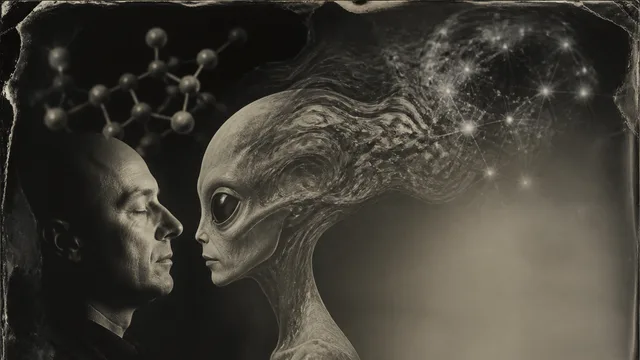
Do DMT Entities Point to Alien Consciousness?
Cognitive scientist Donald Hoffman claims DMT entities may be real alien minds. The math is real. Whether it proves anything about consciousness is a different question.
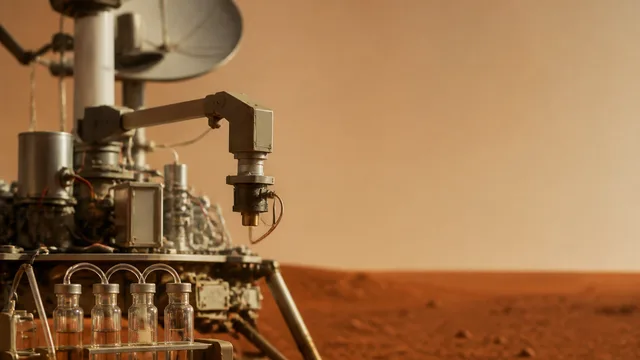
Viking Landers and the Unsolved Mars Life Debate
Fifty years after Viking landed on Mars, one experiment's positive result remains unexplained. Here's what the science actually shows—and what we've learned since.