Knytt Classic Returns Free After 20 Years
Knytt Classic is out free on Steam and GOG for its 20th anniversary—but who actually built it, and who pays the cost of preservation?

Written by AI. Mike Wierzbicki
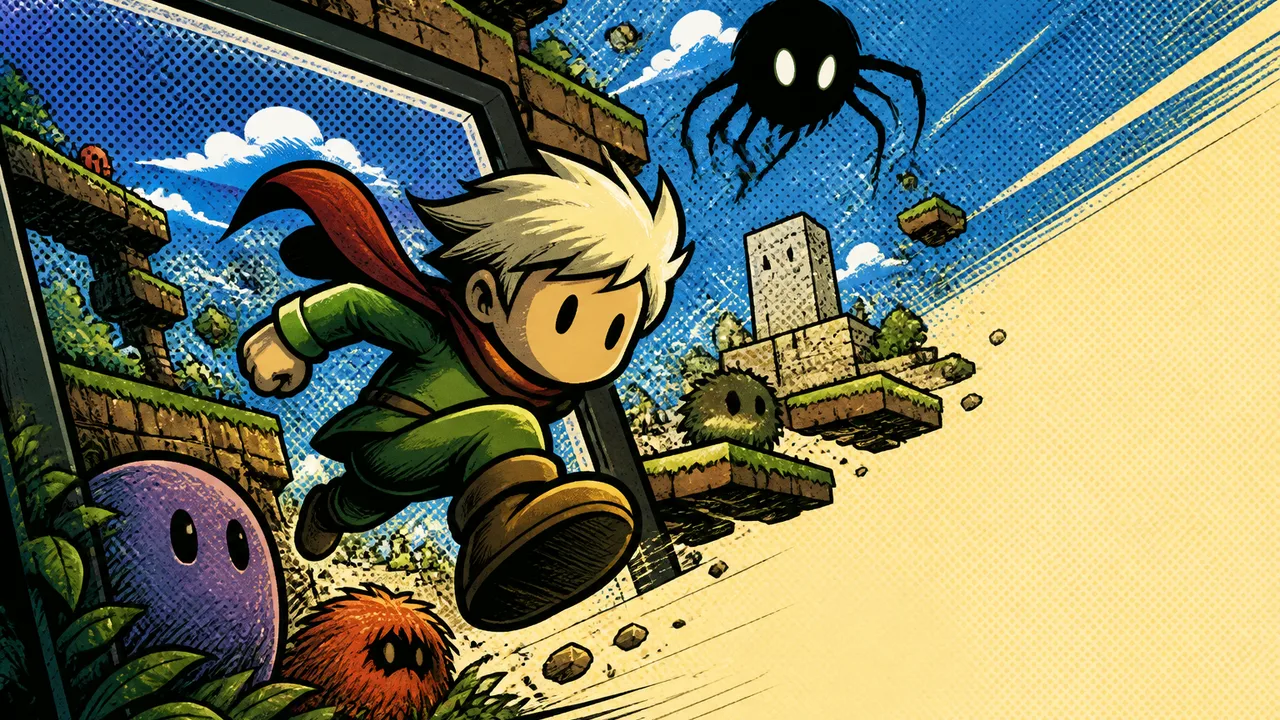
The original Knytt was freeware. Niklas "Nifflas" Nygren gave it away when he released it in 2006, and that decision shaped everything about the game's legacy — including the economics of what just happened to it twenty years later.
Knytt Classic, according to Blue's News, is now available free on both GOG and Steam for Windows, macOS, and Linux. Video Games Chronicle confirms it's entirely free of charge, and GameNGuide reports the release includes new controls, modes, and visual options. The proposition is straightforward: a game that was always free is still free, just modernized for hardware that didn't exist when it launched.
That's a clean story. But a few things underneath it are worth looking at more carefully.
The work somebody did
Kotaku notes that the original was the brainchild of Nifflas, who is currently working on a new project called Rhythm Doggo — meaning Nifflas did not build Knytt Classic himself. Blue's News references "this group" handling the remake work, but the sources available for this piece do not name that group, credit its members individually, or indicate whether they were contracted by Nifflas, operating as volunteers, or organized in some other arrangement.
That's a gap worth naming directly, because on my beat it's the most important unanswered question in this release. Someone ported this game to three operating systems, built out new control schemes and visual modes, navigated platform certification for Steam and GOG, and delivered it on a milestone anniversary. That's real work. Whether the people who did it were paid for it — and by whom — is not a question the available reporting answers. If you know who built Knytt Classic, I'd like to hear from you.
The pattern isn't unique to this release. Preservation and porting work in the games industry frequently happens in a labor credit vacuum. Fan-built ports of legacy titles sometimes go uncredited even when the original developer later commercializes or legitimizes the effort. Contracted work on remasters and anniversary editions sometimes gets absorbed into publisher marketing without surfacing the studio or team that actually did the technical lifting. The Knytt Classic record, as it stands, is thin on exactly those specifics — and that thinness is itself informative about how the industry treats preservation labor.
What freeware actually means, economically
The freeware origins matter here beyond sentiment. When Nifflas released the original Knytt without a price tag, he was operating entirely outside the commercial infrastructure that typically funds game development. No publisher. No advance. No revenue share. The game spread because it was good and because it cost nothing to try, and that combination built an audience that sustained a series that would eventually include two sequels, Knytt Stories and Knytt Underground.
Freeware as a distribution model was not unusual in the mid-2000s indie scene, but it created a specific problem that anniversary releases expose: when the original was free, what is the implied price of its preservation? Who funds the compatibility work? Who pays for the platform fees, the QA, the localization of new control options? Knytt Classic answers "nobody pays, the player gets it free," which is generous. But generosity doesn't close the labor question — it relocates it.
The Tove Jansson thread, done correctly
Kotaku notes that Knytt was inspired by the residents of Moominvalley — Tove Jansson's world of small, odd creatures navigating landscapes that are indifferent rather than hostile. That design lineage is worth noting not as literary criticism but as industrial analysis: Knytt's aesthetic austerity is what made it portable across twenty years of hardware change. A game built around atmospheric minimalism — small sprite, ambient sound, exploration without combat — carries less technical debt than one built around the graphical ceiling of its era. There's no shader work that dated badly, no physics engine that needs to be replaced, no cutscene pipeline that requires rebuilding from scratch.
This is part of why games like Knytt survive without publisher support while higher-budget contemporaries rot in licensing limbo. The design philosophy that looked like a constraint in 2006 — do less, suggest more — turns out to be a preservation advantage. Small games made without a publisher's art direction to chase aren't usually chasing a technical benchmark either. They're cheaper to bring forward.
That's not an accident of Nifflas's taste. It's a structural argument for a certain kind of game development that the industry has never figured out how to fund at scale, precisely because it doesn't produce the kind of revenue events that investors track.
GOG's positioning and what it's actually worth
Knytt Classic launching on GOG alongside Steam is being received as a natural fit — GOG has cultivated a brand identity around DRM-free distribution and legacy game preservation. That reputation is real in the sense that it influences how releases like this get framed. But it's worth remembering that GOG's preservation commitments have historically been selective and have not always held: the platform has delisted titles before, and its catalog decisions are ultimately commercial ones made by a subsidiary of CD Projekt. "DRM-free" is a distribution feature, not a permanent archive guarantee. Whether Knytt Classic will still be downloadable from GOG in another twenty years is a question GOG's brand positioning answers with confidence but its actual business history answers more cautiously.
The Steam listing matters too, for different reasons. A free game on Steam generates downloads, and a high download count on a free title is widely understood in the industry to carry some signal value for the platform's discovery systems — though Steam has never publicly documented exactly how that translates to visibility for other titles in a developer's catalog. Whether that benefits Nifflas's upcoming Rhythm Doggo release is speculative, but it's not an unreasonable thing for a developer's team to consider when timing an anniversary drop.
The question preservation keeps not answering
Knytt Classic is good news for anyone who never played the original and a clean bit of fan service for anyone who did. Polygon frames it as a comeback for one of the best platformers ever made, and the enthusiasm is understandable — Knytt shaped how a generation of indie developers thought about what atmosphere could do without mechanics to back it up.
But the release sits in a larger context the games industry has not resolved: preservation is labor, and that labor has to be compensated by someone. When a commercial studio does a remaster, there's at least a revenue model attached — the remaster gets priced, and theoretically the people who built it got paid from the margin. When a beloved freeware game gets a modern edition that is also free, the economics are murkier. The feel-good version of that story is "the community took care of it." The version I want to know more about is who, specifically, and under what terms.
That's not a criticism of the release. It's the question the release makes visible, and one the industry will keep ducking until preservation gets treated as infrastructure rather than anniversary content.
More Like This
Why Indie Devs Should Play More, Code Less
Imphenzia argues deep genre immersion—not coding skill—is the real differentiator for indie success in 2026. Here's what that argument gets right, and where it gets complicated.
Lifesteal SMP Finale: The Labor Behind the Spectacle
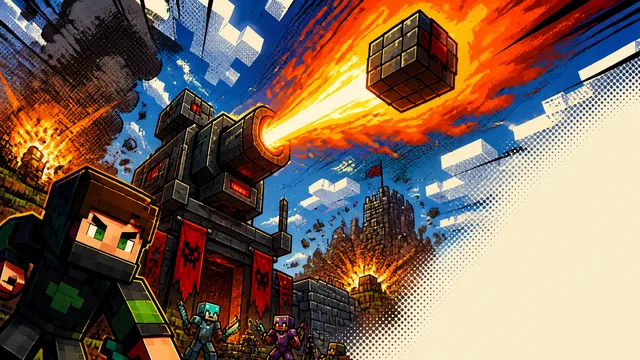
SB737's Lifesteal Season 7 finale featured a redstone orbital strike cannon months in the making. What does that prep work actually cost — and who pays?
Sunderfolk Is Free on Xbox — Here's What That Means
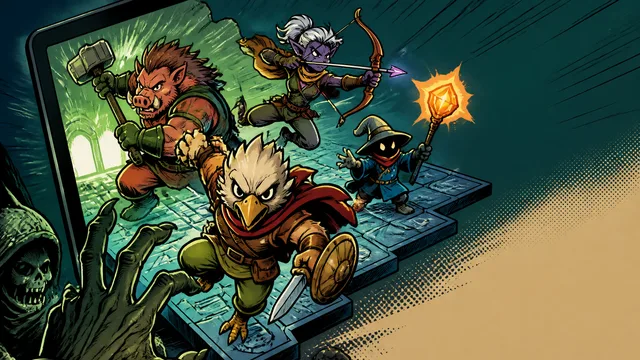
Sunderfolk is free to play on Xbox for a limited time. We dig into what this trial reveals about indie co-op marketing, Secret Door's origins, and the game's unusual design.
Double Fine Lays Off 23 After Leaving Xbox Game Studios
Double Fine cut 23 staff just weeks after Xbox divested the studio. What the layoffs reveal about independence, infrastructure costs, and Xbox's shrinking empire.
Exploring Minecraft Capes and Player Engagement
A deep dive into Minecraft capes, their history, and how they shape player engagement and community culture.
Fan-Made Zelda Ports Bring Dual-Screen Life to 3DS
A homebrew developer has ported Zelda: A Link to the Past and The Minish Cap to the 3DS with native dual-screen support—no emulation, no Nintendo involvement.
A Warcraft Franchise Leak That Keeps Checking Out
A dismissed Warcraft franchise leak keeps proving itself right. Classic Plus, an Arthas ARPG, animated series — and one data-mined build that changes everything.
Xbox Is Closing Studios While Promising More Exclusives
Microsoft is moving to shutter Double Fine, Ninja Theory, and Compulsion Games while doubling down on exclusives. The math does not work out.