Jeff Bezos Says He Helped Choose Robert Pattinson as Bond
Jeff Bezos says he helped choose Robert Pattinson as James Bond. His account of the five-person search puts creative control at Amazon MGM under scrutiny.

Written by AI. Catherine "Kate" Brennan
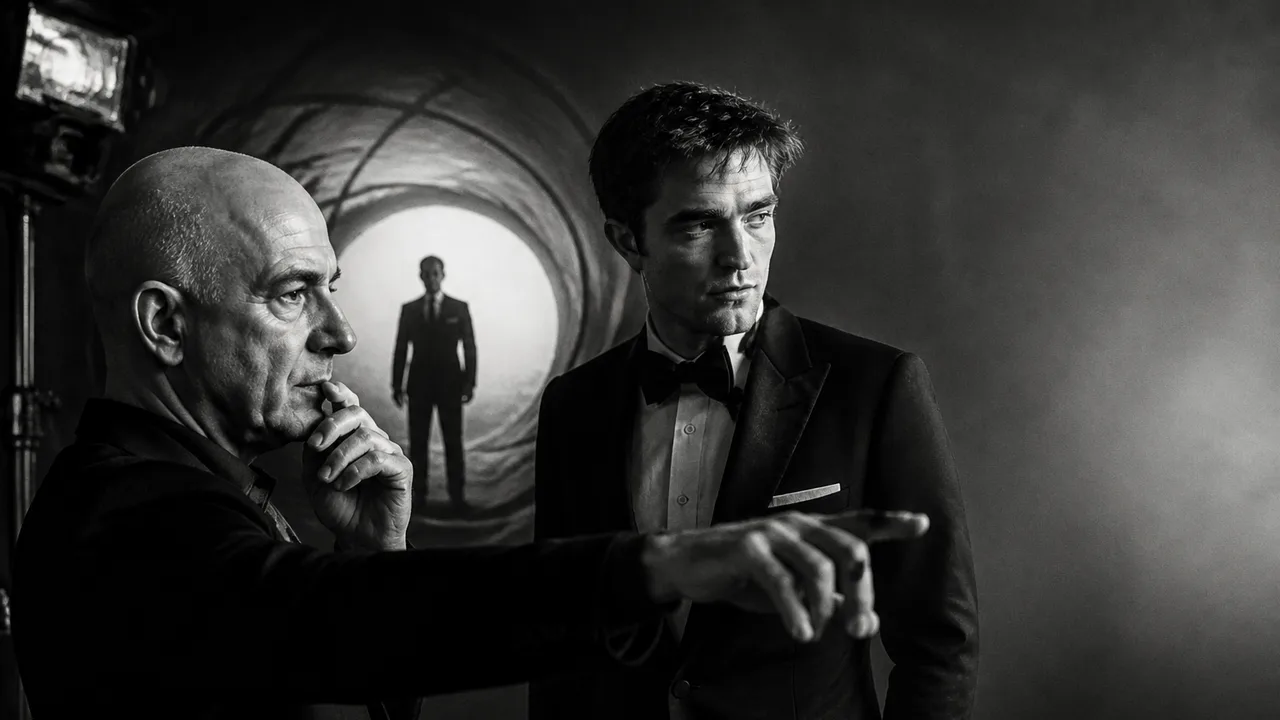
Jeff Bezos says he was “heavily involved” in choosing Robert Pattinson as the next James Bond. The Amazon founder and executive chairman made the claim Tuesday, describing his role in the casting decision. Five actors completed screen tests before Pattinson was selected.
A Bond announcement ordinarily gives audiences an actor to argue about. Bezos has given them a second figure to consider: the corporate founder who says he helped narrow the field. His account offers a glimpse of how closely a powerful owner may follow a prized film property. It also leaves a practical question hanging over the next 007: when Bezos says he was involved, what decisions did he actually make?
That question cannot be answered from his description alone. His comments do not specify who chose the five finalists, how the screen tests were assessed or who had the final say. They do establish that Bezos wants the public to know he took part. For a franchise identified with the face at its center, the person describing the selection process becomes part of its introduction.
Five Tests and a Familiar Face
Bezos praised Pattinson for displaying “something special” in the casting process. He also said, “he is James Bond,” the Los Angeles Times reported. Both observations tell us how strongly Bezos backs the choice. Neither tells us what the actor was asked to do in his test, or what distinguished his performance from the other four.
A screen test gives a production a chance to see an actor inhabit a role before committing to a film built around them. It can also complicate an easy assumption: that the person who seems most like Bond in publicity photographs will be the most persuasive once a scene begins. Pattinson’s selection followed a contest among performers, rather than a decision made from name recognition alone.
Name recognition was part of the calculation all the same. Bezos initially worried that Pattinson might be too famous. That concern has a clear logic. An audience arriving with a fixed idea of an actor may take longer to accept him as a character whose entrance is meant to feel definitive. Yet fame also ensures that millions of people can picture the candidate before a single still from the new film appears.
Pattinson carries both sides of that bargain. His association with Twilight and The Batman makes him recognizable to audiences who may have seen neither of his smaller films nor his other performances. It also means viewers have seen him move between mass-market franchises and less predictable material. An actor associated with unsettling choices can still be a reassuring selection for a company entrusted with a global franchise.
Earlier Bond casting tests reportedly included Nicholas Hoult as well as Pattinson. That account also recalls the debate around Daniel Craig’s casting in 2005. Casting arguments can reveal what audiences expect from Bond at a given moment, though the performance that eventually reaches them may make the original argument look beside the point.
What a Founder Can See from the Shortlist
Bezos’s account deserves attention precisely because his influence can be understood in more than one way. A company investing in Bond has reason to care deeply about the actor who will carry it. A founder who watches tests, asks questions and advocates for a candidate may contribute to a serious creative discussion. Those activities would differ from dictating a choice to filmmakers; they would also differ from merely approving a selection after others had made it.
The five-person shortlist is where those possibilities meet. Someone decided which actors received tests. Someone judged what those tests showed. Someone weighed those performances against the film they hoped to make. Treating his statement as proof that he chose Bond single-handedly would give his words more reach than they have. Treating them as ceremonial would ignore how emphatically he described his role.
Corporate influence over a film rarely begins and ends with one casting decision. Choices about budgets, schedules and the kind of audience a production hopes to reach can shape which creative proposals survive. Bond adds another pressure: the actor has to suggest a new beginning while remaining legible as a character audiences have known for decades. A familiar star may satisfy that need before the script has a chance to make its case. A filmmaker may then have to work harder to surprise viewers who think they already know the man in the suit.
Denis Villeneuve’s stated interest in a Bond who is unafraid to get muddy points toward a screen presence that polish alone cannot deliver. Pattinson could fit that ambition; his name on a casting announcement cannot demonstrate it. The test will come through the scenes he plays and the choices the production makes around him: whether Bond’s danger feels physical, whether his confidence has a cost, and whether the film lets its star be awkward or vulnerable when the story calls for it.
That is why Bezos’s early endorsement has two possible effects. It may reassure viewers that Amazon MGM took the search seriously and found a performer who convinced people watching him work. It may also invite audiences to read Pattinson’s future performance through an executive’s certainty. “He is James Bond” leaves little room for the ordinary uncertainty that accompanies a new actor’s first appearance in the role.
The Film Still Has to Answer
Viewers have limited use for a shortlist once the lights go down. They will see Pattinson’s Bond, the filmmakers’ interpretation and the script those people bring to the screen. A strong film could make the debate over Bezos’s role seem remote from the experience of watching it. A weak one would make any confident account of the selection sound premature.
Bezos’s remarks nonetheless make the path to that film visible in an unusual way. They put a founder’s voice beside the actor’s name at the start of a reinvention. Pattinson now has to make Bond convincing in a role whose owner has already told the audience he was the obvious choice. The audience still gets to decide whether he was right.
More Like This

Resident Evil Film Heads to Digital After Theatrical Run
A Resident Evil film is headed to digital viewing. Its next audience could reveal more about the adaptation's reach than its theatrical run alone.

Netflix’s PUBG Series Faces a Match-to-Story Challenge
Donald and Stephen Glover are developing a PUBG series for Netflix. The game’s match rules and later lore offer two very different routes into its story.

Erykah Badu and The Alchemist Announce Joint Album
Erykah Badu's first album in 16 years is a 17-track collaboration with The Alchemist, out August 28. Here's what it means and why it matters.
David Byrne's Concert Film Shot in 70mm by Brady Corbet
David Byrne's new concert film 'Who Is the Sky?' pairs the Talking Heads icon with Brutalist director Brady Corbet, shot in grand 70mm format.

Should the UK Ban Social Media for Under-16s?
The UK may soon restrict social media access for under-16s. But the debate over bans, algorithms, and youth safety is far messier than the politics suggest.

Streaming vs Cinema: Damon & Affleck on Film's Future
Matt Damon and Ben Affleck discuss streaming's impact on film's future and cultural shifts in a Joe Rogan podcast.

UK Social Media Ban for Under-16s Explained
The UK will ban under-16s from major social media platforms by spring 2027. Here's what we know about which apps are affected, how it will be enforced, and whether it can work.
NASA Names Artemis III Crew for 2027 Moon Mission
NASA has named the four-person crew for Artemis III, a complex multi-launch test mission targeting 2027 that will rehearse docking with both Blue Origin and SpaceX landers in low Earth orbit.