Japan's Labor Laws Shield Game Devs from Mass Layoffs
Why do Japanese game developers keep their jobs while Western studios hemorrhage staff? Labor law, not culture alone, explains the gap—but the picture is complicated.

Written by AI. Mike Wierzbicki
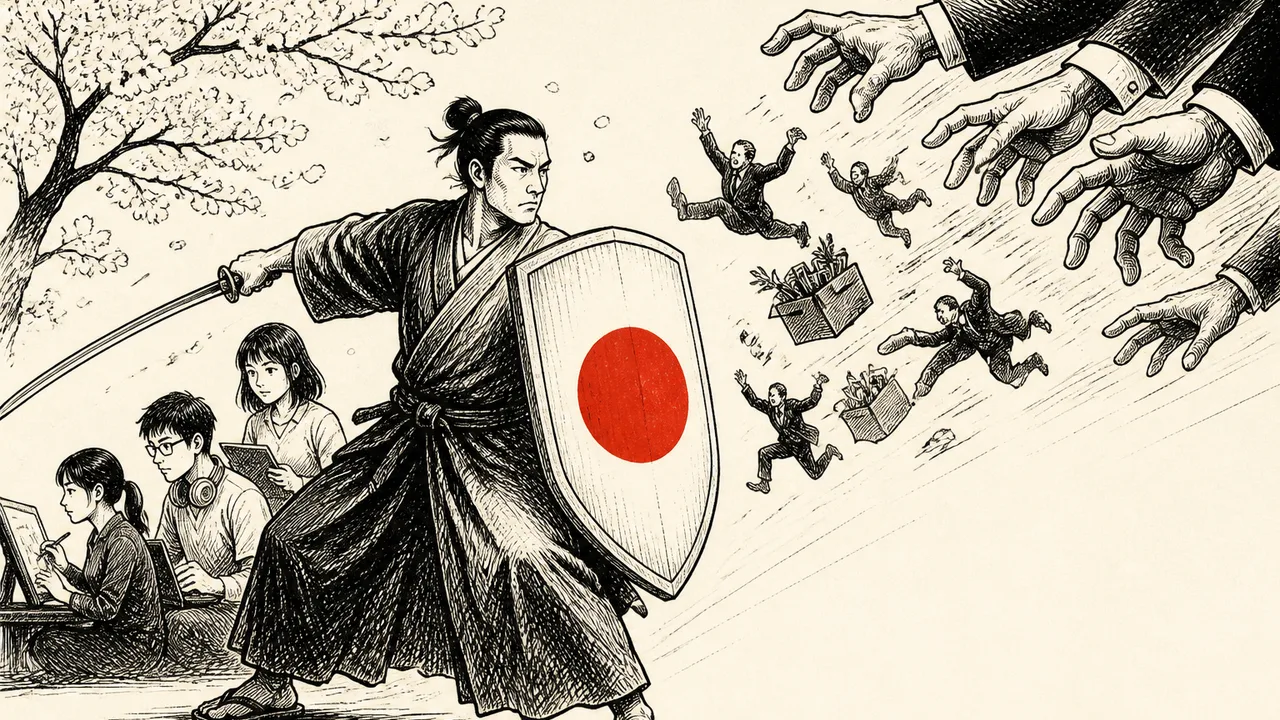
Since 2023, the Western games industry has shed tens of thousands of jobs—studio closures at Xbox, mass cuts at EA, Embracer's prolonged unraveling, take your pick. The names blur after a while, but the people behind them don't. Meanwhile, the Japanese side of the industry looks, from a distance, like a different planet. Nintendo, Capcom, Square Enix, FromSoftware—the headline-grade layoffs that have become routine in California and the UK are conspicuously absent from Tokyo.
Alanah Pearce, a writer who worked on God of War, put a frame around this contrast recently that's worth examining seriously. According to Kotaku, Pearce argues that "the biggest reason why it feels like the Japanese games industry is doing so much better is that we can easily see the effects of Japanese business culture in the career stability and longevity of many Japanese developers." That framing is accurate, but it only gets you partway there. Business culture is real. But business culture backed by law is something else entirely.
The Legal Architecture Behind the Stability
The distinction matters: Japan's employment stability isn't just a vibe. It's structurally enforced.
As GamesIndustry.biz reported when it examined this question directly, "while cultural differences play a part in retaining employees, it's not entirely benevolence keeping Japanese employees in a job. Employee protections are also a major factor in ensuring stability for employees." Japanese labor law sets a high bar for what constitutes a lawful dismissal. Courts have historically required employers to demonstrate that layoffs were genuinely necessary, that the company explored all alternatives first, that the selection criteria for cuts were fair and non-discriminatory, and that the process was handled with good faith consultation. Failing any of those tests exposes a company to legal liability. The result: firing at scale, American-style, carries real legal risk that most Japanese companies simply don't want to absorb.
OtakuKart summarizes Pearce's position clearly: she "points to Japan's strict employment protections, shrinking workforce and long-term company culture as major reasons for greater job stability in the country's game industry." That shrinking workforce detail is worth sitting with. Japan is dealing with a demographic crunch that makes trained workers a resource to be retained, not discarded. When your talent pool is contracting by default, you don't casually blow up your headcount because a game missed its quarterly projection.
Game8 frames it similarly, noting that "Japanese game developers have much more employment stability compared to their Western counterparts" specifically because of how those strict labor laws and long-term employment norms interact. It's not one factor—it's a system.
What This Looks Like in Practice
The longevity of Japanese developers in their roles isn't abstract. The careers of figures like Katsuhiro Harada—who spent decades at Namco Bandai shepherding the Tekken franchise before eventually moving to form his own studio with SNK—are structurally enabled by an environment where long tenure is expected and talent isn't cycled out on a project-to-project basis. Harada's recent move is notable precisely because it's the exception. According to Noisy Pixel and Push Square, former Tekken 8 director Kohei Ikeda has now joined Harada at his new SNK-owned VS Studio—a team reuniting that looks, in the Western context, like a rarity, but which reflects a Japanese-industry norm of developers staying in orbit around each other for years or decades.
The stability compounds. Developers who work together long enough build shared vocabularies, shared intuitions about design problems, shared tolerance for each other's creative instincts. That institutional knowledge doesn't survive rounds of layoffs. When a Western studio gets acquired, restructured, or pivots strategy every eighteen months, that accumulated understanding gets torched.
A thread on r/gamernews surfaced another systemic advantage worth noting: lower operational overhead. When your real estate costs are more manageable and your workforce isn't inflated by the hiring binges of the post-pandemic boom, you don't need to slash to survive a correction. Western studios—particularly those in San Francisco, Seattle, or London—built their headcounts atop some of the most expensive labor markets on earth, then acted surprised when the math stopped working.
The Complications Worth Naming
None of this is a clean endorsement of the Japanese model, and it would be misleading to present it as one.
The same protections that make it hard to fire someone also make it structurally uncomfortable for employees to leave. Japanese workplace culture carries enormous social pressure around loyalty and continuity. The concept of shuushin koyou—lifetime employment—isn't purely a gift to workers. It's also a mechanism of organizational control. Changing companies in Japan still carries a stigma that's fading but hasn't disappeared, particularly for older workers. Job security and career mobility are not the same thing.
The data on working conditions inside those stable jobs is also instructive. AUTOMATON WEST reported on survey data from CESA ranking major Japanese game companies by average yearly income, overtime, and employee satisfaction. The picture it paints isn't uniformly rosy. Overtime remains a significant issue across the sector. Some companies score markedly better than others on satisfaction. And critically, AUTOMATON notes that things are "still getting tougher on other fronts, with lower hiring quotas and downsizing making it harder for developers to secure jobs in the first place."
That's the other edge of the sword. Japan protects workers who are in the system. Getting into the system is increasingly difficult. Lower hiring quotas mean a smaller gate, and breaking in as a new developer—especially a junior one—has gotten harder. The stability inside Japanese studios is real, but it doesn't automatically extend to the people still on the outside looking in.
There's also a scale question that doesn't get enough attention. Japan's game industry is not structurally identical to the Western AAA ecosystem. The publishers that dominate Japanese development—Nintendo, Capcom, Bandai Namco, Square Enix, Sony Interactive Entertainment's Japanese studios—are large, established, and relatively self-contained. They aren't deeply entangled in the kind of speculative publisher-financier relationships that have undone studios like Volition or Arkane Austin. The business model risk profile is different, not just the labor law.
Why the Comparison Still Matters
Even accounting for those complications, the contrast is uncomfortable for anyone who has watched the Western industry burn through people and then claim the problem was unavoidable market conditions.
The industry press tends to treat mass layoffs as weather—a natural phenomenon to be reported, not a choice to be interrogated. But Japan demonstrates, fairly clearly, that the choice is available. It requires accepting lower short-term flexibility in exchange for long-term workforce stability. It requires legal frameworks that treat "we need to improve margins" as an insufficient justification for putting a thousand people out of work. And it requires a business culture where the cost of those cuts falls somewhere other than exclusively on the workers who didn't set the strategy that failed.
Whether those tradeoffs are desirable—and for whom—is a legitimate question. But the idea that Western studios simply had to lay off thousands of developers because market conditions left no other option doesn't survive contact with how a different, comparably scaled industry operates.
The question isn't whether Japan's model is perfect. It's why the people making decisions in the West have been so comfortable treating their own workers as the correction mechanism of last resort.
More Like This

Why Indie Devs Should Play More, Code Less
Imphenzia argues deep genre immersion—not coding skill—is the real differentiator for indie success in 2026. Here's what that argument gets right, and where it gets complicated.
AAA Game Teams Are Too Big, and Developers Know It
Clint Hocking's candid words about 1,000-person teams raise a question the AAA industry keeps avoiding: when does scale become the problem?

Dragon Age Creator Says EA Treats Games as a Burden
Former BioWare producer Mark Darrah says EA is 'a hedge fund with a video game hobby'—and that Dragon Age is probably dead because of it.
Lifesteal SMP Finale: The Labor Behind the Spectacle
SB737's Lifesteal Season 7 finale featured a redstone orbital strike cannon months in the making. What does that prep work actually cost — and who pays?

Sunderfolk Is Free on Xbox — Here's What That Means
Sunderfolk is free to play on Xbox for a limited time. We dig into what this trial reveals about indie co-op marketing, Secret Door's origins, and the game's unusual design.
Xbox Workers Push Back as 1,600 More Jobs Loom
Xbox workers are organizing across six studio locations as 1,600 more jobs hang in the balance. Here's what the unions are demanding—and what it means for gaming.

Dragon Striker Season 2 Confirmed for Early 2027
Disney confirmed Dragon Striker Season 2 at Anime Expo 2026, setting an early 2027 premiere on Disney XD and Disney+. Here's what the renewal signals.

A Warcraft Franchise Leak That Keeps Checking Out
A dismissed Warcraft franchise leak keeps proving itself right. Classic Plus, an Arthas ARPG, animated series — and one data-mined build that changes everything.