Insects Ruled Earth for 400 Million Years Before Us
Entomologist Jessica Ware joins StarTalk to explain insect evolution, the decline of insect populations, and what happens when humans try to outsmart them.

Written by AI. Olivia Meng
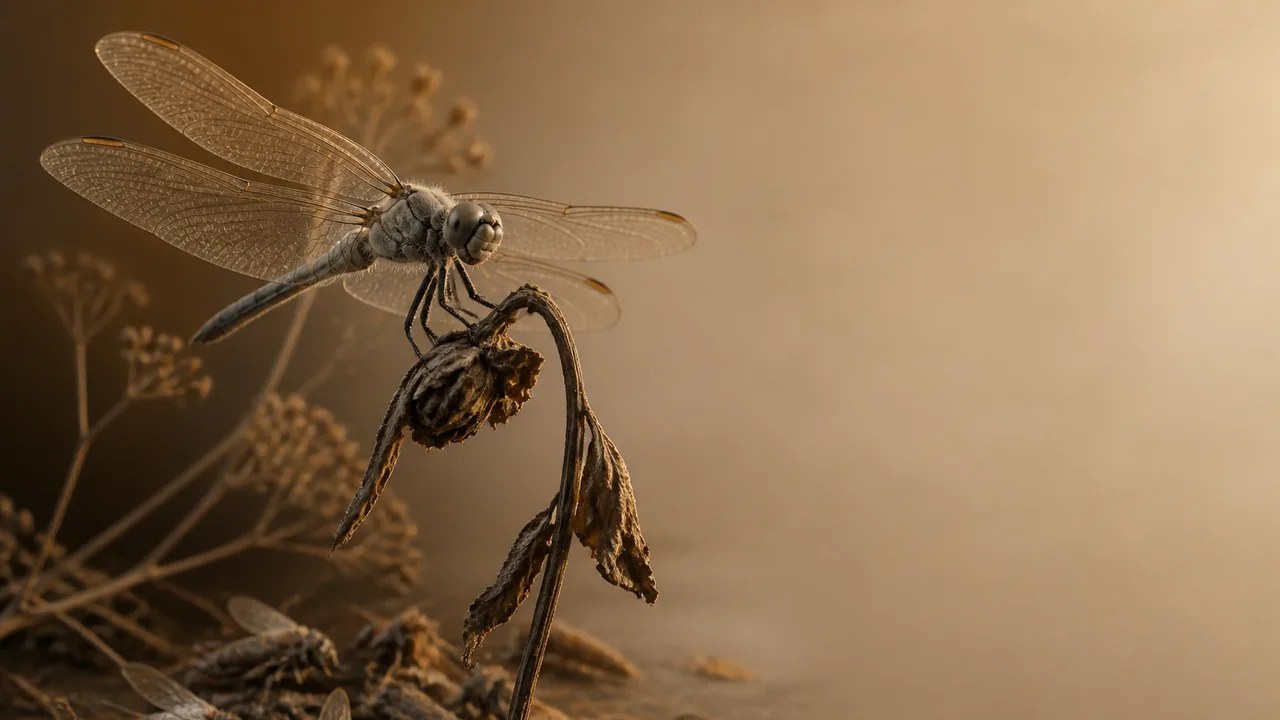
Photo: AI. Naia Iwarra
There is a terminological injustice embedded in everyday language that Jessica Ware, division chair of invertebrate zoology at the American Museum of Natural History, would like to correct. When you call the gnat circling your head a "bug," you are, taxonomically speaking, wrong. Bugs are a specific order of insects — Hemiptera, the true bugs — united by a single defining trait: a sucking mouthpart, like a straw with a pump. Dragonflies are dragonflies. Beetles are beetles. The gnat is a fly. "Bugs," Ware told Neil deGrasse Tyson and comedian Negin Farsad on a recent episode of StarTalk, "are just a kind of insect."
This is not pedantry for its own sake. The distinctions matter because the differences between insect groups are genuinely vast — and understanding them turns out to be prerequisite to understanding one of the more consequential ecological stories of our time.
An empire built over 400 million years
Flying insects have been on this planet for roughly 400 million years. That number is hard to hold in your head without something to anchor it to. Ware offered one: the dinosaurs most people picture — the charismatic fourth-floor specimens at the Natural History Museum — weren't anywhere near the scene yet when dragonflies were already airborne. Insects predate them by something on the order of 100 million years. They were the first animals to fly, period. Before birds, before bats, before pterosaurs.
When the sky was empty, early winged insects grew large and flew clumsily — because they could. There was nothing hunting them from above, and the mechanics of aerial competition hadn't yet been invented. As the sky filled up with other things over geological time, wings evolved toward precision: fast flight, maneuverability, hovering. The dragonfly wing design was good enough that Frank Herbert borrowed it for the ornithopters in Dune. "It's the original design," Ware said. "The blueprint, the template."
The reason for their original size has been reconsidered recently. The long-standing hypothesis pointed to higher atmospheric oxygen in the Carboniferous period — insects breathe through small openings called spiracles, and more oxygen in the air meant bodies could grow larger. But Ware cited new work from collaborators in odonatology (the study of dragonflies and damselflies — search carefully, it's one Google misspelling away from dentistry) showing that prehistoric dragonflies possessed large internal air sacs. They weren't simply breathing richer air. They were carrying their own supply.
What persisted across all that time is a basic body plan: head, thorax, abdomen with roughly ten segments, six legs. Eyes and wings arose once each — single origins, not convergent evolution reinventing the wheel. Ware's research at the Institute for Comparative Genomics reads that 400-million-year history through whole genome sequencing. The dragonfly brain she was examining before she arrived at Tyson's office is a physical record of that history: mostly optic lobes, a tiny central structure, and a "mushroom body" thought to be involved in memory. Almost everything in a dragonfly's head is devoted to seeing. The brain is an afterthought.
Whether territorial dragonflies develop larger brains than non-territorial ones — or migratory individuals larger than those that never leave their natal pond — are open research questions. The answers would tell us something about what memory is actually for in a nervous system that small.
The intervention problem
Which brings us to the recurring motif of this conversation, and the one that sharpens into something genuinely uncomfortable when you pull back far enough: humans keep intervening in insect systems, and the results keep running orthogonal to intent.
The bug zapper is the obvious case. Designed to exploit insects' sensitivity to UV light, marketed as a mosquito-control device. Ware's assessment was pointed: the devices kill an overwhelming proportion of non-target insects — beneficial ones — while making essentially no dent in mosquito populations. The mosquitoes you're trying to eliminate are not the ones dying. You've built a machine that does the opposite of what it says on the box, and millions of people have bought it.
The spotted lanternfly is a slower version of the same story. New Yorkers have been told to stomp them on sight, and the instinct is understandable — it's an invasive species causing real damage to trees. But Ware flagged a selection pressure problem that nobody in the stomp-on-sight campaigns has reckoned with: if you selectively kill the slow ones because they're easy to catch, you are, methodically, breeding a faster population. "What you should do," she said, with the particular patience of someone who has explained this many times, "is go after the fastest ones." The slow ones, meanwhile, are still out there, sap-sucking away. Egg-scraping campaigns have yielded little. The lanternfly, Ware suggested, is probably established in the Northeast now in the same way the boll weevil eventually became simply a fact of American agriculture — something you manage around rather than eliminate.
The Lone Star tick is the most baroque example. Climate change has allowed it to expand its range into regions that were previously inhospitable. It carries a pathogen that can trigger alpha-gal syndrome — an allergy to mammalian meat. On Martha's Vineyard, Tyson reported, the tick has become prevalent enough that grocery stores have reduced their meat stock and restaurants now carry dedicated menus for the alpha-gal affected. A tick, reshaped in its distribution by warming we caused, is now quietly reorganizing the dining options of one of the wealthiest seasonal communities on the Eastern Seaboard. Whether that counts as irony or justice probably depends on your diet.
The mosquito question, which is not as simple as it sounds
Mosquitoes sit at the extreme end of this conversation, because the case for targeted elimination of specific species is genuinely strong — and because that's exactly where the intervention problem gets most interesting.
More humans have died from mosquito-vectored disease than from all human wars combined. Ware acknowledged this without flinching. Her position: if we could eliminate Anopheles (the malaria vector) and Aedes aegypti (dengue, chikungunya, yellow fever), that would represent a net positive for human life. Thousands of other mosquito species — the ones not vectoring diseases that affect us — would remain. Bats, dragonflies, and the rest of the food web that feeds on mosquitoes would, by Ware's read, largely adapt.
The methods being tried are worth examining in that frame. Researchers have released sterile males — irradiated to render them reproductively inert — to crowd out fertile ones. They've also deployed Wolbachia bacteria, which spreads through female mosquito populations and suppresses male fertility, effectively collapsing reproduction from within. These are elegant, targeted tools designed by the same species that invented the bug zapper.
That's not a reason to dismiss them — the scientific logic is meaningfully different from "UV light attracts insects, let's electrocute them." Sterile insect techniques have real track records. But the second-order effects of restructuring a mosquito population at scale, in ecosystems we don't fully map, are not something we know yet. We are, as a species, not great at knowing what we don't know about insect systems until after we've acted. The bug zapper taught us that. The lanternfly is teaching us that. The Lone Star tick is the one we didn't see coming at all.
"The catastrophe that we're seeing, we created," Ware said. "And we're kind of keeping it going."
The collapse underneath everything
Insect populations are declining at rates that started alarming researchers in the early 2010s, when species-level studies began showing dramatic drops across butterfly populations and beyond. Urbanization is expanding the footprint of impervious surfaces — concrete, asphalt, rooftops — while simultaneously compressing the green space insects need. Light pollution disrupts firefly mating: the flashes are species-specific signals, and in Times Square, there is simply too much competing light for them to find each other. Monarch butterflies, Ware noted, have seen severe declines driven by milkweed habitat loss and the gauntlet of their migratory route — though the precise figures vary by population and methodology, and the full picture is more complicated than any single number captures.
The stakes of insect decline are not abstract. Every terrestrial vertebrate, every plant that requires pollination, every bird, mammal, and fish that eats insects sits downstream of this. "All life," Ware said, "with the exception of maybe fish — it came after insects." The insects were here first. We built our entire ecological inheritance on top of theirs.
Ware's practical prescription was modest but specific: learn the insects in your neighborhood. Know what's supposed to be there, so that when something that shouldn't be shows up, you notice, and you tell someone before it establishes. It's not a glamorous solution. It doesn't have the clean satisfaction of a product you can buy or an app you can download. It requires sustained, patient attention to a world most people have been trained to find repellent.
The biologist J.B.S. Haldane, when asked what he could infer about the nature of God from his study of the natural world, reportedly answered that the creator must have "an inordinate fondness for beetles" — given that there are more described beetle species than almost anything else on Earth. What Haldane didn't say, and what Ware's work implies, is that the fondness appears to be unrequited. We are systematically dismantling what 400 million years assembled, and we're doing it faster than we can measure.
More Like This

Unraveling Time and Reality with Sean Carroll
Explore time, black holes, and reality with Sean Carroll, as science and philosophy intertwine in our understanding of the universe.

Black Holes, Rubble Piles, and the Cost of Not Knowing
Neil deGrasse Tyson's StarTalk Cosmic Queries tackles black holes, the Roche limit, and asteroid deflection—where astrophysics meets existential stakes.

Science Spent Millions on Blue Roses and Failed Spectacularly
Decades of genetic engineering haven't produced a true blue rose. The quest reveals fascinating limits of plant biology—and human obsession.
DC Is Releasing 600,000 Mosquitoes to Fight Mosquitoes
Washington DC is deploying 600,000 Wolbachia-infected male mosquitoes this summer to crash local populations. Here's the biology, the stakes, and the bigger picture.
Bourbon Virus: What the First NY Case Reveals
Bourbon virus has reached New York. Here's what we know about this rare, untreatable tickborne illness—and what its spread reveals about emerging disease risk.

Adam Becker on Why Silicon Valley's Big Bets Will Fail
Astrophysicist Adam Becker argues that the singularity, Mars colonies, and AI doom share one flaw: they all assume exponential growth never ends. It always does.
The Aurochs Is Gone. Should We Bring It Back?
The wild ancestor of cattle vanished in 1627. Now scientists are using back-breeding to resurrect it—and the ecological stakes extend across all of Europe.

Spain's 2026 Total Solar Eclipse: Best Cities to Watch
On August 12, 2026, a total solar eclipse crosses Spain. Here's which cities sit in the path of totality — and what it actually means to be there.