Hubble and Webb Reveal Different Sides of Cat’s Head Nebula
Hubble and Webb image the Cat’s Head Nebula in visible and infrared light, revealing an illuminated dust pillar, hidden stars and clues to stellar feedback.

Written by AI. Amelia Nwofor
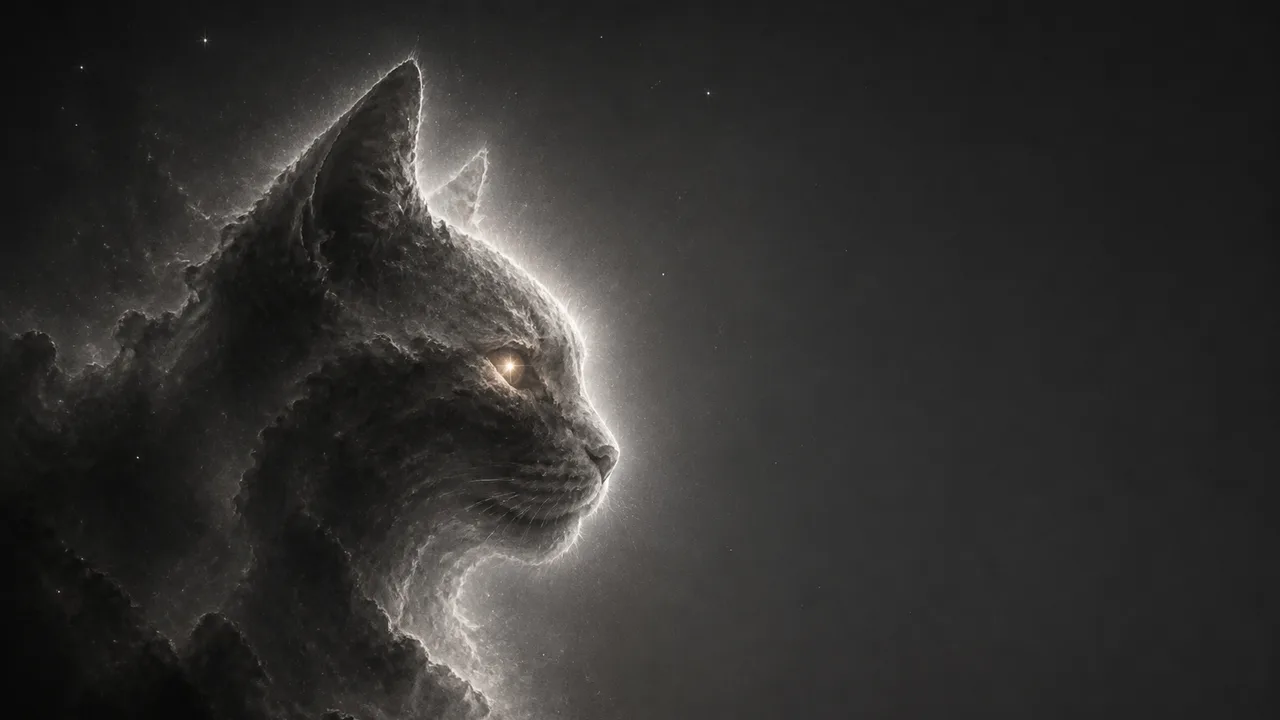
Hubble and Webb have imaged the same dusty pillar in the Carina Nebula, and the pillar looks different in each telescope’s view. Hubble shows a dark shape edged with light. Webb brings stars and fine structures into view through the dust. The small patch, nicknamed the Cat’s Head Nebula, lies within a star-forming region about 7,500 light-years from Earth. Its apparent eye gives the shape its name; the more useful question is what each image lets astronomers examine.
The three views use different wavelengths. Hubble’s visible-light image emphasizes an opaque dust pillar, a bright rim and glowing material around it. Webb’s near-infrared image makes parts of the pillar appear more transparent and reveals many stars. Its mid-infrared image picks out emission associated with warm dust and carbon-based molecules. Those changes in appearance come from looking at the region in different light, rather than watching the pillar change over time.
Start at the Bright Edge
On the right side of Hubble’s dark pillar, a hazy yellow ridge follows the edge of the dust. Hubble’s filters also capture light emitted by oxygen, hydrogen and sulfur, along with starlight scattered by dust. The surrounding blue, cyan, yellow, orange and red therefore reflect a mixture of glowing gas, dust and illumination. A color patch cannot be read as a simple temperature reading.
The bright rim is consistent with gas illuminated and ionized by ultraviolet radiation from nearby massive stars. That radiation could be driving photoevaporation: gas at the exposed edge heats and disperses while denser material farther in persists. It marks a plausible boundary between an irradiated surface and a dustier interior; the image alone does not measure how quickly that boundary is retreating.
Over time, ultraviolet radiation and winds from massive stars have likely worn away surrounding material, leaving denser parts of the pillar standing longer. Astronomers call such effects stellar feedback. The image catches a structure shaped by that history, rather than recording its stages one after another. The same radiation that can erode a cloud can affect where subsequent stars form, a question that requires more than the outline of a pillar to answer.
Carina contains massive stars capable of influencing their surroundings. Eta Carinae is one example of a powerful stellar system in the wider region; the Homunculus Nebula associated with it does not appear in these Cat’s Head images. Identifying a powerful stellar system in Carina does not identify the star responsible for this ridge. In the wider study of stellar feedback, radiation and winds may encourage or inhibit star formation depending on local conditions. The Cat’s Head offers a place to examine that tension, rather than a verdict on which effect wins.
Follow the Dust into Infrared
Set Hubble’s image beside Webb’s near-infrared view and keep your eye on the pillar. Its overall form remains recognizable, but the filament looks more transparent and its surface structure becomes easier to pick out. Bright nebulosity that stands out in visible light recedes in prominence. A scattering of stars takes its place in the near-infrared image, while wisps of dust and gas appear to the pillar’s left.
That comparison changes the question a viewer can ask. Hubble makes the exposed rim conspicuous, directing attention to illumination at the edge. Webb’s near-infrared view gives more access to stars and detail within or beyond the dusty scene. Some stars remain obscured even there, and faint background galaxies are visible through parts of the view. Seeing a point of light through a cloud does not, by itself, place that object inside the cloud.
The cat’s glowing eye is a good test of restraint. It may be a young star still partly embedded in dust. Webb keeps the eye conspicuous, while a faint jet-like feature near the cat’s belly could signal an outflow associated with another young star. That possible star might sit within the pillar or just outside it. The visual resemblance makes the eye easy to find; the tentative identifications depend on interpreting light and structure, not on the feline outline.
Webb’s mid-infrared view shifts attention again. Emission from warm dust and carbon-based molecules outlines delicate strands and globules. Variations in its colors and brightness may reflect changes in molecular emission, dust emission and local irradiation, rather than temperature alone. A bright source to the right appears to have a narrow filament crossing it, but the image cannot establish whether the two occupy the same physical location. Apparent crossings are especially persuasive to the eye because a picture compresses depth into a flat frame.
A star prominent in Webb’s near-infrared image and a bright rim prominent in Hubble’s visible-light image are responses to different observing choices. Counting what looks bright in one against what looks bright in another would confuse wavelength with a change in the nebula. Mid-infrared adds information about dust and molecules; it does not turn the other two images into earlier chapters of a sequence.
Together, the views let astronomers connect an illuminated edge, a partly obscuring pillar, stars and dust-sensitive emission within the same patch of Carina. That is a stronger basis for investigating stellar feedback than any one view supplies. It still leaves the causal work to be done: which stars irradiate this edge, how fast material is being lost and how the local conditions affect young stars. For a reader moving between the images, the practical method is to track the feature first, then ask which wavelength brought it into view. The cat stays put; the questions change.
More Like This
Webb Finds Evidence of an Atmosphere on Lava World TOI-561 b
Webb tracked TOI-561 b through nearly four orbits. Its cool nightside points to a reflective atmosphere, while mineral clouds and its survival remain open questions.
Webb Finds the Farthest Fast Radio Burst’s Dwarf Host
Webb measured the host of the farthest fast radio burst. Its dwarf galaxy and dispersed signal offer different clues about the burst and matter along its path.
TON 618: The Black Hole That Defies Its Own Physics
TON 618 weighs 66 billion solar masses—more than current black hole growth models can explain. Here's what that gap in our knowledge actually means.
A Doomed Water World Is Falling Into Its Star
Astronomers have found a hot, water-rich exoplanet spiraling toward its star. Here's what its slow destruction reveals about planetary life cycles.
James Webb Telescope Data Strains Big Bang Cosmology
Philosopher of science Bjørn Ekeberg argues Webb's early galaxy findings expose a deeper problem: cosmology's dependence on interpreting light it cannot fully verify.
3I/ATLAS: An Interstellar Comet Older Than the Sun
James Webb observations of interstellar comet 3I/ATLAS reveal unusual deuterium and carbon isotope ratios that may point to an origin 10–12 billion years old.
The Relativistic Submarine Paradox, Explained
A submarine moving at near-light speed should sink in one frame and rise in another. Here's why that contradiction took decades to untangle—and why it still isn't fully settled.
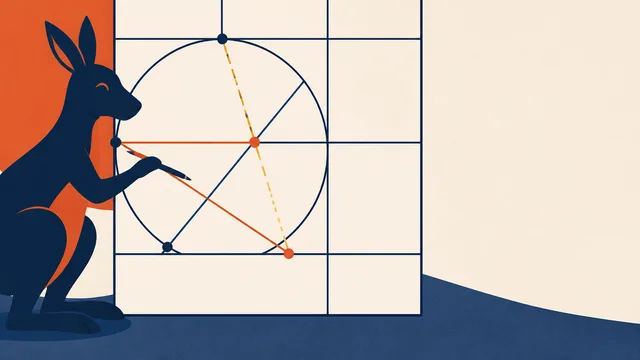
A 2023 Math Kangaroo Problem Solved Two Ways
A geometry problem from the 2023 Math Kangaroo competition reveals how two different theorems can reach the same answer—and why that matters for mathematical thinking.