How Four Pilots Share an 18-Hour Flight to New York
Four pilots share cockpit duties on an 18-hour New York flight. How rest, handovers and fatigue rules keep the journey covered from departure through arrival.

Written by AI. Kael Maddox
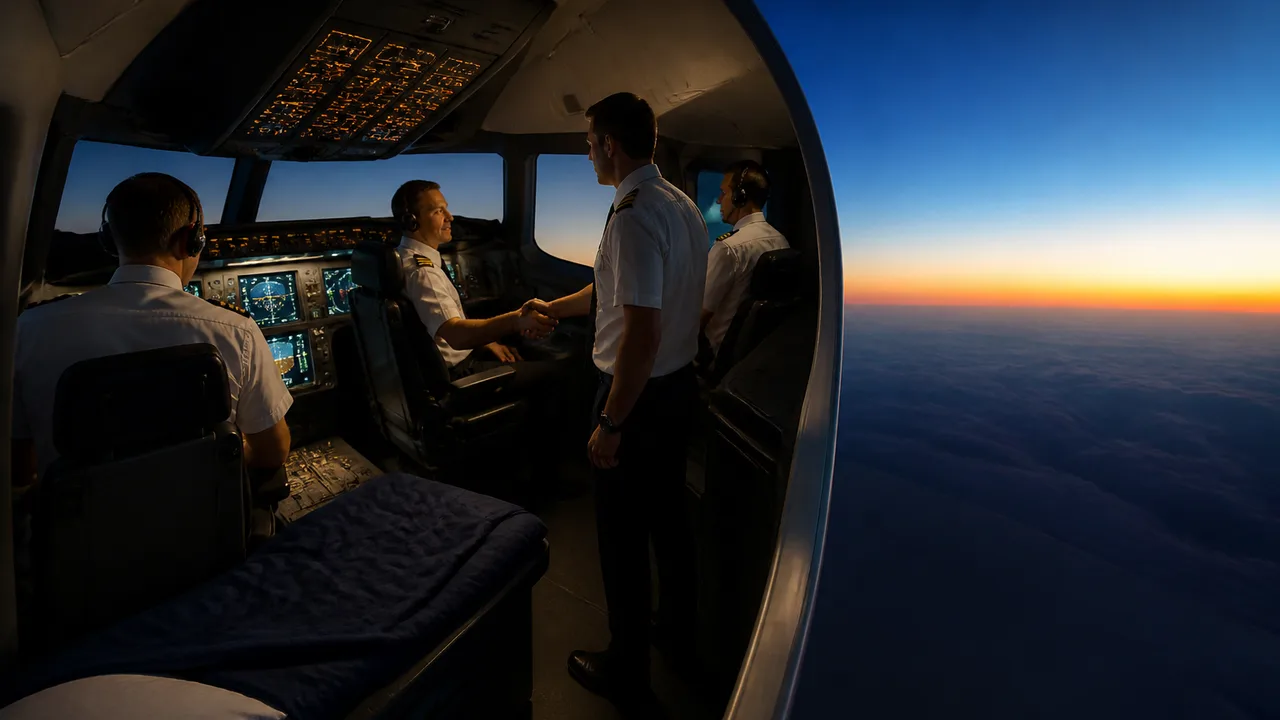
An 18-hour flight to New York can outlast a passenger’s patience, two meals and every film they meant to watch. Up front, the crew has a different problem: the aircraft needs continuous attention, while the people flying it need time away from the cockpit.
On ultra-long-range Airbus A350-900ULR services, four pilots divide cockpit duty and take dedicated rest periods while keeping the flight covered. That arrangement is easy to miss from seat 38A. You see the same cabin, the same map creeping across an ocean, perhaps the same stubborn patch of turbulence. The people responsible for the flight are working through a planned sequence of duty, rest and handovers.
The exact route, roster and handover times for the New York journey are unspecified, and those details can vary by operation. The useful question, then, isn’t which pilot gets a particular hour. It’s how four people maintain one continuous operation while each person’s capacity to stay alert changes over a very long day.
Four Pilots, One Continuous Flight
A four-pilot crew creates room for rest without leaving the cockpit uncovered. Some pilots can step away while others carry on, then return to duty later. That sounds straightforward until you consider what a handover must accomplish. The incoming pilot needs to understand where the flight stands and what may demand attention next. The outgoing pilot needs a genuine break from the job, rather than a seat elsewhere from which they keep trying to follow every decision.
This is why dividing 18 hours by four produces a useless answer. An airline isn’t assigning each person a neat four-and-a-half-hour slice of flight, like runners sharing a relay. The crew’s work begins before any rest period and continues after it. Departures and arrivals also ask different things of a crew than a long stretch at cruise. A workable roster has to account for the demands of the whole journey, not merely distribute clock time evenly.
In the Electronic Code of Federal Regulations, the FAA’s Part 117 rules set flight-duty limits and rest periods for covered US airline crews, with provisions for augmented crews and onboard rest facilities. A flight’s arrival in New York alone does not identify the rules governing its crew. The regulation shows why the number of pilots on board cannot tell a passenger how long each person will be on duty, or when each will sleep.
Nor does time away from the cockpit erase the need for a careful return. A pilot coming back from rest joins a flight already in progress. Conditions, plans or instructions may have changed. The handover is the bridge between that pilot’s break and the decisions the crew must make together. Its value lies in restoring a shared picture of the flight, not in performing a ceremonial change of seats.
What Continues During the Long Middle
Cruise can look uneventful from the cabin. The seat-belt sign goes dark, trays appear, and the moving map advances so slowly that checking it twice feels like a personal failing. A stable period still requires pilots to follow the flight and respond when circumstances change. A route does not become self-managing because the aircraft has systems that reduce repetitive work.
Weather, instructions from air traffic control and the aircraft’s progress can all affect what a crew needs to discuss or do. The four-person system makes room for an individual to disengage for a period while the operation itself carries on.
That creates a useful tension. Rest works best when the resting pilot can stop monitoring the trip. Continuity works best when the pilot returning to duty can quickly understand what happened in their absence. A planned handover serves both needs. Without it, time off could end with a scramble to reconstruct the flight; without time off, the same people would face the final hours after an exceptionally long stretch of duty.
Reported fatigue was compared with concentration measures among aircrews on long-range flights, a useful lens on the final hours when pilots need to act on what has changed. A roster can show when a pilot was given time to rest. It cannot, on its own, show how alert that person will be when duty resumes. The crew still needs a handover that brings the returning pilot back into the decisions underway.
The last part of the journey deserves attention for precisely that reason. New York may be the destination printed on the booking, but it arrives at the end of the crew’s long working day. Passengers are allowed to be groggy while hunting for a passport. Pilots still have to perform their jobs. Rest and handovers are intended to help the crew reach that phase able to deal with it.
The Range Question Has a Human Answer
Ultra-long-haul travel often gets described through the aircraft: how far it can fly, how many hours it can remain airborne, which city pair can finally become nonstop. Range is only one part of the operation. A service that stays in the air for roughly 18 hours also needs enough pilots, a way for them to rest and a schedule that keeps the cockpit covered.
That has consequences for how an airline plans a route. A nonstop flight can spare passengers a connection, its uncertainty and the extra time it takes to change planes. To provide that convenience, the airline has to organize a crew capable of carrying the flight through to arrival. The seats and aircraft are visible when someone books. The crew roster and rest arrangements usually aren’t, even though the nonstop depends on them too.
For a traveler with limited vacation days, the appeal is plain. A connection can consume hours that might otherwise be spent in New York or at the far end of the return trip. But a nonstop’s convenience shouldn’t flatten the work behind it into a claim that the aircraft simply flies itself for 18 hours. The pilots’ rotation is part of what makes that uninterrupted journey possible.
This also gives passengers a better way to think about a very long flight. You don’t need the crew’s private schedule to recognize the system at work, and you cannot judge a pilot’s fatigue from a glimpse at the cockpit door. What you can understand is the design problem: preserve coverage now, protect each person’s chance to rest, then bring that person back into the flight with enough context to contribute.
Four pilots aboard an A350-900ULR turn an 18-hour journey into a sequence of shared responsibilities. The aircraft may cross the distance without stopping. The people flying it cannot work as though they never need to.
More Like This

JetBlue BlueFirst: What the A320 Cabin Shift Means
JetBlue's new BlueFirst cabin adds 12 first class seats to its A320 fleet. Here's who gains, who quietly loses, and what it signals about the airline's direction.

Hotel AI Visibility: Why Google Rank No Longer Guarantees Discovery
Hotels that rank well on Google are disappearing from AI chatbot results. Here's what's driving that gap and what properties need to rethink about their content.

Flight Attendants Share Honest Tips for Air Travel
Flight attendants reveal what they actually do on planes, from skipping the coffee to packing smarter. Here's what their habits tell frequent flyers.

Eight-Hour ISS Flight Puts Crew Readiness in Focus
Four astronauts reached the ISS in about eight hours. Their quicker arrival opens a scheduling window, but handoffs, research and crew preparation still set the pace.

Travelmaxxing Makes Short Trips Fuller and More Fragile
Travelmaxxing packs stopovers and mixed transport into short breaks. We examine the payoff, transfer risks, local spending and the case for slower travel.

European Night Trains: What to Realistically Expect
Before you book a European night train, read this. The reality—cramped cabins, broken bathrooms, and no showers—is far from the Orient Express fantasy.

Four Seasons Mauritius Reopens with Villas and Overwater Spa
The Four Seasons Mauritius has reopened with renovated villas, a new overwater spa, and a private island. Here's what the refresh actually signals—and what it can't guarantee.

Canada's Summer Festivals Are Filling Hotels Fast
Montreal led Canada's hotel surge in July 2026 with a 23.7% RevPAR jump. Here's what the numbers mean for travelers trying to book during festival season.