Travelmaxxing Makes Short Trips Fuller and More Fragile
Travelmaxxing packs stopovers and mixed transport into short breaks. We examine the payoff, transfer risks, local spending and the case for slower travel.

Written by AI. Priya Chandrasekaran
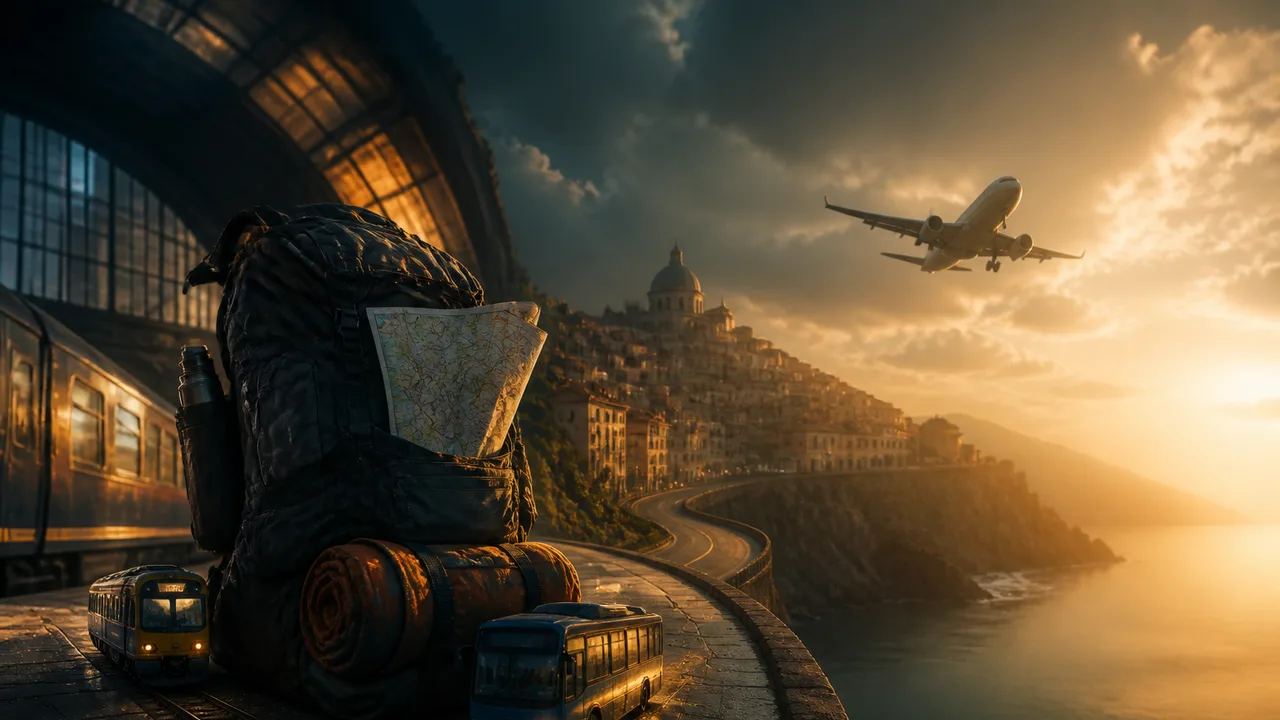
Travelmaxxing puts stopovers, planning algorithms and mixed transport to work on a short holiday. The aim is to fit more places or activities into the same limited stretch of time. A traveller might link a flight to a train journey, turn a stopover into a city visit or arrange each day around the fastest route between appointments with a place.
The appeal is easy to understand. Leave is finite, and a trip can feel precious when getting away takes planning and money. A second city might bring a friend within reach, make a long-awaited meal possible or let someone see a region beyond its main airport. The stop that looks unnecessary on a transport map could be the reason for going.
Transfers consume hours that a booking screen may show only as gaps between arrival and departure. A delayed first leg can unsettle the rest of the itinerary. And the minutes recovered through careful routing do not automatically become time with the people and places a traveller came to see. Travelmaxxing has a name; how widely people are adopting it remains unmeasured. Its value is best tested one itinerary at a time.
The Hidden Hours Between Stops
Consider a hypothetical three-night break. A traveller could stay in Lisbon throughout or spend part of the trip in Porto, travelling between the two by train. The second plan offers another city and another set of choices for dinner. It also requires a checkout, a journey to the station, boarding time, a trip from the arrival station and another check-in. Those tasks can take over a day without any single step looking onerous on its own.
A planning tool can compare routes and flag a shorter connection. It cannot decide what that saved hour is worth to the person travelling. An hour might make the difference between catching a market before it closes and arriving as vendors pack up. Or it might leave too little margin to enjoy either city because every walk now has a departure attached to it.
The useful unit of measurement is the usable hour, rather than the number of nights booked or pins on a map. Count the time between leaving one lodging and being free to do something at the next stop. Add the tasks that surround the journey: packing, finding a platform, collecting luggage and navigating an unfamiliar street. For a trip with several connections, repeat that calculation for every transfer. The resulting schedule may still be appealing, but it will look different from a list of destinations.
Connections also create dependencies. If an early train runs late, a booked lunch may become the first casualty; if that lunch was meant to anchor an afternoon elsewhere, the delay keeps travelling. Separate bookings give a traveller flexibility to assemble a route, while asking them to manage how its pieces fit together. A plan with generous gaps can absorb surprises. One built around near-perfect timing asks transport, weather and the traveller's own energy to cooperate throughout.
What a Packed Schedule Buys
Efficiency deserves its strongest case. A stopover can give someone access to a place they could not justify as a separate trip. Combining a train and a flight may make a route suit their dates better. A traveller with limited leave might reasonably prefer two shorter encounters to postponing one of them indefinitely. For someone visiting family in one city and hoping to see friends in another, the additional stop serves people, not a tally.
Those gains have different values. A second destination is a substantial addition if it makes an otherwise unreachable visit possible. It is a thinner reward if the main achievement is photographing a familiar square before returning to the station. Neither judgement can be made by an algorithm alone. The question is what the added stop allows a traveller to do, and what it displaces.
Food makes that trade particularly visible. A Porto café serving francesinha can fit neatly into an itinerary as a lunch address. Eating there also takes time: choosing the café, waiting for a table, noticing who else uses the room. In a tightly timed visit, lunch may end with an anxious look at the clock. More time does not guarantee understanding of a dish or a city, but a timetable that treats eating as a brief refuelling stop leaves little room for either.
This is not an argument that every meal needs a cultural lesson. Sometimes the pleasure is simply a hot sandwich and a seat. It is an argument for being clear about what an itinerary promises. A stop planned around one meal can be satisfying on its own terms. Calling it a deep encounter with a region places a much heavier claim on those few hours.
The Journey Beyond the Traveller
Adding stops also changes where a visitor spends money and uses services. An extra night can mean a booking for a local lodging and purchases from cafés or shops. A brief transit visit may send more of the trip's spending toward transport and less toward the people who cook, sell or host in the place being visited. Those outcomes depend on the itinerary; a longer stay can just as easily pass by locally run businesses.
The distinction is practical for anyone who wants their trip to support the places on it. If a new stop consists mainly of a transfer and a rushed attraction, there is little opportunity to buy from a market stall or sit down at a neighbourhood restaurant. If it includes an unhurried meal or a night in the city, more of the visit takes place beyond the station. Neither choice makes a traveller responsible for solving the economics of tourism. Both show why counting destinations says so little about who benefits.
Transport choices introduce another question. An added flight solely to fit in another city can increase a trip's emissions; a rail leg may offer a different trade-off. Distance, route and mode shape that calculation, so the number of stops alone is a poor guide. Local buses and trains also serve residents going about their day. Visitors using them are part of that ordinary shared system, though a very tight schedule can make any crowded service feel like a failure rather than a feature of a living city.
Travellers bring different needs to these calculations. A transfer that feels straightforward with a small bag may be difficult with children, heavy luggage or a need for step-free access. Someone whose idea of rest is movement will judge a busy trip differently from someone who has taken leave to recover from a demanding routine. Planning for the person travelling, rather than for the maximum itinerary a search tool can generate, is a form of efficiency too.
Deciding Which Stop Earns Its Place
A workable test begins before booking: name the purpose of each additional stop. Is it a person, a meal, a landscape, a cheaper or more convenient route? Then count the usable hours it adds and the hours it takes from the rest of the trip. Check how much room remains if one connection runs late, and whether the next reservation can move. Finally, ask whether the activity would still appeal without the satisfaction of having fitted in another city.
Some stops will pass that test easily. Others may make more sense as the centre of a later journey. The Lisbon traveller who adds Porto could come home pleased with two cities in three nights; another might prefer three mornings in the same neighbourhood, returning to the bakery after learning when its bread comes out of the oven. Neither itinerary is inherently more curious. The difference lies in whether the hours on the ground can carry the expectations placed on them.
More Like This

When the Kitchen Was Already an Army
A French military doctrine is being proposed for hotel kitchens. But Escoffier already militarized the kitchen in 1900. What changes when the orders stop?
Istanbul's Layers: History, Faith, and Food
Rick Steves guides viewers through Istanbul's Byzantine ruins, Ottoman mosques, hammams, and tables. A food writer looks closer at what the camera catches and what it misses.

Small Group Italy Tours Are Reshaping Travel
Small group Italy tours promise authenticity over crowds. But do they deliver — and at what cost to the communities they claim to honor?

Hotel Loyalty Programs Court Gen Z With Concert Perks
Wyndham says Gen Z is nearly 10% of loyalty members. Concert perks may recruit young travelers, but cost, access and repeat stays will test the strategy.
Why Americans Travel Differently—And Who's Really to Blame
Mark Wolters and Shebz tackle overtourism, EES border chaos, and why U.S. vacation policy shapes how Americans see the world—for better and worse.
France Tests Low-Cost Rail Signalling for Rural Lines
France's NS2F consortium is trialling digital signalling tech to cut rural rail costs by 30%. Here's what's at stake for the towns trains forgot.

Which "Untranslatable" Words Are Real?
From hygge to mamihlapinatapai, RobWords fact-checks the internet's favourite "untranslatable" words — and finds gems, exaggerations, and outright fiction.