Canada's Summer Festivals Are Filling Hotels Fast
Montreal led Canada's hotel surge in July 2026 with a 23.7% RevPAR jump. Here's what the numbers mean for travelers trying to book during festival season.

Written by AI. Kael Maddox
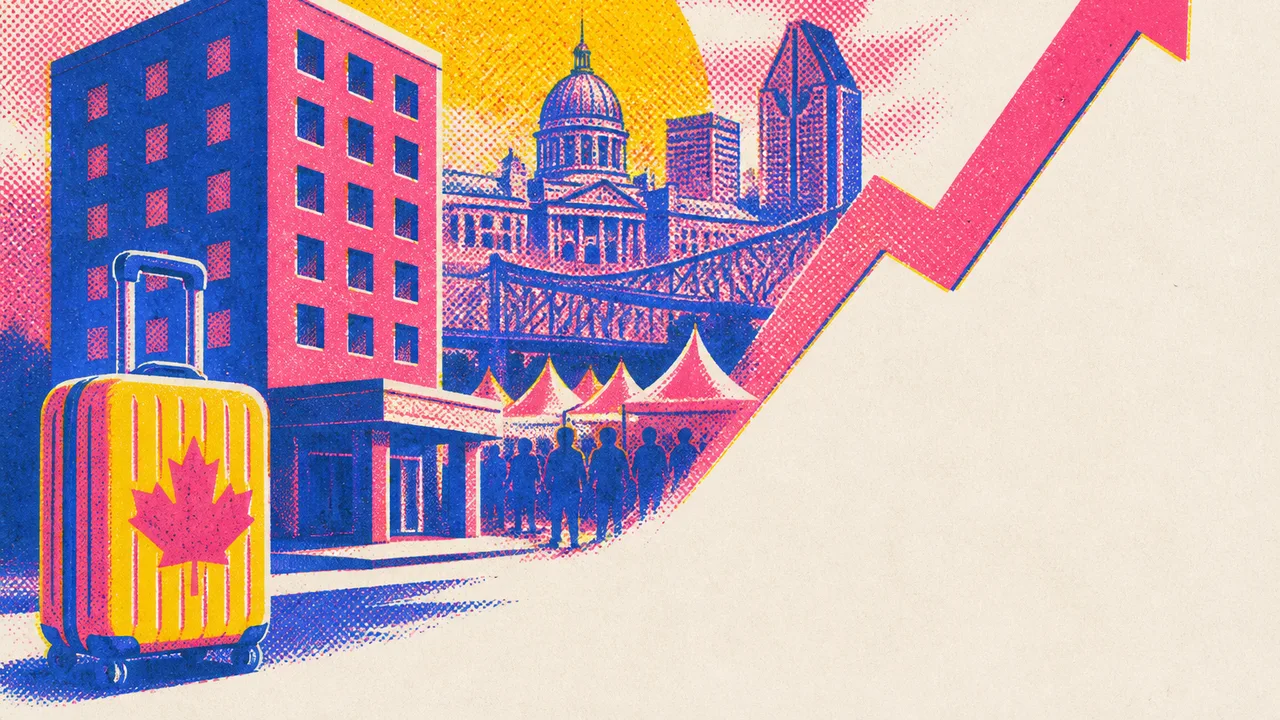
Rue Saint-Denis at 11 p.m. during Jazz Fest doesn't feel like a city that needs a tourism strategy. It just feels like a city. Music bleeding out of three different bars at once, the smell of poutine from a cart someone's dragged onto the sidewalk, strangers pressed together in the August heat doing the universal thing where you make accidental eye contact and both decide it's fine. You don't experience Montreal during festival season as a destination. You experience it as a fact of nature — loud, warm, and completely indifferent to your plans.
Which is exactly why you can't find a room for under $350 if you wait until June to book.
That gap between the street-level feeling and the hotel spreadsheet is where the real story lives right now. According to Hospitality Net, Canada's hotels posted strong July 2026 gains across major markets, with Montreal leading the country at a 23.7% increase in revenue per available room — RevPAR, the metric that captures both how full hotels are and what they're charging per night. The drivers were Jazz Fest and Osheaga, two events that between them pull hundreds of thousands of people into the city over a matter of weeks.
That 23.7% isn't an abstraction. It's the difference between a room being available when you search and a page that just says "no results for your dates." Leading Hoteliers reports summer occupancy in Montreal averaging well above 80% during peak season — which, from a traveler's perspective, means the city is functionally sold out most nights that matter. If you're the kind of person who decides in July that you want to go to Montreal in July, the market has already moved on without you.
What's actually driving this
The festival effect is real and documented, but it sits on top of a broader shift that's been building for over a year. The "Buy Canadian" movement — partly a cultural response to cross-border trade tensions, partly genuine rediscovery — pushed Canadians to stay home in numbers that surprised even optimistic forecasters. According to Travel and Tour World, select-service hotels saw 18% RevPAR growth in July year-over-year, with overall growth hitting 11% nationally. Those are not modest numbers for an industry that usually celebrates 3%.
What does that feel like on the ground? I'd describe it as a kind of re-acquaintance. Canadians who had spent a decade defaulting to New York or Miami or somewhere cheaper in Europe started showing up in Atlantic Canada, in Quebec City, in places that had been quietly excellent the whole time. The East Coast in particular absorbed a wave of Ontario and Quebec travelers — people road-tripping through Prince Edward Island or booking cottages in Cape Breton who would have been on a flight to Portugal two summers ago. The hotels filled. The rates followed.
Meanwhile, the international visitor numbers — particularly from the U.S. — softened, according to Hotel Online. The domestic surge helped cover that gap, which is how Canada's hotel industry ended up outperforming expectations rather than revising them downward.
Hotel News Resource puts a finer point on it: Canada's hotels posted their highest year-over-year increases in both average daily rate and RevPAR since 2024, with the gains specifically attributed to event-driven demand in key urban markets. That framing — "event-driven" — is doing a lot of work. It's the industry's way of saying: the city didn't get more desirable in some ambient, hard-to-explain way. Something specific happened, and people came for it.
The double edge of event dependency
Here's where I want to slow down and think about this more carefully, because the industry's self-congratulatory read of these numbers deserves some friction.
When a city's hotel performance is this tightly correlated to its event calendar, it raises a question that the monthly RevPAR report doesn't answer: what happens between events? Travel and Tour World's earlier coverage noted exactly this pattern in Edmonton — strong summer occupancy driven by events, followed by a meaningful taper when the calendar emptied out. The hotel fills for the festival, then goes quiet. That's not a thriving hospitality ecosystem; that's a city that's good at selling out specific weeks.
Montreal is in a better structural position than most because its event calendar is genuinely dense. Jazz Fest, described by Dirty Coast as one of the greatest cultural festivals in America, runs for weeks, not a weekend. Osheaga follows. The Grand Prix sits earlier in the summer. There's enough stacking that the off-peak valleys aren't as steep. But even Montreal has an October, and an October in a city that ran 80%+ occupancy in July tells a more complicated story than the summer headlines suggest.
The traveler's read on this is different from the industry's read. An 80% occupancy rate sounds like success to a hotel operator. To someone trying to plan a trip, it sounds like a warning: don't wait, don't be flexible, don't expect to negotiate. The cities that are winning the event-tourism game right now are doing so partly by becoming genuinely difficult to visit spontaneously. Which is a real cost, even if it doesn't show up in RevPAR.
What this means if you're actually planning to go
If Montreal in festival season is on your list — and it should be, genuinely — the math is simple: book early or pay late. The 80%+ occupancy figure from Leading Hoteliers means the city is operating with almost no slack during peak weeks. The rooms that remain available late in the booking window are either the expensive ones or the ones that are available for a reason.
The select-service hotel data is interesting here. An 18% RevPAR jump at that tier — according to Travel and Tour World — suggests the mid-range is where demand pressure is most intense. Budget-conscious travelers who might have paid $150/night in a previous July are now being pushed toward $175-185, or they're being pushed out entirely toward neighborhoods farther from the action. For solo travelers especially, that math matters. A solo traveler pays the same room rate as a couple but splits it with no one.
The "Buy Canadian" undercurrent also reshapes how to think about where to go. The travelers flooding into Atlantic Canada this summer aren't doing it because some campaign told them to — or at least, not only because of that. They're doing it because they discovered that the Cabot Trail is absurd in the best way, that Lunenburg is the kind of town you don't believe is real until you're standing in it, that the tidal bore on the Bay of Fundy is the most genuinely weird natural phenomenon you can watch from a parking lot. The patriotism story is real, but underneath it is a simpler one: Canadians went looking for something to be proud of and found it was already there.
The question the hotel data can't answer — and the one I keep turning over — is whether this holds when the friction that pushed people home disappears. Because the best version of this summer's story isn't that Canadians boycotted American travel. It's that they booked a room on Rue Saint-Denis, got caught in a saxophone solo they weren't expecting, and started wondering why they ever needed to go anywhere else.
That discovery doesn't evaporate. But whether it becomes a habit or just a good summer — that's the story worth tracking in 2027.
More Like This

The World's Longest Domestic Flights, Explained
From Boston to Honolulu to Paris to Réunion, the world's longest domestic flights reveal how borders, customs zones, and sovereignty really work.
Six Hospitalized at Angine de Poitrine's Montreal Jazz Fest Show
Six people were hospitalized after Angine de Poitrine's record-breaking free set at Montreal Jazz Festival. What the incident reveals about sound, crowds, and live event safety.

Local Staycations Are Reshaping Travel This September
With 72% of travelers preferring nearby getaways, the September staycation trend is more than a budget fix—it's quietly rewriting how tourism works.

Transylvania's Wild Side Beyond the Vampire Myth
Transylvania offers far more than Dracula lore—its Carpathian peaks, bear sanctuaries, and ancient caves make it a serious destination for adventure travelers.

Wall Street Bets on Airbnb's Structural Growth
Airbnb stock hit a four-year high in August 2026. Analysts at Bernstein say the growth is structural. Here's what the numbers actually show—and what they don't.
What Experienced Cruisers Know Before They Board
Professor Melissa's 14-minute cruise guide distills hard-won tips on packing, pricing, seasickness, and gratuities that first-timers rarely hear before embarkation day.

World Cup 2026 Economic Ripple Reaches Non-Host Cities
The 2026 World Cup is lifting hotels and spending in cities nowhere near a stadium. Here's what the data shows—and what it obscures about who actually keeps the money.

Light Rail Automation Borrows Tech from Cars and Satellites
Cities are automating light rail using car sensors and satellite positioning. Here's what that shift means for urban transit, safety, labor, and city design.