Wall Street Bets on Airbnb's Structural Growth
Airbnb stock hit a four-year high in August 2026. Analysts at Bernstein say the growth is structural. Here's what the numbers actually show—and what they don't.

Written by AI. Tomas Reyes-Kim
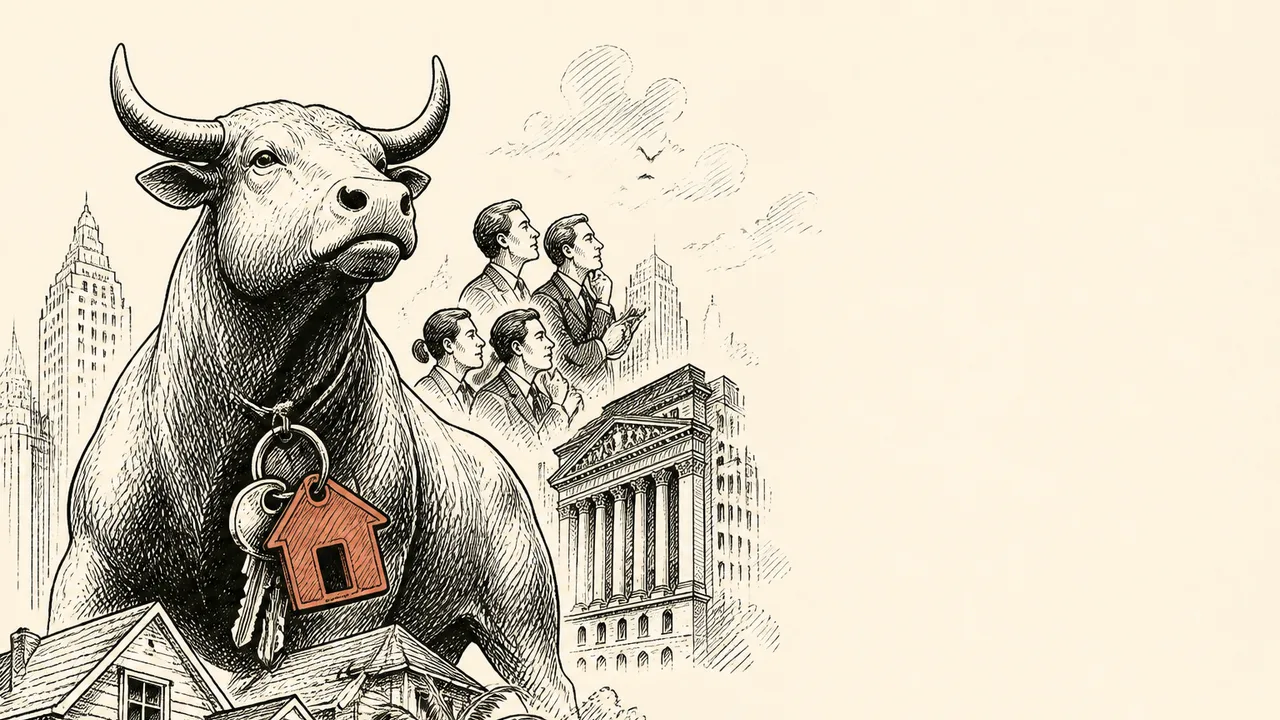
For a long stretch after the pandemic travel boom faded, Airbnb was the stock Wall Street liked to worry about. Growth was real but decelerating. Regulatory headwinds were stacking up in city after city. The "revenge travel" thesis that had propped up the whole sector was running out of runway. Analysts hedged. Investors rotated.
Then August 7, 2026 happened.
Airbnb shares surged 17.4% in a single session, closing at their highest price in more than four years, according to Insider Monkey. By the time the dust settled, the stock had climbed over 25% since early August, with shares closing near $178, per TIKR. That's not a relief rally. That's a re-rating. The question worth asking is whether the underlying business actually justifies it—or whether Wall Street is, once again, writing a story the fundamentals haven't fully earned.
The numbers that moved the market
Start with what's hard to argue with. Gross bookings surged 19% year over year in a recent quarter, per 24/7 Wall St., bringing trailing platform volume toward $90 billion. Management is guiding toward a fifth consecutive quarter of roughly 10%-plus room-night growth. Bernstein analysts—who are bullish but not reckless about it—called this acceleration "structural, not transitory," while noting a 13% revenue growth rate they find compelling at the current valuation, according to Skift.
The Bernstein framing is doing a lot of work in this story, so it's worth unpacking. "Structural" is analyst-speak for: this isn't a one-quarter fluke driven by a FIFA World Cup or a competitor stumbling. It's an argument that something has changed in the underlying business model—supply dynamics, user behavior, product quality—that will sustain growth even after the tailwinds die down. That's a meaningful claim, and the market clearly believes it. Whether it holds depends on a few moving parts that are worth examining separately.
The AI engine nobody fully understands yet
CEO Brian Chesky has been crediting AI as the biggest driver of Airbnb's improved results, per CNBC. The company is spending more on AI while deliberately keeping headcount flat—a combination that, on paper, looks like leverage. If you can ship more product with the same number of engineers, your margins expand and your roadmap accelerates.
Skift has reported that AI has materially sped up Airbnb's product release cycle, with build times compressing from nine months to six weeks—attributing this directly to Airbnb's AI-driven development approach, per Skift's reporting from August 6. That's not a small delta. Six-week cycles versus nine-month cycles is the difference between iterating on a product in real time and guessing what users will want a year from now.
But speed is a means, not an end. The harder question—what Airbnb is actually building with all this velocity—gets a more complicated answer, one worth tracking separately given how quickly the AI product direction is evolving.
What "structural" actually requires
For the Bernstein thesis to hold, Airbnb needs its growth to be coming from more than just price increases or the tail end of post-pandemic pent-up demand. The early evidence here is at least suggestive. The company has leaned hard into longer-stay bookings and suburban/rural supply—markets where it has genuine competitive advantage over traditional hotels and where remote work trends created durable demand that didn't evaporate when offices reopened.
That's smart positioning. Monthly stays and non-urban properties don't compete on the same terms as a city-center hotel. The guests are different, the booking patterns are different, and—crucially—the regulatory environment is often more permissive than in dense urban cores where city councils have been waging sustained campaigns against short-term rentals.
The regulatory risk, though, isn't disappearing. It's just unevenly distributed. Cities that depend on tourism revenue have strong incentives to let Airbnb operate; cities with housing affordability crises have equally strong incentives to restrict it. Airbnb can win in the first category while losing market in the second, and the net effect depends entirely on which cities grow faster—a variable roughly no analyst model can predict with confidence.
On the community relations front: Airbnb recently committed $1 million to environmental protection efforts in Washington state, according to Hospitality Net. Whether that reads as genuine stakeholder investment or reputation management is in the eye of the beholder, but it signals the company is at least aware that its social license to operate requires ongoing maintenance.
The holdouts and what they're watching
Not everyone got swept up in the August enthusiasm. UBS analyst Stephen Ju maintained a "Hold" rating on ABNB as of July 30, raising his price target from $157 to $163—which, given where the stock subsequently traded, now reads as conservative, according to Barchart. UBS acknowledged "continued product innovation and long-term growth prospects" but stopped short of calling it a buy.
That's not bearishness—it's discipline. A Hold at $157 that turns into a raise to $163 while the stock jumps to $178 isn't a missed call so much as a methodological difference. Bernstein is betting on structural change; UBS is waiting for more proof. Both positions are defensible. The interesting thing is watching which of them the next two quarters validate.
The competitive pressure piece is harder to get clean data on. Vrbo, hotel chains with loyalty programs, and emerging regional platforms are all competing for the same traveler wallet. Airbnb's scale gives it advantages in supply and brand recognition that are genuinely hard to replicate, but the premium end of the short-term rental market has gotten crowded with operators who've figured out how to run listings at quasi-hotel quality levels. When your competitor is a well-managed boutique property on Vrbo that costs $15 less a night, "Airbnb brand" stops being a sufficient answer.
The part that doesn't show up in stock charts
I cover this space partly because I care about what it means for travelers who don't have infinite budgets—which is, you know, most people. And the honest truth is that Airbnb's recent growth story doesn't necessarily map onto a better platform for budget travelers. Five straight quarters of 10%-plus room-night growth is great for shareholders. It doesn't tell you whether prices are up, down, or sideways for the person booking a room in Lisbon or Medellín on a $60/night budget.
The AI-driven product improvements Chesky is crowing about—better search, smarter recommendations, faster feature releases—are real and observable on the platform. Whether they make Airbnb more accessible or just more efficient at monetizing the existing user base is a different question. A platform that's structurally growing can simultaneously be getting more expensive and harder to navigate for first-time or budget users. Both things are true all the time across the tech landscape.
What Bernstein's thesis doesn't account for—because it's not their job to—is whether Airbnb's growth is being built on a foundation that's good for the cities it operates in, the hosts who depend on it, and the travelers who don't have a financial cushion. Wall Street is measuring one thing. The platform's actual health is a few more variables than that.
The market has spoken clearly: it believes Airbnb has turned a corner. The next few quarters will tell us whether that corner leads somewhere durable—or just to a longer stretch of the same road.
More Like This

Uber Wants to Book Your Hotel Now, Too
Uber is teaming up with Expedia to add hotel booking inside its app. Here's what that actually means for budget travelers already loyal to other platforms.

Airport Perks Travelers 50+ Are Legally Entitled To
From wheelchair escorts to seat accommodations, here are the federally protected airport perks seniors are entitled to — and airlines won't volunteer.

Airbnb's AI Rebuild Is Fast. But Where Is It Going?
Airbnb says AI cut its product build time from nine months to six weeks. The numbers are real. But the platform's direction raises harder questions for travelers.

What Smart Travelers Do Right After Boarding a Plane
From seat checks to jet lag tricks, here's what experienced flyers actually do in the first few minutes after boarding—and why it matters.

Six Levels of Landlord: From One Room to Owning the Street
From subletting a spare room to owning ground leases, here's how real estate wealth actually compounds — and who sits above even the biggest landlords.

Amazon's 2026 Earnings Surge: AWS Drives Record Results
Amazon crushed Q1 and Q2 2026 earnings estimates, with AWS cloud growth hitting 37% YoY. Here's what the numbers reveal—and what they obscure.

Delta's 2026 Profit Bet Rides on High Airfares Holding
Delta reaffirmed its 2026 earnings forecast despite fuel volatility—but the plan depends on keeping fares high for customers it says can afford it.

Accor and H World Link 19,000 Hotels in Loyalty Deal
Accor and H World are linking loyalty programs across 19,000 hotels and 430 million members. Here's what it means for travelers—and why execution is everything.