Flight Attendants Share Honest Tips for Air Travel
Flight attendants reveal what they actually do on planes, from skipping the coffee to packing smarter. Here's what their habits tell frequent flyers.

Written by AI. Kael Maddox
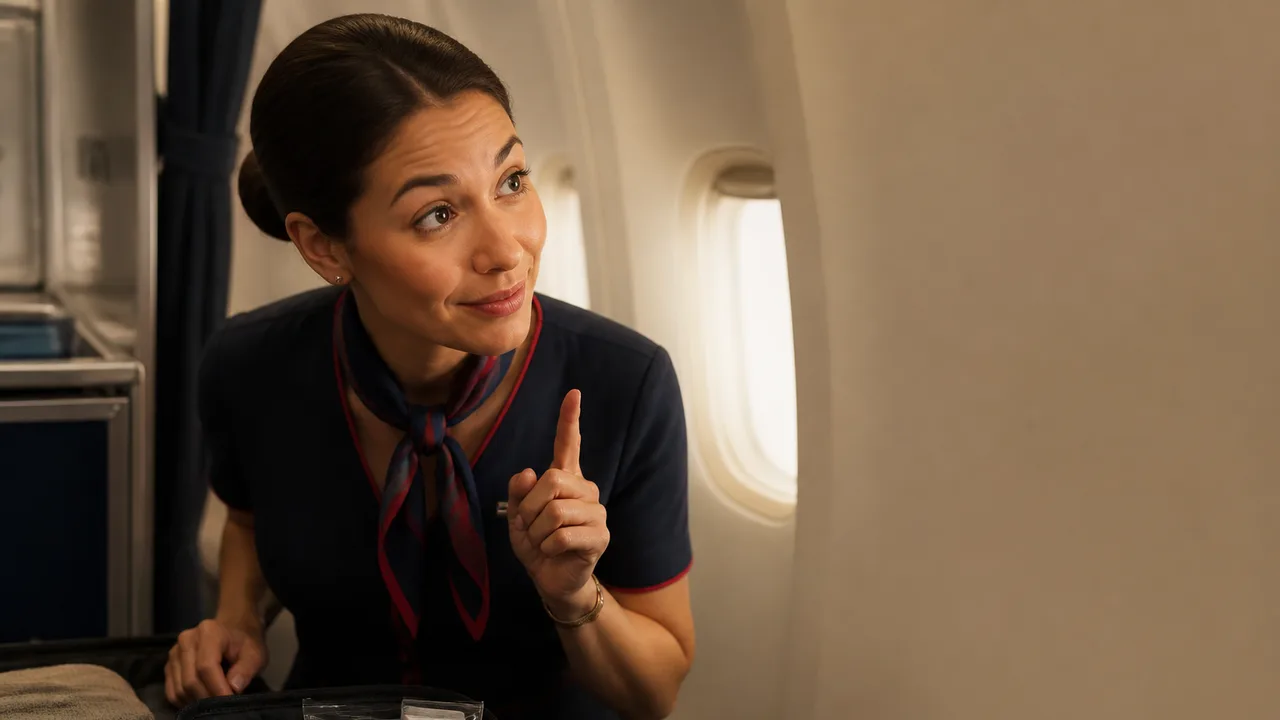
Photo: AI. Naia Iwarra
There's a particular kind of knowledge that only comes from repetition. Not reading about something, not watching someone else do it, but doing it yourself so many times that you stop thinking about it consciously. Flight attendants have that relationship with commercial aviation. They're not passengers. They live in those cabins, and the gap between what they do and what most passengers do is, it turns out, pretty instructive.
Travel + Leisure recently gathered a group of flight attendants from across the industry for an unfiltered video about how they actually navigate flying. What emerged wasn't a polished PR exercise. It was closer to listening to mechanics talk about which rental cars they'd avoid. The candor is the point.
The Coffee Question, and What It's Really About
The detail that tends to get people's attention first is the coffee. Multiple attendants in the video say they don't drink it. One explains: "It's more to do with where the water is kept." Another adds flatly, "I've never seen them clean the coffee pots."
This isn't a verified safety claim about any specific airline or aircraft. The attendants are speaking from personal experience on their own routes, and their concerns vary. One is fine with the ice (and calls rumors about it inaccurate). Another is not fine with the filtered water. The point isn't that airplane coffee will hospitalize you. The point is that the people who see how the sausage gets made have developed specific, informed preferences, and those preferences are worth understanding.
The same logic applies to the food. Several attendants describe skipping airline meals not out of drama but out of familiarity. "If the ingredients list is longer than a CVS receipt, then you may not want to put that into your body," one says. Another mentions sodium content, noting that her ankles used to swell from the salt load. The science behind this is straightforward: altitude affects taste perception, so food manufacturers compensate with additional seasoning and flavoring, which means the meals often carry more sodium than they'd need at ground level. One attendant puts it directly: there could be a simple dish on your tray, but it might contain significantly more ingredients than you'd expect. Her advice is to bring your own snacks.
That's not paranoia. That's just someone who's learned to control what they can.
Hygiene: The Stuff Nobody Posts on Instagram
One attendant describes boarding and immediately pulling out Clorox wipes to clean her seat from top to bottom, including the tray table. She's not doing this for content. She's doing it because she's seen what ends up on those surfaces: feet, clothing items people shouldn't be discussing in mixed company, and a cleaning schedule that may not align with what passengers imagine between flights.
The wipes advice has been consistent enough across flight attendant accounts that it shows up in reporting on cabin etiquette more broadly. Simple Flying has noted that crew members who share passenger habit insights tend to flag surface hygiene as one of the areas passengers most underestimate. And it's hard to argue: the tray table is a surface that folds up during landing and deploys during meals, and almost nothing happens to it in between.
The dehydration issue is the other hygiene-adjacent point that the attendants return to repeatedly. Cabin air is dry. Several of them describe carrying water continuously throughout flights, keeping lip balm in every pocket, and packing lotion. One says she felt noticeably older after flights before she built these habits. Another carries a portable self-heating water bottle in her carry-on so she always has access to something warm without depending on the service cart.
The compression socks recommendation lands in the same category: not glamorous, medically grounded. Circulation in the lower legs suffers during long periods of seated immobility at altitude, and the attendants who work long-haul routes have seen enough of the consequences to take it seriously regardless of how the socks look.
Kindness as Strategy (With Caveats)
Here's where the video gets more interesting, because it surfaces a genuine tension. The attendants are consistent that being kind, genuinely kind, not performatively strategic, improves your flight experience. "If you just come on and you're kind and you communicate with us, I promise you that your in-flight experience will be so much better," one says. That tracks. It's also just decent human behavior.
But the video also gets into goody bags. Some attendants say they appreciate small gestures from passengers: a Snickers, a Starbucks card, a kind word. The implicit suggestion is that reciprocity follows. One attendant is honest: "I know it's a thing on TikTok that if you bring us goody bags, that we will upgrade you. We don't have that power, but if you do scratch my back, I'll scratch your back. I'll probably give you some free alcohol."
Another attendant reveals the limits of this dynamic immediately. A passenger gave the crew a bag of candy that had already been opened, with some pieces missing. "We're like, 'Oh, thank you.' In the trash." The laughter that follows is real, and it says something about how crew members parse genuine warmth versus attempted transactions. The goody bag as calculated move is transparent, and it lands differently than a simple thank you.
Travel + Leisure's own reporting on first-class travel mistakes makes a related point: passengers who treat service interactions as performances to be optimized often get less out of them than passengers who just treat crew members like people. That's not a novel insight, but it's consistently confirmed by people who spend their working lives on the receiving end of both approaches.
The Carry-On as a Philosophy
The packing section of the video is where the attendants sound least like people giving tips and most like people who have genuinely solved a problem through repetition. One describes a personal rule: everything she packs needs to serve more than one purpose. Gym shoes double as daily sneakers. Running shorts double as swim trunks. The logic is that every inch of space is a decision, and decisions made at home mean fewer problems in transit.
Another attendant makes a case for compression packing cubes with the conviction of someone who has packed for hundreds of trips. Roll the clothes, compress them, and a week's worth of gear fits in a carry-on. This is not radical advice, but hearing it from someone who has actually done it hundreds of times lands differently than reading it on a packing list.
The portable charger recommendation is practical and worth repeating: seat outlets exist on many flights but don't always work, and the attendants who have autonomy over their own comfort don't leave that to chance. One packs snacks specifically because she knows that during turbulence, service carts can't move through the cabin. She's watched one destroy a colleague's knee. The snacks aren't a luxury. They're contingency planning.
One attendant takes a different approach entirely for long trips: check an empty bag on the way out, buy clothes at the destination, and use the carry-on only for essentials. It's the most aggressive version of the philosophy, and not everyone has the budget or the flexibility for it, but it's an interesting window into how someone who flies constantly has decided to relate to the luggage problem.
AirTags in both checked and carry-on bags get a mention, with one attendant acknowledging that checked luggage does get lost while also expressing confidence that airlines track it down. Whether that confidence is universally warranted is a separate question, but the tracking instinct is sound.
What the Pattern Tells You
Taken together, what the attendants describe is less a set of tips and more a posture toward flying: control what you can, don't depend on the aircraft to provide comfort, treat the crew like humans, and clean your immediate environment because no one else is going to do it to your standard.
The motto the video opens with, "if a flight attendant's not doing it, don't do it," is a useful compression of all of it. These are people who have been inside the system long enough to know which assumptions passengers carry that simply don't match reality. The coffee. The tray table. The carry-on lifting (flight attendants in the video are clear that they cannot lift your bags due to liability concerns, and that gate-checking is always an option). The bathroom queue that starts before the plane has even pushed back.
None of it requires you to become a paranoid flyer. It just requires you to fly with your eyes open, which, if you're reading this, you probably already wanted to do.
More Like This

Hotel AI Visibility: Why Google Rank No Longer Guarantees Discovery
Hotels that rank well on Google are disappearing from AI chatbot results. Here's what's driving that gap and what properties need to rethink about their content.

Long-Haul Flights Are Often More Comfortable Than Short Ones
Wide-body aircraft, better air quality, and the psychology of surrender make long flights surprisingly pleasant. Here's what actually drives the comfort gap.
Airport Behavior That Makes Flying Worse for Everyone
From gate lice to baggage claim crowding, Mark Wolters of Wolters World maps the airport habits that slow everyone down—and why they persist.
The World's Longest Domestic Flights, Explained
From Boston to Honolulu to Paris to Réunion, the world's longest domestic flights reveal how borders, customs zones, and sovereignty really work.

Airbnb's AI Rebuild Is Fast. But Where Is It Going?
Airbnb says AI cut its product build time from nine months to six weeks. The numbers are real. But the platform's direction raises harder questions for travelers.
Airport Theft at MIA Exposes Deep Trust Failures
A passenger's stolen Cartier watch, sold online, reveals the layered accountability failures behind airport baggage theft at Miami International Airport.

Madrid Metro Line 11 Extended to Valdebebas for €880M
Madrid's Comunidad has approved an €880M extension of Metro Line 11 to Valdebebas Norte—7.2 km, four new stations, and a bet on the city's northern edge.

World Cup 2026 Economic Ripple Reaches Non-Host Cities
The 2026 World Cup is lifting hotels and spending in cities nowhere near a stadium. Here's what the data shows—and what it obscures about who actually keeps the money.