Long-Haul Flights Are Often More Comfortable Than Short Ones
Wide-body aircraft, better air quality, and the psychology of surrender make long flights surprisingly pleasant. Here's what actually drives the comfort gap.

Written by AI. Tomas Reyes-Kim
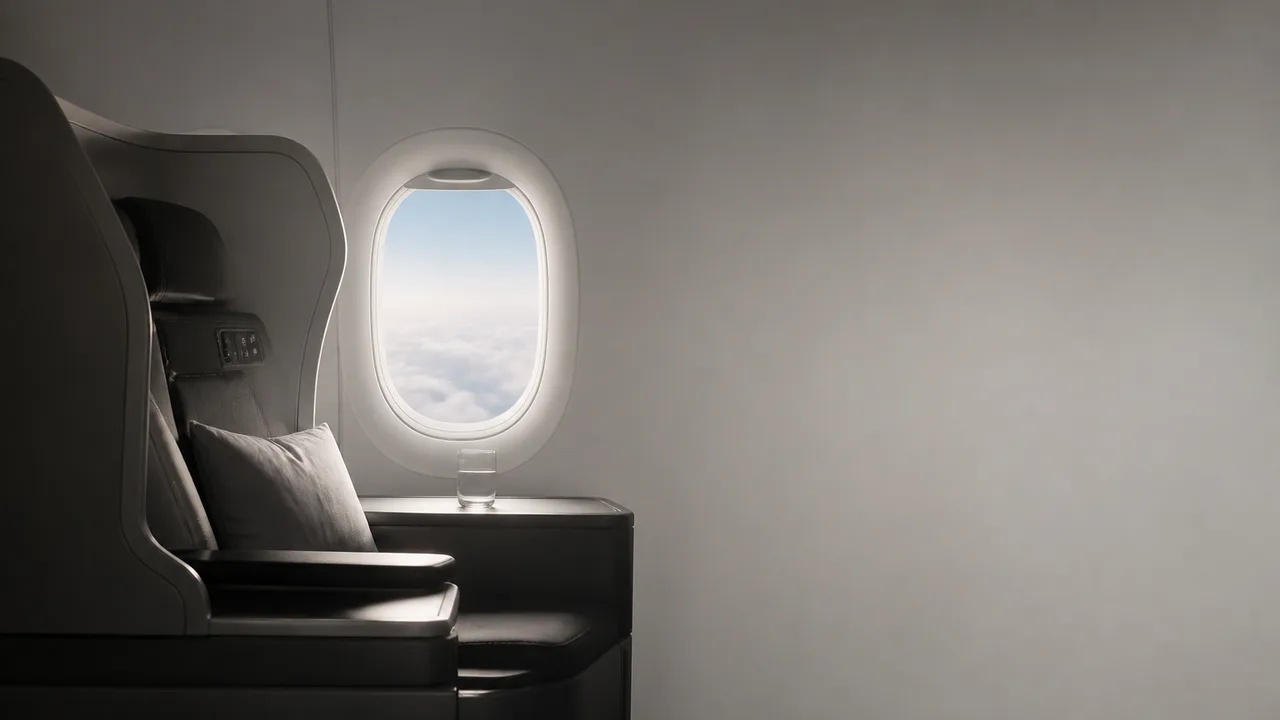
Photo: AI. Tomoko Hayashi
There's a specific kind of misery that belongs only to short flights. The seatbelt sign that never goes off. The beverage cart that materializes beside you for exactly forty seconds before vanishing. The full psychological weight of knowing you're uncomfortable but also almost there, so complaining feels stupid. You land stiff, dehydrated, and vaguely annoyed at the universe.
Then you board a thirteen-hour flight to somewhere far away, and something strange happens: you actually relax.
A recent video from FlySmarter on YouTube digs into exactly this paradox, and the explanation turns out to be more layered than "long flights have better snacks." The gap between a 90-minute regional hop and a transoceanic haul isn't just about amenities. It's engineering, economics, psychology, and a structural problem that budget travelers booking "cheap" short flights probably haven't accounted for.
The Air You're Breathing Is Actually Different
Start with the airplane itself. Long-haul routes get wide-body aircraft: Boeing 787s, Airbus A350s, the occasional 777. These are not just bigger versions of the planes that shuttle you between regional airports. They're a different category of machine.
The 787's composite fuselage, for example, lets it maintain a cabin altitude around 6,000 feet rather than the 8,000 feet standard on older jets. That difference matters because lower cabin altitude means more oxygen in the air, less strain on your cardiovascular system, and less of that vague, pressure-headache feeling you attribute to travel stress but is actually just bad air management. The FlySmarter presenter notes that the Dreamliner and its Airbus counterparts also push humidity levels from the "desert dry" 4 to 7% found in older models up to 12 to 25%. On older narrow-body planes, he says, "a single cup of water feels like a life raft."
Noise is another variable most passengers never think to check. The 787 is designed to be roughly 20% quieter than older jets, with chevrons on the engine nacelles to smooth airflow and sound-absorbing linings inside the fuselage. The Airbus A350 can run around 50% quieter than earlier 777 variants. That sustained low-grade drone on aging aircraft isn't just annoying; it fatigues you. You deplane feeling like you've been at a concert for eight hours without knowing it.
None of this is available on the Airbus A320 flying you from one regional hub to another. That plane is pressurized at higher altitude, drier, louder, and because it's smaller, it bounces more. Physics is literal here: greater mass means more inertia, which means less dramatic response to turbulence. Wide-body passengers on a 777 or A380 often perceive light to moderate turbulence as less intense than narrow-body passengers do, and a flight attendant cited in the video confirmed that wide-bodies "indeed feel smoother during light turbulence, although severe weather affects all planes equally."
Time as a Comfort Variable
Here's the thing that I think gets underweighted in most travel coverage: the actual structure of time on short versus long flights works against you on short ones.
On a 90-minute domestic route, you spend a disproportionate chunk of that time in climb and descent, which is exactly when the seatbelt sign is on and you're pinned. The FlySmarter presenter describes the rhythm bluntly: "You take off, the sign turns off for maybe 20 minutes, then comes right back on for descent. Cabin crew race against the clock to complete service, so beverage carts zoom past you."
On a long flight, the seatbelt sign might stay on for the first and last thirty minutes. The middle is yours. You can walk, stretch, develop a routine, eat a real meal, sleep for several hours, wake up for breakfast. There's a reason international economy cabins typically include pillows, blankets, amenity kits, and multiple meals, while a three-hour domestic flight offers you a packet of pretzels and the option to pay nine dollars for a beer. The economics of long-haul service justify spending money on passengers. Short-haul economics don't.
Travel Awaits covers the in-flight essentials that make this long-haul comfort accessible to economy passengers specifically: compression socks, a proper neck pillow, layers for temperature swings. These aren't luxury items. They're the difference between arriving functional and arriving wrecked. On a short flight, you wouldn't bother. On a twelve-hour flight, they're load-bearing infrastructure.
The crew situation also quietly shifts. Long-haul routes attract senior flight attendants who've been in the industry long enough to have chosen their schedules. More of them per cabin, with more experience, and enough time to actually use it. The presenter describes a Singapore Airlines crew member who taught him a stretching routine and another who briefed him on which side of the plane would show Greenland. "On short hops," he notes, "there simply isn't time for that kind of care."
The Myth Worth Debunking: Wide-Body Does Not Mean Spacious
Here's where the FlySmarter video earns its keep, because it actively complicates its own thesis.
The argument isn't "book long flights and you'll be comfortable." It's more conditional than that. Airlines can, and frequently do, cram wide-body planes just as aggressively as narrow-bodies. Many Boeing 777s were originally designed for nine-abreast seating; most carriers switched to ten. Seat widths dropped to around 17 inches, sometimes narrower than an Airbus A320 seat. Some 787s were marketed with eight seats per row, but most carriers chose nine. The presenter is direct: "That shiny Dreamliner you booked might have seats narrower than an old domestic 737."
The configuration data on this is stark. British Airways fits 331 seats across three classes on its A350-1000. French Bee puts up to 480 seats in the exact same airframe. Same plane, wildly different experience. Charter 747s have carried over 500 passengers. A smaller 767 configured generously can feel, comparatively, like a different product category entirely.
So the hierarchy that actually matters: aircraft generation first, then cabin configuration, then body type. A new A321neo with modern engines and good mood lighting can genuinely outperform an aging A340 on comfort, even though the A340 is a wide-body. The presenter flew an old A340 across the Atlantic and described his ears buzzing for hours afterward. The A350 he flew later was "a distant whisper."
Tools like SeatGuru let you check seat pitch and width before you book. ExpertFlyer shows whether a specific flight is using a denser configuration. These aren't pro-tier resources; they're free and genuinely useful. Spending ten minutes on seat research before a twelve-hour flight is probably the highest-return travel task most people aren't doing.
The Psychology You Can't Engineer Around
There's one factor that no aircraft can manufacture, and it might be the most honest explanation for the paradox: how you show up mentally.
When you know you're boarding a ten-hour flight, you prepare. Comfortable clothes, entertainment downloaded, snacks packed, shoes you can slip off. You've mentally committed to being somewhere for a while, which means you stop resisting it. The FlySmarter presenter puts it plainly: "Long flights force you to slow down and surrender to the experience."
On a 90-minute flight, you're in transit mentally even before you board. You're thinking about the connection, the meeting, the thing waiting at the other end. That restless energy doesn't go anywhere. Every minor bump registers as an intrusion. The discomfort you feel is partly the seat, yes, but it's also you, fighting against an experience that's already over in your head.
This is the part that's hardest to optimize for, and also the part that matters most for digital nomads doing the long-haul circuit regularly. The travelers who describe loving long flights aren't deluding themselves. They've figured out how to use the time, and they've stopped experiencing it as time stolen from them.
The aircraft helps. The humidity and the noise levels and the legroom all help. But the actual transformation is psychological: long flights work better partly because you let them.
Whether that's a design feature or a coping mechanism probably depends on which flight you just got off.
More Like This

Flight Attendants Share Honest Tips for Air Travel
Flight attendants reveal what they actually do on planes, from skipping the coffee to packing smarter. Here's what their habits tell frequent flyers.

Uber Wants to Book Your Hotel Now, Too
Uber is teaming up with Expedia to add hotel booking inside its app. Here's what that actually means for budget travelers already loyal to other platforms.
Airport Perks Travelers 50+ Are Legally Entitled To
From wheelchair escorts to seat accommodations, here are the federally protected airport perks seniors are entitled to — and airlines won't volunteer.

How to Book a Cruise: Agent, Direct, or Agency?
The commission is already in your cruise fare. Who gets it — and what you get for it — depends entirely on how you book. Here's how the system actually works.
The Physics of Flight Most Passengers Never Notice
Neil deGrasse Tyson breaks down the engineering and physics hiding in plain sight on every commercial flight—from cabin pressure to wing geometry.

Wall Street Bets on Airbnb's Structural Growth
Airbnb stock hit a four-year high in August 2026. Analysts at Bernstein say the growth is structural. Here's what the numbers actually show—and what they don't.

Travel Spending Is Rebounding—But Read the Fine Print
Travel spending rebounded in June and agents are booking again—but the data tells a messier, more interesting story than the headlines suggest.
Delta's 2026 Profit Bet Rides on High Airfares Holding
Delta reaffirmed its 2026 earnings forecast despite fuel volatility—but the plan depends on keeping fares high for customers it says can afford it.