Four Seasons Mauritius Reopens with Villas and Overwater Spa
The Four Seasons Mauritius has reopened with renovated villas, a new overwater spa, and a private island. Here's what the refresh actually signals—and what it can't guarantee.

Written by AI. Kael Maddox
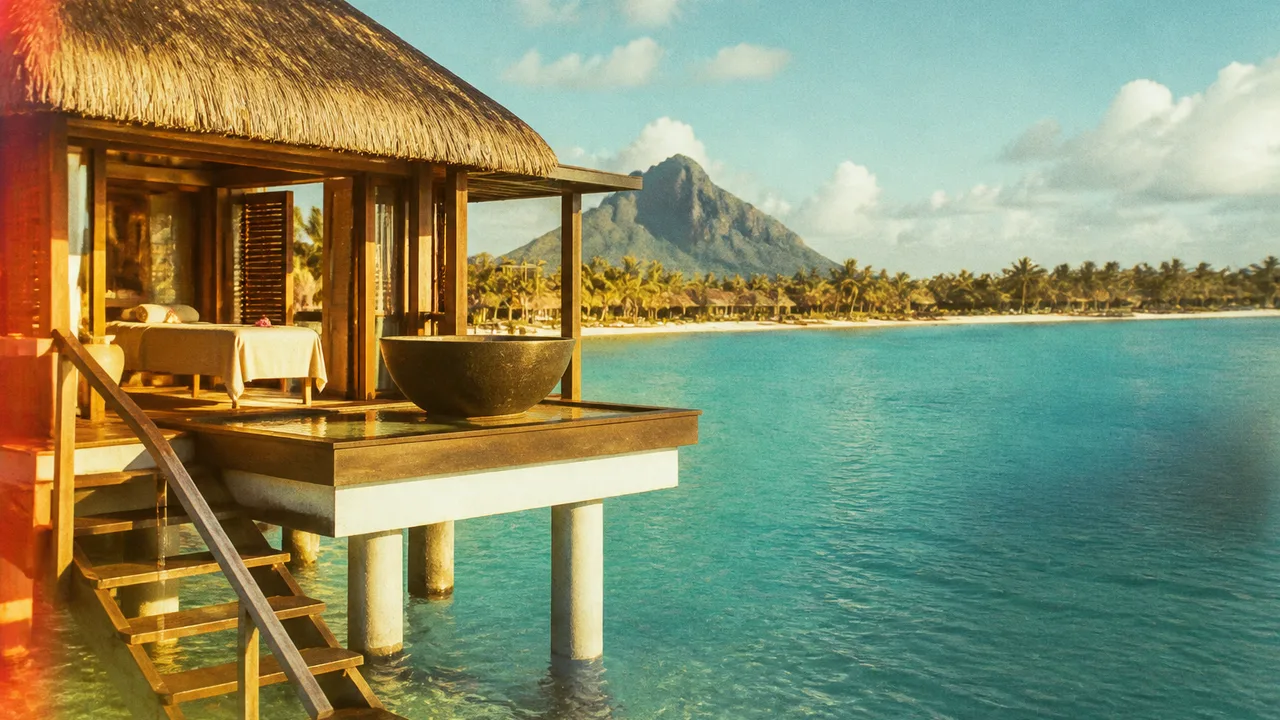
Let me be honest with you about something: I am not the person this resort is built for.
I write about places that ask something physical of you — the altitude that makes your lungs feel like wet paper bags, the river crossing you miscalculate at dusk, the hostel bunk where you lie awake recalibrating why you thought this was a good idea. A 7,114-square-foot private compound with five bedrooms, five full bathrooms with freestanding bathtubs, and two swimming pools on a private island — which is, according to Luxury London, exactly what awaits guests at the Royal Island Sanctuary on Île aux Chats — is not a place that will ask anything of you except your credit card number and perhaps the energy to choose a bath salts scent.
And yet I keep thinking about it. Not with envy, exactly. More with the particular curiosity I feel about anything that operates at the absolute limit of its category.
The Four Seasons Resort Mauritius at Anahita has reopened after renovations, and the shape of that reopening is worth taking seriously — not because the press materials say so, but because what a property chooses to add when it rebuilds tells you something true about where luxury travel thinks it's going.
The resort sits about 45 minutes east of the airport, according to Travel + Leisure Asia, the drive threading narrow village roads through sugarcane fields before depositing you into a different reality entirely. That 45-minute corridor matters. It's the membrane between the island that actually exists and the island the resort is selling. Both are real. They just aren't the same place, and the renovation makes no pretense otherwise.
The bones of the property: 90 one- and two-bedroom villas, plus 45 private retreats running from two to five bedrooms, every one of them a stand-alone structure, every one with a private pool and what Women's Health describes as al fresco showers. Mauritius Hotel Reviews notes the golf course, the dedicated kids and teens club — the infrastructure of a resort designed to be the whole trip rather than a launching point for it. None of that is new. What's new is the Oseyan Spa.
The Oseyan is overwater. That's the headline detail, and Travel and Tour World describes it as a wellness facility designed for relaxation and rejuvenation — the kind of language that's hard to argue with and equally hard to hold anyone accountable to. Here's what I actually notice about it: every top-tier resort that has renovated in the last few years has added some version of this. Overwater structure, wellness branding, water views through the treatment room window. The Maldives got there first and got there so thoroughly that overwater bungalow photography has become almost abstract — you see it and register "luxury" before you register "place." Mauritius is now reaching for that same visual grammar.
Whether it earns it differently is the only interesting question.
The case that it might: Mauritius is not the Maldives. The island has texture the Maldives doesn't — those sugarcane fields, the Creole architecture, the cultural density that comes from a genuinely complicated colonial history. Business Traveller describes the reopened resort as an all-villa property with its own private island and overwater spa — a configuration that positions it at the very top of what the island offers. If the resort is doing this right, the overwater spa isn't importing a Maldives experience; it's doing something specific to this lagoon, this light, this coastline. The T+L Asia review notes, almost offhandedly, that the approach through village roads and sugarcane fields has a particular effect on arriving guests — "you find yourself slowing down and smiling more," the review observes — and that detail is doing more work than it looks like. It's describing a decompression that happens before you even check in, a geographic unwinding that the resort itself didn't engineer.
That's the thing no renovation budget can buy.
What actually worries me about any property that comes back from a significant closure with this much fanfare isn't cynicism about the chandeliers. It's more specific than that. When a resort renovates hard and relaunches loud, there's a window — maybe six months, maybe a year — where the physical plant is immaculate but the human systems haven't settled. The staff who know where everything went before don't always survive the transition. The institutional memory of how the kitchen runs at 2 a.m., which maintenance guy actually knows the pool equipment, which concierge has the relationships with the best local guides — that knowledge is soft, informal, and extremely easy to renovate away.
For a guest spending enough to book the Royal Island Sanctuary for a week, that gap is not a minor inconvenience. The experience they're buying is total: every meal, every service interaction, every moment the curtain is supposed to be invisible. What a renovation press release cannot tell you — what Business Traveller can get closer to, which is why actual reviews from actual arrivals matter more than architect's renderings — is whether the newly beautiful infrastructure is being operated by a team that's found its rhythm yet.
Four Seasons as a brand has a reputation for absorbing this kind of transition better than most. The operational culture is deeply systemized in a way that protects consistency across properties and relaunch cycles. But that's brand-level confidence, and it doesn't remove the question — it just makes the downside scenario less likely.
The other thing I keep sitting with is the sustainability gap. The resort's pitch leans on Mauritius's natural beauty — the lagoon, the reef, the private island — as inherent value. That's the product. And properties that use a coral reef ecosystem as their primary amenity have a specific ethical obligation to that ecosystem that goes beyond the usual "we use LED bulbs" disclosure. I haven't seen sourced, detailed reporting on the Anahita renovation's environmental impact or commitments, and the sources I'm working from don't provide that either. I'm not going to invent concern where I don't have data, but I'm also not going to pretend the question doesn't exist. A resort that profits from reef access while reef ecosystems degrade globally is a resort that needs to show its work. The renovation would have been an obvious moment to make that work visible.
Maybe it did. If so, I'd want to read about it somewhere other than a press release.
None of this means the Four Seasons Mauritius at Anahita is the wrong choice for the traveler it's designed for. The T+L Asia review's observation about slowing down and smiling more isn't naive — it's describing something real about what deceleration does to people who are usually moving too fast. There's a version of this trip where a honeymooning couple or an exhausted executive or a family with two teenagers arrives, gets gently arrested by the lagoon light and the sugarcane smell on the drive in, and genuinely recovers something they didn't know they'd lost. That's not nothing. That's actually quite hard to engineer, and the scale of this renovation suggests the property is serious about engineering it.
I'm just not the person who finds out by booking it. I find out by watching who does — and whether they come back talking about the overwater spa, or about something quieter that happened between the cane fields and the check-in desk.
More Like This
Inside Argentina's 7-Generation Working Estancia
Estancia La Tomasa near Buenos Aires has welcomed guests since 2023. Here's what a weekend on this 140-year-old working ranch actually looks like.

The World's Longest Domestic Flights, Explained
From Boston to Honolulu to Paris to Réunion, the world's longest domestic flights reveal how borders, customs zones, and sovereignty really work.

Airbnb's AI Rebuild Is Fast. But Where Is It Going?
Airbnb says AI cut its product build time from nine months to six weeks. The numbers are real. But the platform's direction raises harder questions for travelers.
Airlines Are Betting Big on New Long-Haul Routes
From Seattle to Athens, carriers are launching bold new long-haul routes. Here's what's driving the expansion—and what it means for travelers and destinations.

DTH Travel's New Slow Rail Journeys Across Asia
DTH Travel is expanding its slow rail journeys across Laos, China, and Vietnam. Here's what the routes look like—and what the trend actually means.

Hotel Check-In Safety Checks Worth Doing
From bed bugs to hidden cameras, a former hotel worker's check-in routine covers safety, hygiene, and avoiding surprise charges—here's what actually holds up.

World Cup 2026 Economic Ripple Reaches Non-Host Cities
The 2026 World Cup is lifting hotels and spending in cities nowhere near a stadium. Here's what the data shows—and what it obscures about who actually keeps the money.

Light Rail Automation Borrows Tech from Cars and Satellites
Cities are automating light rail using car sensors and satellite positioning. Here's what that shift means for urban transit, safety, labor, and city design.