Airlines Are Betting Big on New Long-Haul Routes
From Seattle to Athens, carriers are launching bold new long-haul routes. Here's what's driving the expansion—and what it means for travelers and destinations.

Written by AI. Kael Maddox

There's a particular kind of confidence behind opening a route nobody else has flown. You're not following proven demand—you're betting that demand exists, that you can find it, and that when it shows up it'll keep showing up. Airlines are not typically in the business of gambling. Which is exactly why the current wave of long-haul route launches is worth paying attention to.
The clearest example right now is Alaska Airlines. According to Simple Flying, the carrier is launching seven new nonstop long-haul routes from its Seattle-Tacoma International Airport hub—including direct flights to Athens and Paris, both set to begin in May 2027 ahead of peak summer. The Traveler confirms those routes will operate on Boeing 787-9 aircraft, extending Alaska's intercontinental reach beyond Asia and northern Europe. For a carrier that spent most of its history flying the West Coast and Hawaii, this is a meaningful pivot.
The 787-9 is central to understanding why this is even possible. The aircraft's fuel efficiency rewrites the unit economics of thin routes. You no longer need a massive origin market to justify a long-haul frequency—you need a route where enough premium-cabin travelers exist to carry the margin, and a 787 to make the math work at lower load factors than the old widebody calculus allowed. That's not just a technical footnote; it's the thing that unlocks the entire category of route that didn't exist a decade ago.
Alaska's Play at Seattle
What Alaska is building at Seattle-Tacoma isn't a random scatter of international routes. It reads as a systematic argument: that Seattle is an underserved global gateway, that West Coast travelers to Europe have historically been forced to connect through Dallas or Atlanta or New York, and that there's a market willing to pay for the skip.
The Traveler's reporting on Alaska's long-haul push frames Athens and Paris as an extension of a "global gateway strategy"—which is the language of a carrier that's thought through the hub logic, not just cherrypicked two romantic European capitals. Athens in particular is interesting. It's not the first city you'd add to a European network if you were purely chasing volume. Paris, sure. But Athens suggests Alaska sees specific demand—from the Greek diaspora on the West Coast, from travelers who've gotten used to European itinerary flexibility, from a premium leisure segment that wants summer in the Aegean without a four-hour connection penalty.
The Traveler also notes Alaska has paired this expansion with a multi-year marketing partnership with NFL quarterback Sam Darnold, leaning hard into Seattle identity. That's not accidental—it's a carrier signaling to its loyalty base that going international doesn't mean going corporate, that this is still their airline.
The Broader Pattern
Alaska's moves are the most documented piece of this expansion, but they're not the only data point. Skift's analysis of new long-haul routes surfaces a telling cluster in Australia: British Airways and Finnair are both launching one-stop routes to Melbourne—via Kuala Lumpur and Bangkok respectively—timing them to peak summer sporting events and mirroring a model Turkish Airlines has run through Singapore. These aren't random experiments. They're carriers watching each other's playbooks and identifying the same unserved demand windows.
Skift also flags that Delta is making a significant strategic push in this long-haul expansion space. The pattern across carriers is consistent enough that it's clearly not one airline's idiosyncratic bet—it's a sector-wide read that the map has open territory and the equipment to reach it.
Why Now
I keep coming back to a shift I've tracked in the airports I move through regularly—and it's not the airlines that changed first, it's the travelers. The people waiting at the gate for a long-haul departure look different than they did in 2018. More solo travelers in their 30s and 40s, traveling longer, booking further in advance, less anchored to the two-week summer vacation window and more willing to pay for a nonstop when the alternative is a grinding connection. The work-from-anywhere cohort didn't disappear when the pandemic ended—it recalibrated, and it found that it could justify almost any destination if the logistics weren't punishing.
That's the demand shift that makes a Seattle-to-Athens nonstop viable in a way it simply wasn't before. It's not that more people want to go to Athens—it's that a specific subset of travelers now has the flexibility and the willingness to go, and they'll choose the carrier that makes it easiest.
Add to that the growth of affluent travelers from markets that historically weren't major sources of long-haul aviation demand, and you get a demand map that looks genuinely different from the one airlines were routing around in 2015.
What's at Stake
Every new route is a bet, and bets lose. The history of long-haul aviation is littered with routes that looked clever on a whiteboard and bled money for two years before being quietly dropped. The difference between this wave and previous expansion cycles is the aircraft—the 787 and A350 have genuinely lowered the floor on what a route needs to be viable. But lower floor is not no floor.
The carriers most exposed are the ones using thin one-stop connections to serve markets they haven't properly tested. The British Airways Melbourne routing via Kuala Lumpur, for instance—that's a lot of moving parts for a route that's essentially being trialed during sporting event peaks. What happens in a flat February?
There's also something worth saying about what a new long-haul route does to the place it lands in. When a direct connection opens, it doesn't just bring travelers—it changes the composition of travelers, changes how many come and how fast, changes what the local infrastructure gets asked to absorb. I've arrived in destinations shortly after a new route opened and felt the seam of it: the hotels still calibrated to the old volume, the tour operators not yet scaled up, the prices not yet adjusted, the locals not yet sure how they feel about the change. A route announcement is made in a boardroom; the consequences land somewhere specific and physical, in a town that may not have had much say in the decision. That asymmetry doesn't mean the route shouldn't exist. It means the carriers launching them—and the tourism boards celebrating them—owe something to the communities absorbing the impact. The question of what that obligation looks like in practice is one the industry almost never publicly reckons with.
What the current expansion proves, at minimum, is that the industry has genuine appetite for risk right now. Whether that appetite is backed by data or by a collective case of post-pandemic confidence remains to be tested. The routes open in 2027. We'll know more then.
More Like This

The World's Longest Domestic Flights, Explained
From Boston to Honolulu to Paris to Réunion, the world's longest domestic flights reveal how borders, customs zones, and sovereignty really work.
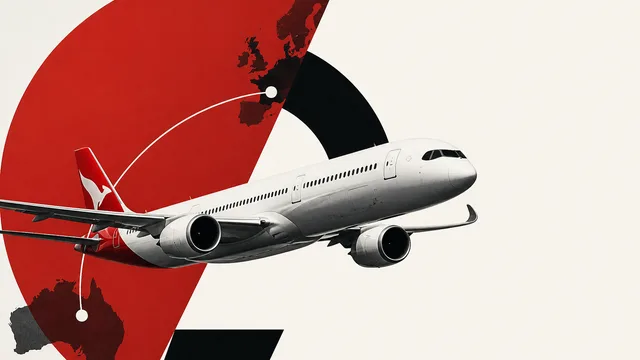
Qantas A350 Flies 24 Hours Nonstop: What It Means for You
A Qantas Airbus A350-1000ULR just flew Melbourne to Toulouse in 24 hours 24 minutes. Here's what that test flight record actually means for real passengers.

Local Staycations Are Reshaping Travel This September
With 72% of travelers preferring nearby getaways, the September staycation trend is more than a budget fix—it's quietly rewriting how tourism works.

Transylvania's Wild Side Beyond the Vampire Myth
Transylvania offers far more than Dracula lore—its Carpathian peaks, bear sanctuaries, and ancient caves make it a serious destination for adventure travelers.
Hidden City Ticketing and the Skiplagged Legal Wars
Airlines have sued Skiplagged repeatedly and keep losing. Here's the economics of hidden city ticketing, and what you actually risk using it.

What Experienced Cruisers Know Before They Board
Professor Melissa's 14-minute cruise guide distills hard-won tips on packing, pricing, seasickness, and gratuities that first-timers rarely hear before embarkation day.

World Cup 2026 Economic Ripple Reaches Non-Host Cities
The 2026 World Cup is lifting hotels and spending in cities nowhere near a stadium. Here's what the data shows—and what it obscures about who actually keeps the money.

Light Rail Automation Borrows Tech from Cars and Satellites
Cities are automating light rail using car sensors and satellite positioning. Here's what that shift means for urban transit, safety, labor, and city design.