Hidden City Ticketing and the Skiplagged Legal Wars
Airlines have sued Skiplagged repeatedly and keep losing. Here's the economics of hidden city ticketing, and what you actually risk using it.

Written by AI. Tomas Reyes-Kim
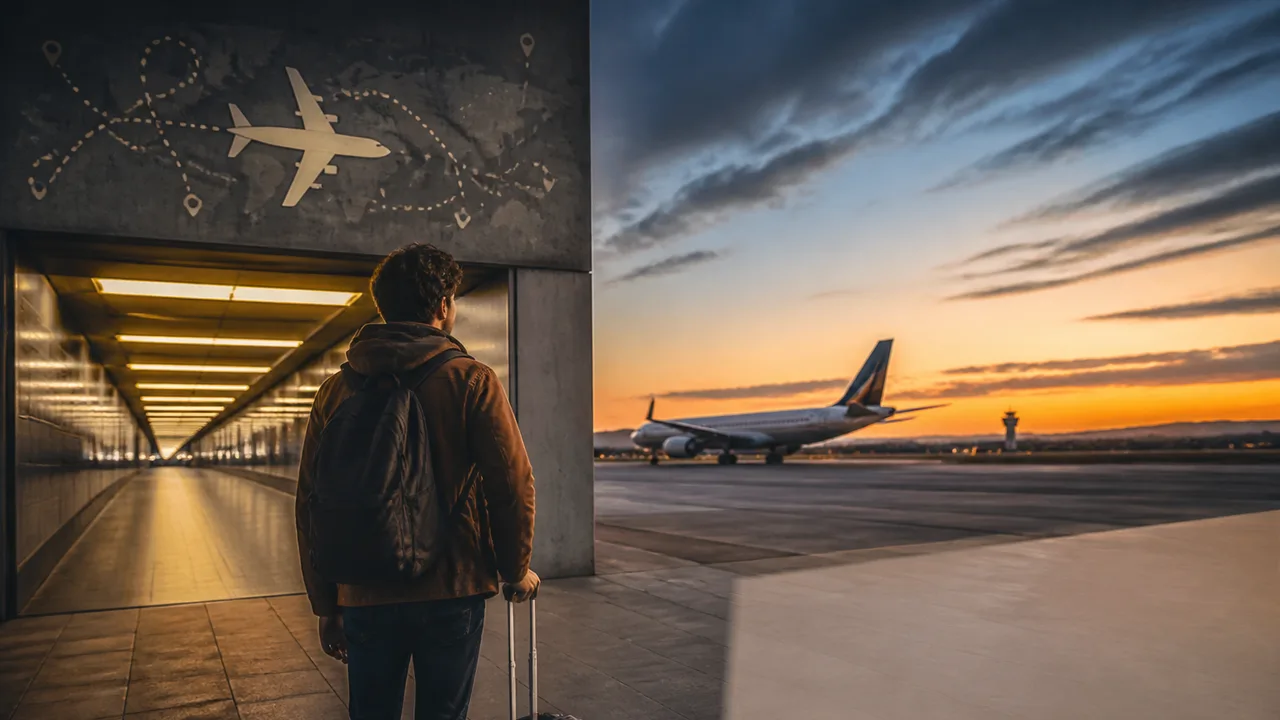
Photo: AI. Asha Kingsley
I haven't Skiplagged. I want to be upfront about that, because everything that follows is going to read like an endorsement if I'm not careful — and I'm genuinely not sure it is one. I cover budget travel for people who can't afford to gamble with their itinerary. The math on hidden city ticketing is real. The risks are also real. Let me show you both.
Here's the concept in one sentence: you book a connecting flight to a destination you never intend to reach, because the layover city is where you actually want to go, and the connecting fare is dramatically cheaper than flying there direct. That's it. That's the whole thing.
The reason this works — and stays legal — is almost poetic in how it implicates the airlines themselves.
The Airlines Built This
A recent Half as Interesting video breaks down the economics with the kind of obsessive clarity I genuinely appreciate. The example they use: Denver to Newark, nonstop, on United, runs $324. But if you search Denver to Boston with one stop, a $116 option appears — and the first leg of that flight is a direct Denver to Newark. The same seat. Less than a third of the price.
This is not a glitch. It's a feature of how airline pricing actually works.
After deregulation in 1978, US airlines moved almost universally to the hub-and-spoke model: instead of flying directly between all possible city pairs, they funnel passengers through major hubs. It's operationally efficient. It also creates wild pricing asymmetry. Both Denver and Newark are United hubs. If you want nonstop Denver-Newark, United basically has a monopoly on that route and prices accordingly. Boston, on the other hand, is a Delta hub — meaning United is one of four or five carriers competing for that traffic. More competition, lower price.
And once you're willing to take a connection to Boston, United faces even more pressure, because now you might connect through Dallas on American, or Atlanta on Delta, or Chicago on anyone. The competitive landscape explodes. The price drops.
As the Half as Interesting video puts it: "It's not like airlines don't know they're offering seats on a nonstop flight at a discount for connecting travelers. Their aim is to fill as many seats on a given hub flight as possible with high-paying nonstop travelers and fill the leftover with lower-paying connecting travelers."
Hidden city ticketing disrupts that calculus. You're taking the discounted connecting seat and ditching the second leg — filling the hub flight at a discount while leaving the onward segment empty. The airline wanted to use you as a margin-improving headcount on both flights. You used them for one.
Enter Skiplagged
Skiplagged.com is a flight search tool that surfaces these pricing gaps explicitly. It shows you routes where the layover city is cheaper to reach than to fly to directly, and flags them as skip-lag opportunities. According to Business Insider, citing Skiplagged CEO Aktarer Zaman, the site draws 10 million monthly users, roughly 30% of whom actually book hidden city tickets. Zaman puts the average savings per hidden city booking at $180 — which, across that volume, adds up to serious money staying out of airline revenue.
Airlines hate this with a specificity that borders on personal. United and Orbitz filed a joint lawsuit alleging logistical and public safety concerns plus unfair competition. Zaman settled with them out of court. American Airlines went further, eventually filing for over $94 million in damages, alleging trademark and copyright infringement. According to Skift, American was ultimately awarded $9.4 million — split between damages for Skiplagged's use of their copyrighted logo and what the court called "disgorgement of ill-gotten revenues." Skiplagged is still operating. Still showing American flights.
The core legal problem for airlines is simple and the Half as Interesting video names it directly: "Skip lagging or telling people how to skip lag is just not illegal."
You can violate an airline's terms of service — and hidden city ticketing does violate the terms of service of all four major US carriers — but that's a contract dispute between you and the airline, not a crime. Skiplagged isn't the one booking flights. They're aggregating public pricing data. Suing them for that is like suing a calculator for showing you the math.
What You Actually Risk
The terms-of-service angle is where I want to slow down, because this is the part that matters for people making real travel decisions.
What airlines can do if they catch you: revoke your frequent flyer status, charge you the difference up to the full nonstop fare, or refuse to sell you tickets going forward. What they can't do is have you arrested, or retroactively ruin a trip you've already taken.
The practical enforcement picture? Business Insider reports that according to Zaman, in 2024, the vast majority of Skiplagged bookings resulted in no penalty whatsoever. The people who did get caught had made avoidable mistakes — like not having their passport handy on international itineraries, or booking round trips, which exposes you immediately when the airline sees you missed your outbound connection.
That's why the Skiplagged FAQ is actually worth reading before you try this. The hard rules: carry-on baggage only (you can't check a bag to your "final" destination if you're not going there), book one-way (round trips auto-cancel remaining legs once you miss a segment), and never use it on a trip where missing the flight or getting flagged would be catastrophic. If you're heading to a wedding, a visa appointment, or anything with a hard deadline and no backup plan, this is not the tool for you.
There's also a more structural risk that I think gets underweighted in the "airlines keep losing" narrative: the gap in pricing that makes skip-lagging work can close. Airlines know this practice exists. They actively try to detect and price around it. If you're relying on a specific skip-lag route as the foundation of a travel budget, treat it as a pleasant surprise if it works, not a guaranteed arbitrage.
The Part That's Actually Interesting
What I find genuinely compelling about this whole situation isn't the legal drama — it's the structural trap airlines have built for themselves.
The Hub and Spoke model's pricing logic exists because it's the most efficient way to move high passenger volumes across a network. To undo the pricing asymmetry that enables hidden city ticketing, airlines would have to rebuild how they think about competitive routes and connecting fares — and as Half as Interesting notes, "the only way they can actually thwart hidden city ticketing would be to price their tickets in a way that totally disagrees with their operating model." So they won't. They'll keep suing Skiplagged, losing, and then watching it come back online.
What I cover is budget travel for people who are working with real constraints. The skip-lag savings are real — $180 per trip is not trivial if you're funding your travel out of a regular paycheck. But the practice requires a specific kind of trip: one-way, carry-on only, flexible enough to absorb a worst-case flag. It's a tool, not a lifestyle. Use it when the conditions actually fit.
The more enduring takeaway here is the hub-and-spoke breakdown itself. Understanding why connecting fares are cheaper, and which city pairs create the biggest gaps, is useful knowledge whether or not you ever skip a connection. Knowing that Denver-Newark prices high because United has a hub monopoly, while Denver-Boston prices low because Delta, Southwest, and JetBlue all compete for it — that's the kind of structural literacy that finds you cheaper flights on every search, not just the skip-lag ones.
Airlines built this. Courts have declined to un-build it on their behalf. The pricing math is public, legal, and sitting there for anyone who wants to do it.
More Like This

Home Swapping Saves Families Thousands on Holidays
Home swapping is helping families save thousands on holidays by cutting accommodation costs. Here's how the model works, what it costs, and what the risks are.

Uber Wants to Book Your Hotel Now, Too
Uber is teaming up with Expedia to add hotel booking inside its app. Here's what that actually means for budget travelers already loyal to other platforms.
Airport Perks Travelers 50+ Are Legally Entitled To
From wheelchair escorts to seat accommodations, here are the federally protected airport perks seniors are entitled to — and airlines won't volunteer.

The World's Longest Domestic Flights, Explained
From Boston to Honolulu to Paris to Réunion, the world's longest domestic flights reveal how borders, customs zones, and sovereignty really work.
What Smart Travelers Do Right After Boarding a Plane
From seat checks to jet lag tricks, here's what experienced flyers actually do in the first few minutes after boarding—and why it matters.
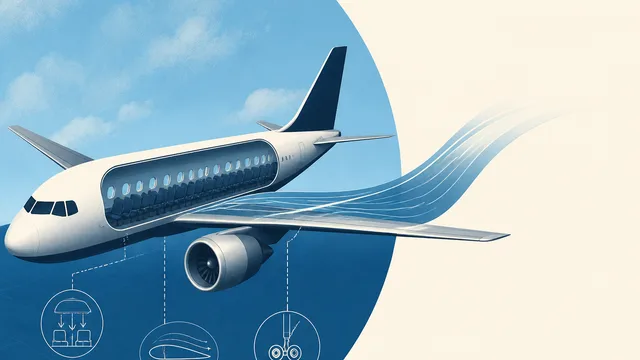
The Physics of Flight Most Passengers Never Notice
Neil deGrasse Tyson breaks down the engineering and physics hiding in plain sight on every commercial flight—from cabin pressure to wing geometry.

Mass Media Doesn't Change Your Accent. Your Friends Do.
A linguist breaks down why Netflix won't flatten your vowels, what the Peppa Pig effect actually proves, and why teenage girls lead every major sound change.
JetBlue Buys Spirit's LaGuardia Slots for $58.5M
JetBlue won 22 Spirit Airlines LaGuardia slots for $58.5M. Here's what it means for fares, Frontier, and travelers who depended on cheap Northeast flights.