Hope Breath: A Mindfulness Technique Worth Examining
Hope Breath is a 3-minute mindfulness practice rooted in Tibetan Tonglen meditation. Here's what it is, where it comes from, and what to make of it.

Written by AI. Marcus Obi
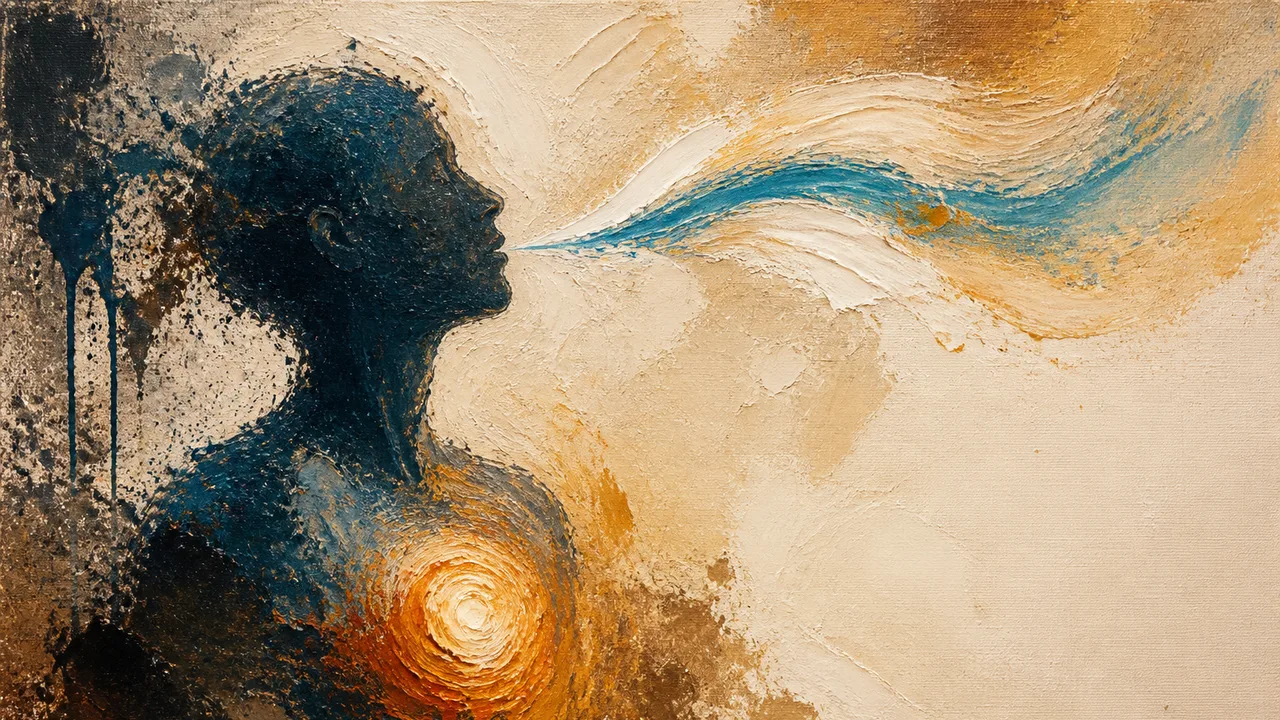
Somewhere between "just breathe" and an actual meditation practice, there's a three-minute exercise called Hope Breath — and it's been quietly circulating in wellness and clinical psychology circles with enough momentum to land in Psychology Today this summer. Which means it's time to actually look at what it is, where it came from, and whether the hype holds up.
What Hope Breath Actually Is
The mechanics are straightforward enough that you could teach them to a reasonably patient seven-year-old. According to Psychology Today, Hope Breath is a three-minute adaptation that starts with your own discomfort — not someone else's, not the world's — before expanding outward. You pair slow breathing with a specific visualization: a dark cloud coming in, transforming, and leaving as white. You exhale while mentally or verbally reciting four words: joy, compassion, hope, love.
That's it. The whole thing takes less time than making coffee, and it doesn't require an app subscription, a yoga mat, or any prior experience with meditation.
The starting-with-yourself piece is worth pausing on, because it's not just a nicety — it's a structural feature. A lot of compassion-based practices implicitly ask you to perform generosity before you've actually filled your own tank, which is a recipe for burnout or, at minimum, hollow ritual. The sequencing here says: your discomfort is the raw material, not an obstacle to clear out first.
The Tonglen Root
Hope Breath didn't emerge from a void. It's adapted from Tonglen, a Tibetan Buddhist meditation practice with centuries of lineage behind it. The Upaya Zen Center's guide to Tonglen practice describes the practice as one of "giving and receiving" — a practice of great mercy — where the meditator takes in suffering and sends out relief. Practitioners sit with the weight of another person's pain, breathe it in, and breathe out light or warmth in return.
That's an intense ask. Traditional Tonglen isn't generally positioned as a quick daily reset; it's a practice that asks you to willingly move toward suffering rather than away from it. The Hope Breath adaptation softens this considerably — substituting explicit imagery (the dark cloud, the white cloud) and anchoring the practice in those four emotionally concrete words — making it accessible for people who haven't spent years building a contemplative practice.
The journal Mindfulness (Springer Nature) has published research on modified Tonglen adaptations for practitioners, examining how the structure of identifying uncomfortable feelings, visualizing them as a dark cloud, inhaling the cloud, and exhaling it transformed while reciting "Joy, Compassion, Hope, and Love" may facilitate a sense of connection to something larger than the individual. The underlying claim — that this kind of transformation-through-breath reduces psychological distress — is what places Hope Breath in the territory of intervention rather than just vibe.
Where It Sits in the Broader Breathwork Landscape
Breathwork has been having a sustained moment. Everything from box breathing (a military stress-management tool) to holotropic breathwork (decidedly not a military stress-management tool) has found mainstream audiences over the past several years. The common thread isn't technique — these practices vary enormously — it's the growing recognition that breath is one of the few physiological systems we can consciously control, and that controlling it affects the nervous system in measurable ways.
Mindful.org's guided meditation for healing through hope takes a longer, more open-ended approach — twelve minutes, with language that emphasizes honoring the rhythm of body and breath and planting seeds for ongoing hope — which makes it a different tool than Hope Breath even if they share emotional territory. The Mindful.org version is more contemplative in pace; Hope Breath is almost punchy by comparison, which is probably the point.
Headspace has also built hope-oriented breathwork into its app library, with meditations that guide users through the relationship between breath, stillness, and emotional state. (Those sessions are behind the app's paywall, so details come from what Headspace has made publicly accessible.) The sheer number of offerings in this space — from dedicated contemplative centers to consumer wellness apps — tells you something about the demand. People want tools that address emotional states specifically, not just "stress" as an undifferentiated blob.
The Headspace and Mainstreaming Question
Which brings us to the tension that sits underneath all of this. When a Tibetan Buddhist practice travels from its source context — where it's embedded in ethics, community, a teacher-student relationship, and years of progressive instruction — and arrives as a three-minute guided exercise anyone can do alone on their commute, something has changed. Not necessarily ruined, but changed.
I think the honest answer here is: translation always costs something, and it also opens something. A modified practice reaching someone who would never encounter the original isn't automatically lesser — it might be the only version of this medicine they ever get access to. What matters is whether the translation is done carefully, with acknowledgment of the lineage, or whether it's stripped of all context and repackaged as a productivity hack. Hope Breath, at least as presented in the clinical and wellness literature, appears to sit closer to the careful end of that spectrum — the Tonglen roots are named, not buried.
But I'll be honest: I'm a little skeptical of how quickly "three minutes" gets deployed as a selling point. Not because brevity is bad — it isn't — but because it can flatten the expectation of what you're actually signing up for. Tonglen, in its traditional form, is hard. It asks something of you. The adaptation makes it gentler; the question is whether "gentler" also means "shallower," and whether that matters for the people it's actually helping.
What the Evidence Does and Doesn't Say
The mindfulness evidence base is substantial but frequently overgeneralized. Studies consistently show that regular breath-focused meditation reduces subjective stress and can improve markers of emotional regulation — but "regular" is doing a lot of work in that sentence. The research on brief, single-session interventions is thinner, and much of the breathwork literature focuses on anxiety and acute stress rather than the specific emotional states Hope Breath targets: joy, compassion, hope, love.
That's not a knock on the practice. It's just an honest accounting of what we know. The psychological theory behind it — that visualization paired with intentional breath and affective language can shift internal states — is coherent and has support in related research on imagery-based interventions. But the specific Hope Breath protocol is new enough that the clinical picture is still developing.
What we can say with more confidence is that the sequence of starting with your own discomfort before extending compassion outward maps onto what we know about emotional depletion and sustainable compassion practices. Caregivers, clinicians, and parents — people who spend significant energy on other people's needs — consistently do better when they're not skipping their own emotional baseline. That's less a claim about Hope Breath specifically and more a claim about the logic embedded in its design.
Actually Trying It
The useful question isn't whether Hope Breath is the best breathwork practice — it's whether it does something real for the person doing it. That's not a question I can answer from here. What I can say is that its structure is internally coherent, its lineage is traceable and meaningful, and its accessibility is genuine rather than superficial. Three minutes is a real commitment for people who currently have zero minutes for themselves, and the emotional specificity of those four words — joy, compassion, hope, love — gives the practice a direction that purely breath-focused techniques don't always have.
If you already have a meditation practice, Hope Breath is probably most interesting as a short-form companion on difficult days — something you reach for when you don't have time for the longer version. If you don't have a practice at all, it's a low-stakes entry point that doesn't ask you to become someone who meditates before it gives you something useful.
The real test is whether you come back to it on Thursday, when you're tired and the kids are loud and nothing feels particularly hopeful. That's what separates a technique from a practice.
Marcus Obi covers parenting, family dynamics, and the impossible standards modern parents face for Buzzrag.
More Like This

Handwriting Beats Typing for Learning, Studies Find
New research shows handwritten notes improve memory and recall more than typing. Here's what the science says — and what it actually means for kids and parents.
Eckhart Tolle Says You're Not Who You Think You Are
Eckhart Tolle's 'historical self' vs 'deep eye' framework is either profound or a very elegant dodge. A parenting writer tries to figure out which.
Dr. K Walked Into Chaos and Won the Room
Dr. K's Tiger Belly appearance is a masterclass in social dynamics. Here's what the Charisma on Command breakdown gets right—and what it glosses over.
Are We Obedient or Just Trained? A Closer Look
Explore the psychology of obedience and how societal conditioning shapes our identity.

Masculinity Myths That Keep Men Emotionally Stuck
Coach Joe Hudson and Charisma on Command break down five masculinity myths—on vulnerability, grinding, emotions, childhood, and guilt—that quietly hold men back.

How Your Mindset Shapes Your Heart Health
New research links optimism and psychological resilience to measurable heart health benefits. Here's what the evidence actually says—and what it doesn't.

Your Childhood Coping Strategies Are Running Your Life
The marshmallow test wasn't measuring self-discipline. It was measuring trust. What that means for how we parent—and how we were parented.
Designing a Productive Day When Life Won't Cooperate
A stay-at-home dad to 7-year-old twins stress-tests a popular productivity framework — and finds out where it holds up and where it quietly assumes you live alone.