Masculinity Myths That Keep Men Emotionally Stuck
Coach Joe Hudson and Charisma on Command break down five masculinity myths—on vulnerability, grinding, emotions, childhood, and guilt—that quietly hold men back.

Written by AI. Samir Patel

Photo: AI. Tomoko Hayashi
There's a version of manhood that most guys absorb before they're old enough to question it. Work hard. Stay in control. Don't need anybody. Figure it out yourself. And here's the uncomfortable part: that version works, up to a point. It gets you a decent job, a functional relationship, a life that looks more or less fine from the outside. The trouble is what it costs underneath.
That tension is at the center of a recent Charisma on Command video featuring coach Joe Hudson — who, according to a 2026 roundup of top CEO coaches by StarupCEO.coach, works with executives at companies including Apple, Google, and OpenAI. In a 35-minute conversation with channel host Charlie Houpert, Hudson dismantles five assumptions that he argues quietly wreck men's inner lives. I want to map those arguments honestly — because they're worth taking seriously, and because a few of them push on things that mainstream self-help rarely touches.
Lie one: Vulnerability makes you weak
Hudson's definition of vulnerability is specific and worth holding onto. It's not emotional oversharing. It's not performing sensitivity. It's simpler and scarier than either: speaking the truth that makes you pucker a little before you say it. "I'm really scared right now." "What you're doing bothers me." "I feel like I did a great job here." That last one, Hudson points out, is vulnerability too — because we're socialized just as hard against pride as against fear.
The mechanism he describes is interesting. The fear underneath withholding isn't actually that people will reject us in general — it's that this specific person will. The job interview. The romantic interest. The client. Hudson draws a distinction between needing a particular individual and needing connection broadly, and he suggests that when you collapse those two things — when your entire sense of acceptability rides on whether one specific person approves of you — you lose the capacity to be genuinely yourself. Vulnerability, in his framing, is what restores that capacity. Not as a performance of openness, but as a refusal to manage the other person.
He also makes a point about shame that I find genuinely useful. Shame, he argues, doesn't motivate change — it prevents it. It freezes the pattern in place. The behavior you've been trying to stop for three years? That's not a willpower problem. That's shame holding the loop closed. The exit isn't more self-criticism. It's exposure — telling someone, apologizing, letting the thing that's been hidden get seen.
Lie two: Grinding is how you win
This one tends to land harder with men in their 20s and 30s, which is probably why Hudson goes long on it. His argument isn't that hard work is bad. He logs serious hours himself. The distinction he draws is between work driven by genuine passion — where you'd do it for free, where it aligns with what you actually care about — and grinding, which he calls "deeply uncreative." The word choice is precise: you're grinding to create. The contradiction is built into the verb.
What grinding actually produces, in his clinical observation, is a burnout-and-check-out cycle. The CEO who sells his company and spends two years half-depressed in his pajamas. The founder who oscillates between extreme work and extreme escape. The rhythm is the same regardless of the outlet. Hudson's more pointed claim is that grinding also tends to focus effort in the wrong direction — busy-work that produces dopamine hits rather than the three conversations or strategic shifts that would actually move things. He's describing a kind of productive-looking avoidance, which is something I think gets underdiscussed.
There's a psychological thread running underneath that Hudson names explicitly: men who chase money compulsively are often chasing something that predates money. The parental approval that was always slightly out of reach. The goalpost shifts predictably — I need enough for this year, now I need enough for five years, now I need enough for everyone in my family forever — because the actual need isn't financial and money was never going to satisfy it.
Lie three: Emotions are obstacles to clear thinking
This is where the conversation gets into neuroscience territory, and I want to be careful here. Hudson invokes the finding that removing the emotional centers of the brain doesn't improve decision-making — it collapses it. This tracks with António Damásio's somatic marker hypothesis, which proposes that emotional signals are integral to practical reasoning. It's a widely cited framework, though it's worth noting that researchers have identified significant challenges to it — including critiques published in the British Journal for the Philosophy of Science — so "settled science" would be an overstatement. The broader point, that emotional suppression doesn't produce rational clarity, is more defensible than any single neurological model.
Hudson's practical claim is this: every judgment you make of other people has an unfelt emotion behind it. Every addiction is an emotion being avoided. The man who insists he's purely rational is, in Hudson's framing, almost always carrying a quiet conviction that rationality makes him better than people who aren't — and that conviction is itself an emotional posture, not an absence of emotion.
The piece of this I find most clinically grounded is Hudson's observation that positive emotions are often harder to tolerate than negative ones. Joy, pride, love at full intensity — these can feel destabilizing precisely because they dissolve the fixed sense of self. The "I'm the stoic one, the grinder, the rational one" identity has nowhere to stand when you're genuinely ecstatic or fully loving something. That's not a bug. Hudson argues it's the whole point.
Lie four: Your childhood relationships don't matter (or were fine)
Hudson says something that will make a lot of men immediately defensive: nearly every new client tells him their childhood was great. He laughs when he says it. Not mockingly — he's clearly seen enough of this to find it more poignant than funny.
The resistance, he argues, isn't denial exactly. It's loyalty. Examining the ways a parent hurt you feels like a betrayal of someone who loved you and tried. That emotional bind is real and worth honoring, not dismissing. But Hudson's position is that staying in that bind doesn't protect your parents — it prevents you from seeing your own patterns clearly.
The attachment dynamics he describes — the anxiously preoccupied man cycling through partners trying to get the nurturance a distant mother never provided; the avoidant man so conditioned against intrusion that he empties his marriage from the inside out — these map onto decades of attachment research, even if Hudson's vocabulary is more colloquial than clinical. His own account of learning to welcome the feeling of emotional abandonment rather than reacting to it with either neediness or hostility is one of the more honest moments in the video. It's not framed as a cure. It's framed as a practice — something you have to show up to repeatedly, the same way lifting weights requires repeated showing up.
The intergenerational piece matters too. Hudson traces his own family's pattern across three generations — alcoholism and Al-Anon in an alternating rhythm — not as an explanation that excuses, but as evidence that unexamined pain tends to route itself through the next person downstream. Acknowledging the hurt is the interruption.
Lie five: Other people's feelings are your fault
The final argument is subtler than it sounds. Hudson isn't saying you can't affect people — of course you can. He's drawing a distinction between emotions that are genuinely responsive to your actions and emotions that are being weaponized to control you. Guilt trips, performative sadness, fear directed at you — these are different from someone simply feeling bad. The manipulation Hudson describes isn't always conscious, and he's careful about that. But the effect is the same: you take on responsibility for an emotional state that isn't yours to fix, and in doing so, you lose your own ground.
His reframe is notable. Instead of absorbing or deflecting, he suggests moving toward the underlying need. A client of his was being screamed at weekly by a notoriously difficult Silicon Valley executive. On Hudson's advice, she addressed what was actually driving the rage — the need to feel that his vision was seen and valued — while clearly naming that the yelling made it hard to help him. He never yelled at the team again. Later, he joined her board.
Hudson's question about fear is worth sitting with: What are you scared might happen? Not "what are you scared of?" — which puts people on the defensive — but the outcome-focused version, which gives them somewhere to go with it. And his reframe of fear as devotion — you can only be scared of something you care about — shifts the valence of the emotion entirely. Fear stops being a sign of weakness and starts being information about what matters.
There's something worth naming about the context here. This conversation happened on a self-improvement YouTube channel with a promotional end card attached. Hudson sells courses. Houpert sells courses. None of that automatically invalidates the ideas — the best clinical insight can come packaged commercially, and the worst therapy can come with excellent credentials. But it's worth knowing the terrain you're on.
What Hudson is describing — the relationship between emotional avoidance and behavioral rigidity, between childhood attachment and adult relational patterns, between shame and stagnation — has genuine overlap with established therapeutic frameworks, even when his vocabulary diverges from clinical language. The question isn't whether the ideas are interesting. They are. The question is whether a 35-minute YouTube video is the container in which you want to actually work through them. For some people, it'll plant a seed. For others, it'll be enough. For others still, it'll point toward something that needs more than a conversation to reach.
That last group isn't a small one.
More Like This
Understanding Emotion Regulation with Dr. Marc Brackett
Explore emotion regulation with Dr. Marc Brackett, focusing on practical strategies for emotional intelligence in personal and professional contexts.
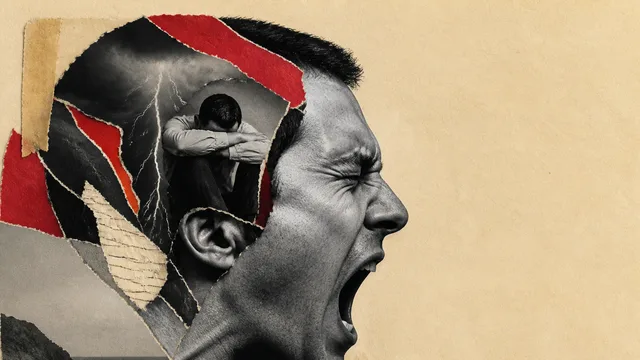
Adult Rage and Emotional Suppression: What We Hold In
Alain de Botton argues adults deserve the emotional honesty of a toddler's tantrum. The science on suppression is more complicated than that.
Unpacking Influence: Beyond Scripts and Techniques
Explore how true influence taps into emotional depths, beyond logical persuasion.

Why Looksmaxxing Has Nothing to Do With Looks
Dr. K's viral breakdown of looksmaxxing reveals it's really about control, shame, and the templates of self-worth we hand our kids without realizing it.

Charisma Is a Skill, Not a Personality Trait
Charlie from Charisma on Command breaks down 7 principles for building charisma through practice—not personality. Here's what holds up, and what's worth questioning.

Understanding Human Nature as a Career Meta Skill
Dan Koe argues persuasion beats AI as the most durable skill to learn. Here's a clear-eyed look at his psychological framework—and where it gets interesting.

When Teens Look Fine but Feel Invisible
Deniz Erdemir's TEDx talk on adolescent belonging reveals how social exclusion registers as physical pain—and what adults keep missing.

Maladaptive Daydreaming: When Fantasy Becomes Escape
Maladaptive daydreaming is vivid, hours-long fantasy that disrupts real life. Here's what psychology knows—and doesn't—about this under-researched experience.