Brainwaves and Communication: Beyond Words
Exploring how brainwave tech could revolutionize emotional communication.

Written by AI. Samir Patel
In the realm of human interaction, communication has always been the bridge—or sometimes the chasm—between minds. Natia Kukhilava's TEDx talk, "From Pictograms to Brainwaves," invites us to reconsider the very essence of how we connect, moving from ancient pictograms to the cutting-edge promise of brain-machine interfaces.
A Personal Journey with Communication
Kukhilava's exploration begins with her childhood, marked by communication challenges that many of us may find familiar. Her struggle wasn't with numbers but with words—understanding them and expressing her emotions effectively. "So something is happening in my brain. I feel some emotions but I cannot translate this into words," she shares, painting a picture of the silent frustration that can accompany emotional turmoil. This personal narrative is a reminder that communication is not just about language; it's about understanding and being understood.
The Evolution of Communication
From the earliest cave paintings to the invention of the alphabet, humans have perpetually sought more precise ways to share their thoughts. Kukhilava walks us through this evolution, highlighting how technology has transformed these interactions. We've moved from keyboards to touchscreens, to voice assistants like Alexa and Siri—tools designed to bridge the gap between human intention and machine interpretation.
Yet, even as we embrace these advances, they remain imperfect proxies for the nuanced tapestry of human emotion. Voice assistants can set reminders, but they can't yet fathom the depth of a sigh or the weight of a pause. This is where brain-machine interfaces come into play, promising a leap forward in how we might one day communicate.
Brainwaves and Emotions: A New Frontier
Kukhilava has explored research into brainwave technology, particularly in decoding emotions through EEG devices. This work suggests that brain activity can reveal emotions even before they manifest physically. This claim, if evidenced more robustly, could revolutionize how we understand and respond to emotional states.
While some might raise an eyebrow at the feasibility of this technology, Kukhilava's description of an experiment with Meta offers a glimpse into a possible future. Participants, equipped with EEG devices, were shown images to see if their brainwaves could later reconstruct these visuals. Though not flawless, the experiment hints at a new kind of communication, one that transcends spoken language. However, the specifics of Meta's project require further validation, and it's crucial to approach such claims with a critical eye.
Implications for Emotional Well-being
The potential of brainwave interfaces extends beyond mere technological novelty—it intersects deeply with emotional well-being. Consider the implications for those who, like Kukhilava once did, struggle to find words for their feelings. Imagine devices that could help therapists understand clients without verbal articulation or assist individuals on the autism spectrum in communicating more effectively.
However, the ethical considerations are substantial. Privacy concerns loom large when discussing technology that can interpret brain activity. How do we ensure that such tools are used to empower rather than exploit?
Towards a Connected Future
Kukhilava concludes with an optimistic vision: "Welcome to this sci-fi reality." While her journey from a young girl grappling with communication to a pioneer shaping its future is inspiring, it also highlights the broader narrative of human innovation. As we stand on the precipice of this new frontier, the challenge will be to harness these advances with compassion and responsibility.
In a world increasingly connected yet paradoxically isolated, brainwave technology offers a tantalizing possibility: to understand and be understood, not just by what we say, but by what we feel. As we navigate this emerging terrain, it's worth remembering that communication is not just about technology—it's about bridging the silent gaps between us.
More Like This
Parenting and Smartphones: A Balanced Approach
Exploring how parents can navigate smartphone use, focusing on development and communication.
Unpacking Influence: Beyond Scripts and Techniques
Explore how true influence taps into emotional depths, beyond logical persuasion.
Redefining Success: More Than Just Achievements
Explore success as more than achievements—it's about personal fulfillment and mental well-being.
AI's Impact on Uber: Jobs at Risk
Explore Uber CEO's view on AI replacing 9.4M jobs and its mental impact.
Are AI Companions Replacing Real Intimacy?
Exploring the impact of AI on human intimacy and the risks of artificial relationships.
Decoding Human Behavior: Grief as a Hidden Driver
Explore how underlying grief from childhood shapes adult behavior and interactions.
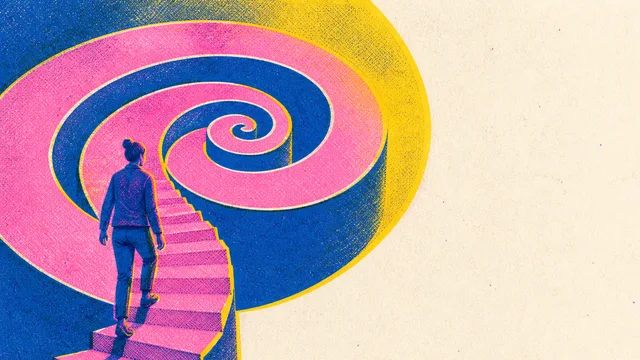
What Pi Can Teach Us About Feeling Stuck
Nehir Kırkgöz's TEDxVUAmsterdam talk reframes the feeling of being stuck—using pi's infinite, non-repeating nature as a lens on personal growth and resilience.
Discipline Is About Removing Options, Not Building Willpower
Mark Manson argues discipline has nothing to do with willpower—it's about eliminating choices. Here's what the research says, and what the theory leaves out.