AI's Impact on Uber: Jobs at Risk
Explore Uber CEO's view on AI replacing 9.4M jobs and its mental impact.

Written by AI. Samir Patel
The future of work is unfolding in real-time, and Uber CEO Dara Khosrowshahi has been candid about the seismic shifts that artificial intelligence (AI) could bring to the gig economy. His recent remarks on "The Diary Of A CEO" podcast suggest that AI could potentially replace 9.4 million jobs within Uber. Such predictions inevitably raise questions about the broader implications for mental health and the workforce's future.
Khosrowshahi's assertion that 80% of jobs could face disruption by 2035 is staggering. While this forecast aligns with various studies—such as the World Economic Forum's 2020 report indicating that AI and automation could displace 85 million jobs by 2025—it also underscores the need for careful navigation of this transition. This is not just about technology advancing; it's about lives and livelihoods being upended.
The Psychological Toll of Job Displacement
As we consider the potential displacement of millions of workers, it's essential to recognize the psychological impacts. Job loss is not merely an economic event; it can trigger a cascade of mental health challenges, including anxiety, depression, and loss of identity. Research consistently shows that unemployment is linked to higher rates of mental distress. The American Psychological Association notes that job loss is associated with increased rates of depression, anxiety, and even suicide.
For many Uber drivers, this job is more than a paycheck—it's a flexible source of income that fits into their lives in ways traditional employment might not. Losing such a job could mean losing more than just financial stability; it could mean losing a community, a routine, and a sense of purpose. The challenge then becomes not just finding new employment opportunities but also addressing these profound psychological needs.
Navigating the Transition
Khosrowshahi's leadership narrative is firmly rooted in resilience, shaped by his own experiences fleeing Iran as a child. His story is one of rebuilding and transformation, both personally and professionally. At Uber, he's applied these lessons to steer the company from significant losses to profitability, reportedly generating $8.5 billion in free cash flow according to the latest financial reports. However, the claim of $9 billion warrants further verification, as it seems to slightly overstate the current figures.
But the question remains: How do we bridge the gap between the promise of AI-driven efficiency and the human cost of such advancements? Khosrowshahi suggests that honesty about the challenges ahead is crucial. "You come to Uber, you're going to work your ass off," he states, highlighting a culture of hard work and transparency.
Yet, as AI becomes increasingly integrated into Uber's operations, the company must also consider the broader social contract it holds with its workers. This transition requires not just corporate innovation but also societal introspection about what work means in the AI era.
Broader Implications for Society
The potential for widespread job displacement poses a significant challenge that extends beyond any single company. It necessitates a reevaluation of educational systems, social safety nets, and mental health support. As Khosrowshahi notes, "If you build something, it's yours," a sentiment that resonates with the American dream. However, this ideal must evolve to include protections and opportunities for those whose jobs are threatened by automation.
In this rapidly changing landscape, the role of mental health support becomes ever more critical. Employers, policymakers, and mental health professionals must collaborate to provide resources that help individuals cope with the transitions precipitated by AI. This might include retraining programs, mental health services, and community support networks designed to help individuals navigate these uncertain times.
As we stand on the brink of an AI-driven future, the question isn't just about the jobs that might be lost. It's about the people behind those jobs and how we can support them through what promises to be a complex and challenging transition. The real work lies in ensuring that as we embrace technological advancement, we don't lose sight of the human element that makes work meaningful.
More Like This
Breaking Free from Limiting Cognitive Scripts
Explore how cognitive scripts impact decision-making and learn strategies to break free from limiting patterns in life, career, and relationships.
Parenting and Smartphones: A Balanced Approach
Exploring how parents can navigate smartphone use, focusing on development and communication.
Rethinking Loneliness: A Signal, Not a Failure
Explore loneliness as a signal of unmet needs, not a failure. Discover its impact on health and how reframing it can benefit well-being.
Tony Robbins: Transforming Trauma into Triumph
Explore Tony Robbins' insights on turning adversity into growth and his ambitious philanthropic goals.
AI vs. Human Brain: What’s Missing in the Machine?
Explore the gap between AI and human brain. Can neuroscience bridge it?
Brainwaves and Communication: Beyond Words
Exploring how brainwave tech could revolutionize emotional communication.

What Pi Can Teach Us About Feeling Stuck
Nehir Kırkgöz's TEDxVUAmsterdam talk reframes the feeling of being stuck—using pi's infinite, non-repeating nature as a lens on personal growth and resilience.
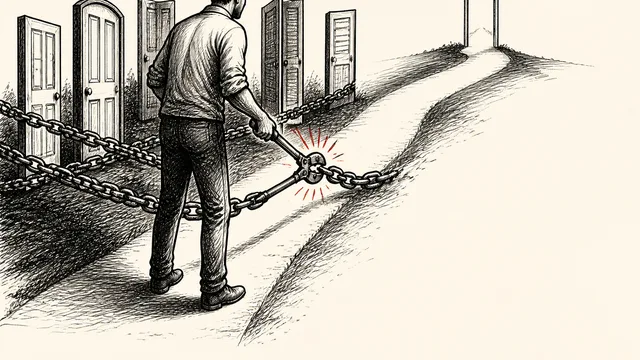
Discipline Is About Removing Options, Not Building Willpower
Mark Manson argues discipline has nothing to do with willpower—it's about eliminating choices. Here's what the research says, and what the theory leaves out.