How to Start Journaling: A Practical Beginner's Guide
Journaling can sharpen mental clarity and ease stress—but only if you actually start. Here's what the research and real journalers say works for beginners.

Written by AI. Vanessa Torres
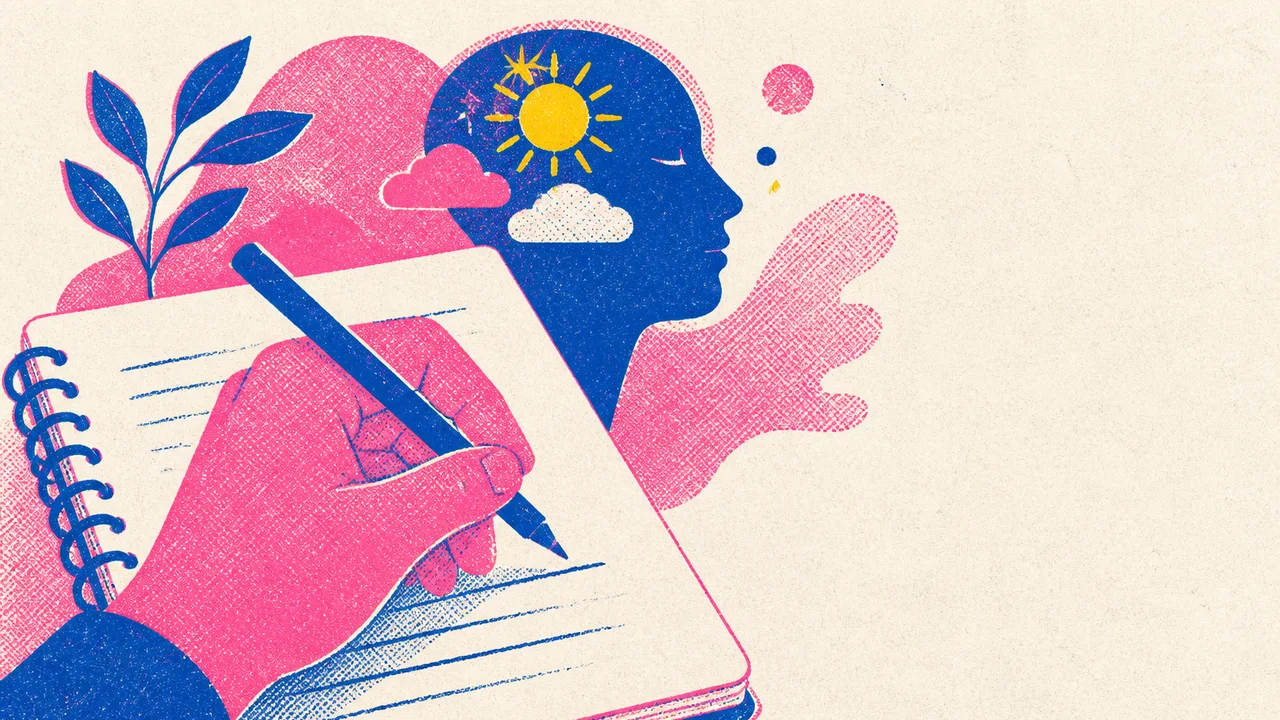
There's a particular kind of self-improvement advice that sounds generous on the surface but quietly loads you up with pressure the moment you try to follow it. Journaling advice, historically, has been one of the worst offenders. Buy the beautiful notebook. Write every morning. Excavate your trauma. Become the person you were always meant to be.
No wonder so many people start and quit inside a week.
What's interesting right now is that the conversation around journaling—at least among people who actually do it—has shifted. The aspirational framing is losing ground to something more honest: journaling works, but not because you do it perfectly. It works because you do it at all.
The Actual Case for Journaling
Before we talk mechanics, it's worth being clear about what journaling is and isn't supposed to do.
According to PositivePsychology.com, the act of writing regularly can significantly improve mental clarity and emotional well-being. That's a meaningful claim, but it's worth noting: the research tends to look at consistent writing practice, not the quality of any individual entry. The mechanism isn't that you write something brilliant. The mechanism is that externalizing your thoughts—getting them out of your head and onto a page—creates a small but real cognitive distance between you and whatever's swirling around up there.
That distinction matters, because the most common reason people quit journaling isn't lack of motivation. It's the belief that what they're writing isn't good enough, deep enough, or meaningful enough to count. They're measuring outputs when the practice is the point.
The New York Times spoke with Amy Krentzman, a social worker who developed a specific journaling method for people in recovery. Her approach is grounding in its simplicity: list "all the good things that happened in the past day," including things you're grateful for that "you normally take for granted." No grand narrative arc. No psychological excavation required. Just a record of what was there that you might have missed.
That's not a lesser form of journaling. That might actually be the most sustainable form.
The Bar Problem
Here's the structural issue with most journaling guides: they're written by people who already journal, for whom the habits and vocabulary feel natural. They don't fully register how high a bar "write freely about your feelings" is for someone who has never done it—or who tried and felt like they were doing it wrong.
Jen Hatmaker puts it plainly at jenhatmaker.com: "Lower the bar. No, seriously. Lower it. You don't need to write a novel or start with 'Dear Diary.' One sentence is enough."
That's not condescension—it's calibration. The people who stick with journaling long-term almost universally describe starting smaller than they expected to. One sentence. One paragraph. Three minutes before bed. The compound effect of tiny, consistent entries is real; the compound effect of elaborate entries you never actually write is not.
The r/Journaling community on Reddit echoes this from a slightly different angle. One thread recommends not going "too deep emotionally to begin with"—instead, briefly describing your everyday life and routine, maybe going into detail on one aspect, then continuing that for a few days before shifting focus. It's almost like easing into cold water. Your nervous system adjusts.
What You're Actually Building
There's a framing from Thee Book Club on Substack that cuts through a lot of the noise: "You don't journal to become someone new. You journal to stop being a stranger to yourself."
That's the honest version of what journaling offers. Not transformation, not reinvention—just familiarity with your own patterns, reactions, and interior weather. Which is, actually, more useful than transformation for most people on most days.
The practical implication is that your journal doesn't have to be aspirational. According to Thee Book Club, "your journal is allowed to be messy, repetitive, petty, and unfinished." If you write the same complaint three days in a row, that's data, not failure. If you skip a week and come back, that's also fine. The practice doesn't expire.
Format: There Are More Options Than You Think
One reason people freeze at the blank page is that they've assumed journaling means one specific thing—the free-form emotional diary. That's one option. It's not the only one.
Susannah Conway outlines a range of approaches: stream-of-consciousness writing until you run out of steam, timed writing (ten minutes, no stopping), or more structured formats. Some people use prompts as scaffolding, especially early on.
Erin Condren specifically recommends journal prompts for anyone feeling stuck or uninspired, noting they can "spark new ideas, stimulate creativity, and deepen your self-awareness." There's also the travel journal format—documenting experiences, places, observations—which some people find less emotionally demanding as a starting point and just as habit-forming.
The format question is worth taking seriously, because the wrong format for your personality will kill the habit faster than any motivational gap. Someone who finds open-ended writing paralyzing will do better with a prompt. Someone who finds prompts constraining will do better with stream-of-consciousness. Neither approach is more legitimate.
What the Research Doesn't Settle
Worth naming plainly: the sources available here don't give us longitudinal data on how many people who start journaling actually sustain it, or which formats produce the strongest mental health outcomes over time. The research backdrop is real but not granular.
What we do have is a consistent signal across practitioners, communities, and evidence-informed writers: the barrier to entry is almost entirely psychological, not practical. You do not need a special notebook, a dedicated time slot, a particular pen, or anything resembling a perfect setup. You need something to write on and a low enough bar that you'll actually clear it today.
The question of why journaling has the effects it appears to have—whether it's the cognitive offloading, the reflective distance, the simple act of attention—remains partially open. That's honest. Most behavioral interventions that work don't come with a clean mechanistic explanation. They just work, and the working is enough.
A Practical Starting Point
If you've read this far and you're trying to figure out what to actually do tonight, here's the unvarnished version:
Write one sentence about your day. That's it. Not what you learned, not what you're grateful for, not what you wish had gone differently. One sentence about what happened. Do that for a week. See what starts to shift.
If you want more structure, set a timer for ten minutes—as Susannah Conway suggests—and write without stopping until it goes off. Don't edit. Don't reread. Just produce.
If you're in a specific headspace where mood is the goal, Amy Krentzman's approach via the New York Times is worth trying: list the good things from your last 24 hours, including the ones you normally overlook. Specificity helps here. Not "had a good morning" but "the coffee was hot and I had fifteen minutes before anything was expected of me."
What all of these approaches share is that they ask very little of you upfront. They're designed around the reality that habits form through repetition, not through intensity. Journaling doesn't need to be the most meaningful part of your day to be the most useful.
The blank page isn't waiting to judge you. It's just waiting.
By Vanessa Torres, Career & Workplace Writer, BuzzRAG
More Like This
Morning Routines: Intention, Gratitude, and a Dash of Skepticism
Explore morning routines focusing on intention and gratitude, with a critical look at wellness industry promises.

How to Start a Coding Project (Without Freezing Up)
Dr. Jonas Birch's 'data type driven design' method promises to unstick any programming project. I tried it. Here's what actually happened.

Microplastics: The Unseen Invaders in Our Lives
Explore the hidden world of microplastics in our daily lives and what you can do to minimize exposure.

Are We Obedient or Just Trained? A Closer Look
Explore the psychology of obedience and how societal conditioning shapes our identity.

Why Real Spies Aren't James Bond
Unpacking the myth: Why real espionage thrives on anonymity over allure.

Jeremy Qualls on Leadership: Lessons from Fire and Post-its
Jeremy Qualls shares leadership lessons from personal adversity, emphasizing empowerment and resilience.

Paulina Amador's Case for a Broader Idea of Genius
Paulina Amador's TEDx talk redefines genius as a state of consciousness anyone can access—not a rare trait reserved for Einsteins. Here's what she argues, and what to make of it.

Daily Habits That Help Calm Trauma Responses
Psych2Go outlines eight daily habits grounded in neuroscience that may help trauma survivors retrain their nervous systems—without requiring therapy access.