Fed's Inflation Signals Are Pointing in Two Directions
Headline inflation stays stubbornly above the Fed's 2% target while trimmed mean indicators hit multi-year lows. What does Kevin Warsh do with that?

Written by AI. Jonathan Park
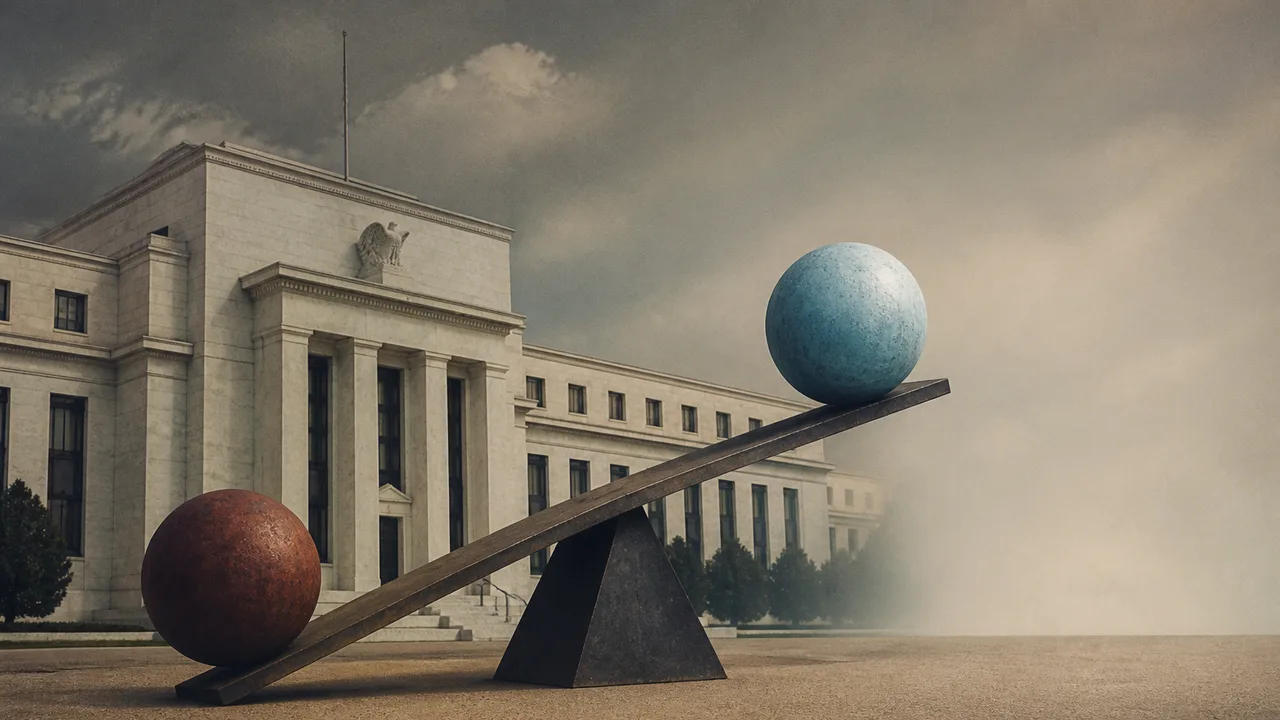
The Federal Reserve's core job description sounds simple: keep inflation around 2% and employment healthy. The hard part is that "inflation" isn't a single number — it's a family of measures that can, and right now do, tell genuinely different stories about the same economy. Kevin Warsh is learning this the uncomfortable way.
Here's the tension at the center of the current moment: the traditional headline figures that dominate public conversation — the CPI readings that show up in grocery store complaints and political speeches — remain well above the Fed's 2% target, according to CNBC's July 31 reporting. Those are the numbers politicians point to. Those are the numbers that generate pressure on the Fed to act. And yet, trimmed mean indicators — the measures that strip out the most volatile price swings in either direction, leaving a cleaner read of where inflation is actually trending — have hit their lowest levels since the early part of this decade, the same CNBC report notes.
That divergence is not a minor technical footnote. It is, arguably, the most important thing happening in monetary policy right now.
What the Measures Are Actually Measuring
A quick translation for anyone who doesn't spend their lunch break reading FOMC minutes: headline CPI captures everything — the spike in egg prices, the surge in car insurance, the one-time tariff passthrough that inflates the cost of a washing machine. These are real costs. People feel them at the register. But they're not always predictive of where inflation is going — they're often where inflation has been, or a response to a one-time shock.
Trimmed mean inflation, by contrast, is deliberately designed to filter out the noise. Developed by the Dallas Fed, it works by tossing out the biggest price movers — up and down — each month, then averaging what remains. The idea is to surface the underlying trend, undistorted by whatever is currently making headlines. When that measure hits a multi-year low, it's a signal that the broad, systemic inflation pressure may be easing even if some categories are still running hot.
The bond market appears to be picking up on something similar. As of early July, CNBC reported that the Treasury market's five-year inflation breakeven had dropped significantly since May to around 2.26%, while the one-year breakeven — though still elevated near 3% at that point — had also fallen nearly half a percentage point over the same period. Those figures are now a month old and market conditions shift; the directional signal they captured, however, was notable precisely because bond investors have direct financial skin in the game on inflation expectations.
Williams' Signpost and What It Actually Says
New York Fed President John Williams, the FOMC's vice chair, has offered one useful benchmark for reading incoming data. According to Yahoo Finance, Williams indicated earlier this month that monthly core PCE readings of 0.2% or lower would suggest inflation is moving toward the Fed's 2% target as tariff effects wash through the system. That's not a hard policy trigger — Williams framed it as a signal about trajectory, not a commitment to action. But it does give markets and observers a concrete reference point for what the Fed is actually watching beneath the headline noise.
The Fed's favored gauge, core PCE, edged down in June but remained elevated, per the same Yahoo Finance report. So the picture on that front is: progress, but not enough to confirm the trend.
Warsh's Communication Problem
What makes this moment particularly interesting — and somewhat unusual for the Fed — is that Chairman Warsh has not made any of this easier to parse. CNN Business reported on July 27 that Warsh has declined to offer clear guidance on interest rates ahead of the policy meeting, leaving markets split on what the Fed would do next. That split-market positioning reflects genuine uncertainty, not just noise — institutional investors and traders are pricing in meaningfully different outcomes.
Warsh's reticence is arguably defensible given the data environment: when your core measures are sending different signals, committing to a clear path creates whipsaw risk. But central bank communication is itself a policy tool. Ambiguity doesn't just neutralize markets — it can amplify volatility. Mortgage rates, corporate borrowing costs, and small business credit conditions don't wait for the Fed's next press conference; they reprice in real time based on what market participants think the Fed might do. When the chair goes quiet, that repricing happens on rumor and speculation rather than signal.
The Political Dimension Warsh Can't Ignore
There's a layer to this story that doesn't show up in the PCE tables. The Washington Times reported on July 28 that Warsh faces increasing pressure to hike rates — a move that would carry its own political risk given that he was appointed by President Trump, who has historically been vocal in his opposition to rate increases. The Fed's institutional independence means Warsh isn't formally answerable to the White House on rate decisions. But the political environment is part of the context in which those decisions get made, communicated, and received.
The pressure to hike comes from the side of the argument that weights headline CPI heavily — the reading that remains above target and that voters experience directly. The case for caution comes from the trimmed mean and market-based signals that suggest underlying inflation is already cooling. Neither side of that argument is obviously wrong; they're measuring different things and prioritizing different time horizons.
The Stagflation Ghost
One phrase that keeps appearing in the background of this conversation is "stagflation" — the 1970s combination of high inflation and sluggish growth that became the defining monetary policy trauma of the modern Fed era. It's worth being precise about what that word actually means before it does too much work here.
True stagflation requires both elevated inflation and a contracting or stagnant economy running simultaneously. What the current data shows is elevated headline inflation alongside confusing underlying signals — which is not the same thing. The trimmed mean hitting multi-year lows is actually the opposite of a stagflation signature; it suggests the inflation component may be receding even as growth questions persist. That doesn't mean the stagflation risk is zero, but deploying the word loosely tends to generate more heat than light.
The Measurement Problem Is the Policy Problem
Here's what I keep coming back to: the Federal Reserve is not being asked to respond to a clear economic reality. It's being asked to adjudicate between competing descriptions of that reality — each technically valid, each with serious proponents, each implying a different appropriate response.
Rate hikes are not costless. They slow borrowing, dampen business investment, and hit housing markets first and hardest. The people who absorb those costs are disproportionately not the shareholders who watch Fed decisions from Bloomberg terminals. If trimmed mean indicators are right that underlying inflation is already at decade lows, then hiking into that signal means imposing real economic pain to fight a problem that's already retreating.
If headline CPI is the more honest read — if the "noisy" categories actually reflect persistent cost pressures rather than temporary distortions — then waiting risks letting inflation expectations re-anchor at a higher level, which is genuinely difficult and painful to unwind.
The Fed has better data, more staff, and more institutional expertise than any observer commenting from the outside. What it doesn't have right now is a clean signal. And what Kevin Warsh owes the public — whatever he ultimately decides — is an honest accounting of which measures he's weighting, why, and what evidence would change his mind.
Tough talk is one thing. The harder and more important job is explaining the reasoning. That transparency is what central bank credibility actually runs on.
More Like This
Bill Ackman's Art of Finding Invisible Money
Explore Bill Ackman's strategy of finding hidden value in companies, beyond standard metrics.

Supreme Court Blocks Trump's Bid to Fire Fed's Lisa Cook
The Supreme Court's 5-4 ruling blocking Trump's firing of Fed Governor Lisa Cook is a win for central bank independence—but a narrow, provisional one.

How APL Turned an NBA Ban Into a Brand Identity
APL's NJ Falk breaks down the six storytelling threads behind one of e-commerce's most unlikely brand-building moves—starting with an NBA ban.

China's Housing Bust Is Still Happening, Just Quietly
China's property crisis never ended — it got papered over by a manufacturing boom. Now that buffer is fading, and Main Street may feel it next.
Kevin Warsh's First FOMC Meeting Signals a Quieter Fed
Kevin Warsh held rates steady at his first FOMC meeting, but his communication overhaul and hawkish signals are already reshaping global markets.
Divided Fed Holds Rates, But September Looms
The Fed held rates at 3.5%-3.75% in a 9-3 vote. Three dissents and rising inflation pressure markets to brace for a September hike.

Youth Economic Inactivity Is a Structural Problem
262 million young people are NEET worldwide. Unemployment figures miss most of them. Here's what the data actually shows about youth economic disengagement.

Blackstone's Career Ladder, From Analyst to Partner
From a $90K analyst seat to Schwarzman's billion-dollar paycheck: how Blackstone's career ladder works—and why private credit is quietly rewriting it.