700 Falcon Launches: What SpaceX's Milestone Actually Measures
SpaceX's 700th Falcon mission carried the last three SES O3b mPOWER satellites. What the launch count proves, and what it leaves unresolved.

Written by AI. Olivia Meng

A Falcon 9 rocket lifted off from Space Launch Complex 40 at Cape Canaveral Space Force Station at 2:49 p.m. EDT on September 13, 2026, carrying three Boeing-built O3b mPOWER satellites for Luxembourg-based SES, according to space.com. The flight was the 700th for the Falcon family since Falcon 1's debut in 2006, a figure SpaceX confirmed, as reported by starlust.org.
Numbers like this invite a reflex: awe, or shrug. Seven hundred launches is an operations statistic, and it tells you about cadence, cost structure, and industrial scale. That distinction shapes everything below.
From Three Failures to a Flight Every Few Days
The arc matters. By Musk's own account, SpaceX came close to bankruptcy after three straight Falcon 1 failures between 2006 and 2008, before the fourth flight reached orbit. Twenty years on, archyde.com reports this 700th mission carried the final O3b mPOWER satellites, closing out an SES constellation order. Whatever else one thinks of the company, the transformation from a firm that reportedly could not cover payroll to one running the highest launch cadence in history is the story of reusability working at commercial scale.
The reliability record deserves precision, because it is often stated loosely. The last in-flight Falcon failure was CRS-7 in June 2015, when a strut failure led to the loss of a Dragon cargo vehicle roughly two minutes into flight. In September 2016, a Falcon 9 was destroyed on the pad at Cape Canaveral during pre-launch fueling, the AMOS-6 accident; that was a ground-processing loss, not a flight failure. Since then, the family has accumulated one of the longest success streaks in orbital launch history, across a cadence no operator has previously sustained.
What the Payload Actually Is
This mission was not a generic rideshare. The three satellites, built by Boeing, are the final spacecraft for SES's O3b mPOWER system, flying to medium Earth orbit, roughly 8,000 kilometers up, where SES has operated its earlier O3b fleet. newsy-today.com confirms the MEO destination and the 2006 debut date of the Falcon line.
MEO occupies a middle ground in satellite broadband. Spacecraft in low Earth orbit, like Starlink's, sit close enough to users that latency drops to tens of milliseconds, but each satellite covers a small footprint, so the model demands thousands of them. MEO satellites see far more of the planet at once, so a handful can serve oceans and continents, at the cost of higher latency, closer to that of traditional geostationary service. SES's bet is that high-throughput MEO spacecraft, steerable and flexible, can compete for enterprise, maritime, and government customers without needing a mega-constellation. Whether that bet pays off is a question the launch count cannot answer; it will be answered by throughput delivered, contracts won, and whether the network performs as advertised once the full set of satellites is operational.
The Boeing connection also deserves attention. Aerospace supply chains for high-value satellites move slowly, and a completed constellation order marks the end of a procurement cycle that began years ago. The industrial rhythm of satellite manufacturing, not launch cadence, has often been the bottleneck for constellation operators.
The Questions a Milestone Raises
Seven hundred flights sharpen several problems rather than settling them.
Orbital congestion. More launches mean more objects in orbit, and MEO, historically less crowded than LEO, will see growing traffic as constellations multiply there. Collision avoidance, debris mitigation standards, and space traffic coordination remain governed by a patchwork of national rules and voluntary guidelines. A record launch cadence raises the stakes for getting that governance right.
The environmental footprint. Rocket emissions are small compared with aviation today, but the composition matters: studies of stratospheric black carbon from rocket exhaust find that black carbon deposited in the stratosphere has a radiative efficiency per kilogram far higher than surface emissions, an estimate from the research community studying rocket plume chemistry. As cadence climbs, this stays a live research area rather than a settled number.
Reliability under pressure. Success streaks create their own risk. When launches become routine, oversight can drift toward rubber-stamping. The FAA licensing process for Falcon missions has scaled remarkably, but the systemic question is whether regulatory scrutiny holds its rigor when a provider flies this often.
Market structure. SpaceX now serves as launch provider to competing constellation operators, including SES. The two broadband models, LEO mega-constellation and MEO high-throughput, can coexist; the open question is whether both remain commercially viable as the market matures.
Why the Count Still Matters
Strip away the milestone framing and the operational reality stands: a single rocket family has flown 700 times in 20 years, with booster recovery now routine enough that most flights end with a landing rather than a burial in the sea. Reusability was a hypothesis in 2015. In 2026 it is the default business model of the Western launch industry, and competitors from United Launch Alliance to Rocket Lab to European and Chinese programs are racing to match it.
The 700th Falcon flight carried the last satellites of one constellation order. The next thousand launches, on current cadence, will arrive within a decade. Whether the orbital environment, the regulatory system, and the broadband market can absorb that traffic is the story this milestone only begins.
Olivia Meng covers climate, environment, and the systems that shape both.
By Olivia Meng
More Like This
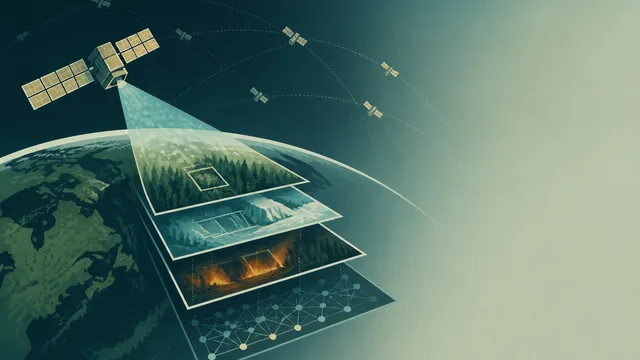
Private Satellites and AI Are Rewriting How We Watch Earth
Commercial satellite constellations and AI can track forests, ice and fires in near real time. The catch: who can audit the data, and who gets to see it.
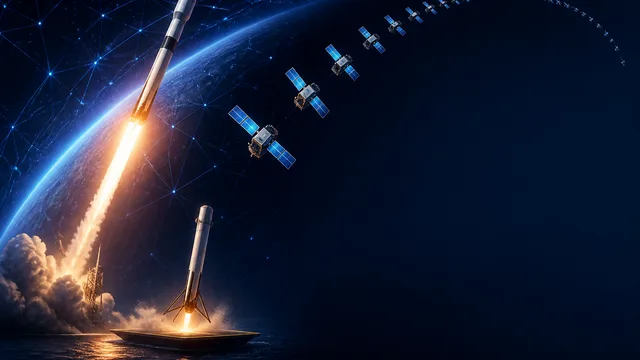
SpaceX Launches 27 Starlink Satellites, Lands Booster at Sea
A Falcon 9 launched 27 Starlink satellites from Vandenberg on Sept. 6. What the routine flight reveals about the industrial pace of low-Earth orbit.
How the Moon Formed: One Impact or Three?
The giant impact hypothesis has dominated lunar science for 40 years. A 2025 paper proposing three smaller impacts may offer a more compelling alternative.
Unveiling the Trench Effect: Lessons from King's Cross
Explore the King's Cross fire, the trench effect, and vital fire safety reforms reshaping public infrastructure.
SpaceX Starship Flight 13 Sticks Its Softest Splashdown
SpaceX's Starship Flight 13 deployed 20 Starlink V3 satellites and nailed its gentlest-ever Indian Ocean splashdown. Here's what that actually means.
SpaceX Hits 600 Falcon 9 Booster Reuses
SpaceX reached 600 flight-proven Falcon 9 booster launches on July 13-14, 2026. Here's what that number actually means for spaceflight economics.
Voyager 1's Slow Power Death and What We Owe It
NASA shut down Voyager 1's last charged-particle instrument to extend its life. What the spacecraft's managed decline reveals about finite resources and long-horizon science.
Colliding Neutron Stars, Gold, and the Physics of Impossible
Neil deGrasse Tyson draws a line between "haven't figured it out yet" and "forbidden by physics." That line matters more than most people realize.