ESPN Cuts Ryan Clark as Cable Decline Reshapes Sports Media
ESPN let go of NFL analyst Ryan Clark mid-broadcast, signaling a broader restructuring as cable audiences shrink and the network pivots to digital.

Written by AI. Denise Okafor-Williams
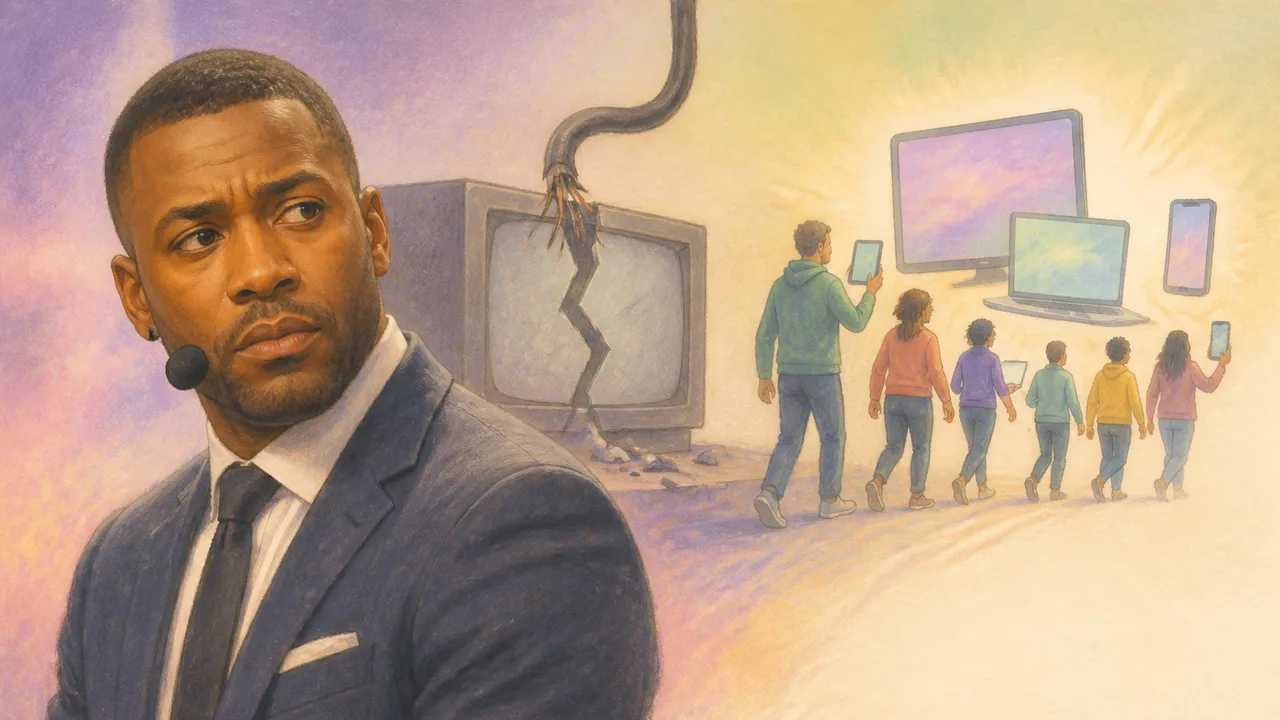
Ryan Clark was on the air at ESPN's NFL Live on Monday when he was informed he no longer worked there. He did not finish the show.
According to a report from The Athletic's Andrew Marchand, cited by Yahoo Sports, Clark was notified of his layoff in the middle of the broadcast — an exit that was confirmed the same day by Front Office Sports, which reported that the dismissal opens what is expected to be a broader round of cuts. Sports Media Watch reported that more layoffs were expected Tuesday.
The optics were bad enough that other media workers noticed immediately. Emmanuel Acho — himself dismissed from Fox Sports last year — posted publicly about the manner of the departure, calling TV executives "cowardly" for handling a layoff while a worker was still on the clock. According to Awful Announcing, Acho's remarks amplified an already-loud social media reaction, with audiences asking who at ESPN might be next.
That question has a structural answer, even if the specific names don't.
The worker's-eye view of a media restructuring
Clark's situation is worth sitting with for a moment before moving to the macro analysis, because the two are actually the same story told at different scales.
He was reportedly earning around $2 million annually at ESPN, according to the Daily Mail. That is, by any measure, significant compensation — the kind of number that tends to complicate sympathy. But high pay and job security are not the same thing in sports media, and Clark's departure illustrates how quickly that distinction collapses when a network is in structural transition. There are no tenured positions in cable television. There are contracts, and then there are the conditions under which those contracts are not renewed.
The way the dismissal was executed matters here too, and not just as an ethical indictment of whichever manager made the call. It reveals something functional about how ESPN is operating: hastily, without consistent internal process, and in a way that suggests coordination between HR decisions and broadcast scheduling is not currently a priority. Whether that's a symptom of urgency or of organizational disorder is a real question, and Barrett Media noted that the departure came at a particularly loaded moment — ahead of ESPN's first-ever Super Bowl broadcast, a landmark rights milestone that the network has been building toward.
Cutting a prominent NFL analyst now, in that context, is either a cost-efficiency move that couldn't wait, or a signal that ESPN's vision of what it needs on screen for its Super Bowl moment looks different than what Clark represented. Possibly both.
What "restructuring" actually means in this market
Sports media coverage tends to treat each round of ESPN layoffs as discrete news events — a name here, a salary figure there — rather than as sequential chapters in the same structural story. The structure is this: ESPN built a business on cable carriage fees, which for years allowed it to collect revenue from every household that paid for a cable bundle, whether those households watched ESPN or not. That model subsidized an enormous talent roster, expensive rights packages, and a production infrastructure that set the industry standard.
Cord-cutting has been dismantling that subsidy for over a decade. The rate of decline accelerated through the early 2020s as streaming alternatives matured, and ESPN's parent company Disney has been managing the resulting revenue pressure through a combination of cost-cutting and platform investment — most visibly through ESPN's push into direct-to-consumer streaming. OutKick, via Fox News, framed Clark's exit as part of "continued shifts in sports media," which is accurate if understated.
What gets compressed in that framing is the labor side of the equation. When a media company restructures toward digital, the cost calculations change — and not always in favor of the workers who built the brand's recognition in the first place. Streaming platforms pay for content in different ways than cable networks do. Rights deals are negotiated differently. And on-screen talent, which in the cable era was a durable asset you invested in over time, can start to look like a liability on a balance sheet that needs to justify every line item to a different kind of investor.
ESPN is simultaneously a cable business in managed decline, a streaming business still finding its audience, and a rights holder trying to extract maximum value from its NFL, NBA, and college sports contracts. These three identities have different labor needs, different cost structures, and different audiences. The tension between them is what produces a moment like Monday's — a significant on-air personality informed of his dismissal while a broadcast is still running.
What Clark's exit actually signals — and what it doesn't
It would be too simple to read Clark's departure as confirmation that ESPN is in freefall. The network is still the most-distributed sports media property in the country, still holds premium rights packages, and is approaching its first Super Bowl broadcast, which is not the behavior of an institution in terminal decline. The more accurate read is that ESPN is in an active, expensive, and disruptive transition — and transitions of this kind have historically cost workers their jobs in waves, not all at once.
The cuts that precede a company's major strategic pivot tend to reveal where leadership thinks value lies going forward. Sports Media Watch reported additional layoffs were expected the day after Clark's dismissal, which suggests this is deliberate sequencing, not a single reactive decision.
What's genuinely uncertain is what ESPN's talent model looks like on the other side of this transition. Cable's economics rewarded familiarity — anchors and analysts who showed up every day, built audience habits, and represented continuity. Streaming's economics, at this stage, seem to reward event-based programming, shareable moments, and personalities with independent platform presence. Those are different skill sets, and they don't map neatly onto a roster built for the cable era.
Clark, who has a substantial social media following and a podcast presence, isn't obviously the wrong profile for a digital-first audience. Which is part of what makes this particular cut hard to read purely on its merits. When a company is restructuring at scale, individual decisions often reflect budget math more than strategic judgment — and that distinction matters enormously to the workers on the receiving end of those decisions, even when it gets lost in the broader narrative about industry transformation.
Acho, who has been through his own version of this at Fox Sports, put it plainly: the manner of these exits is a choice, and choices have costs — reputational, morale-based, and ultimately financial, if the talent market for sports media workers starts pricing in how a network treats people on the way out.
ESPN enters its Super Bowl era with significant leverage and significant pressure. The question is which one is driving the decisions.
More Like This

World Cup Knockout Ticket Prices Drop 39% on Resale Markets
World Cup knockout stage resale prices fell 39% from $2,040 to $1,245. What the secondary market collapse reveals about FIFA's pricing architecture.
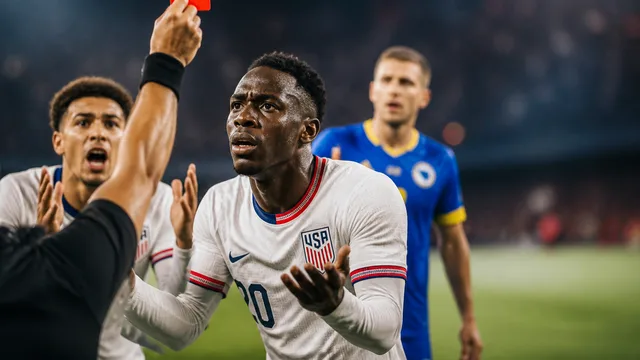
USMNT Beats Bosnia, Advances Despite Balogun Red Card
The USMNT beat Bosnia 2-0 to reach the World Cup Round of 16, despite Folarin Balogun's controversial red card. Here's what it means on and off the field.

Trump, FIFA, and the Balogun Reinstatement Explained
Trump called FIFA's Infantino to contest Folarin Balogun's red card ban. FIFA reversed it. Here's what we know—and what remains unanswered.

Sports Media Executive Skills Are Being Redefined
Rick Alessandri of ZRG Partners breaks down what sports media executives need now: DTC fluency, data analytics, AI literacy, and a global footprint.
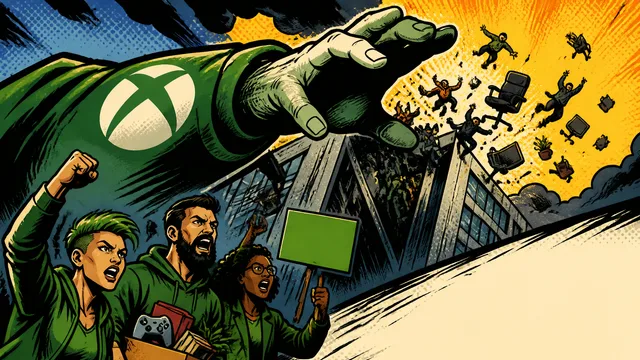
Xbox Workers Push Back as 1,600 More Jobs Loom
Xbox workers are organizing across six studio locations as 1,600 more jobs hang in the balance. Here's what the unions are demanding—and what it means for gaming.

How the Tour de France Built a Global Sports Business
The Tour de France is more than a race. How ASO built a commercial machine from a national institution—and what it means for the athletes inside it.

How Goalkeeper Gloves Are Made in Sialkot
Inside Matrix Sports' Sialkot factory, where nearly half a million goalkeeper gloves are made each year for professional clubs and national teams.

MLB and MLBPA Deadlocked Over 2028 Olympics
Two years from LA28, MLB owners back Olympic participation but the players' union remains at odds over housing, tickets, insurance, and forced participation rules.