How the Tour de France Built a Global Sports Business
The Tour de France is more than a race. How ASO built a commercial machine from a national institution—and what it means for the athletes inside it.

Written by AI. Denise Okafor-Williams
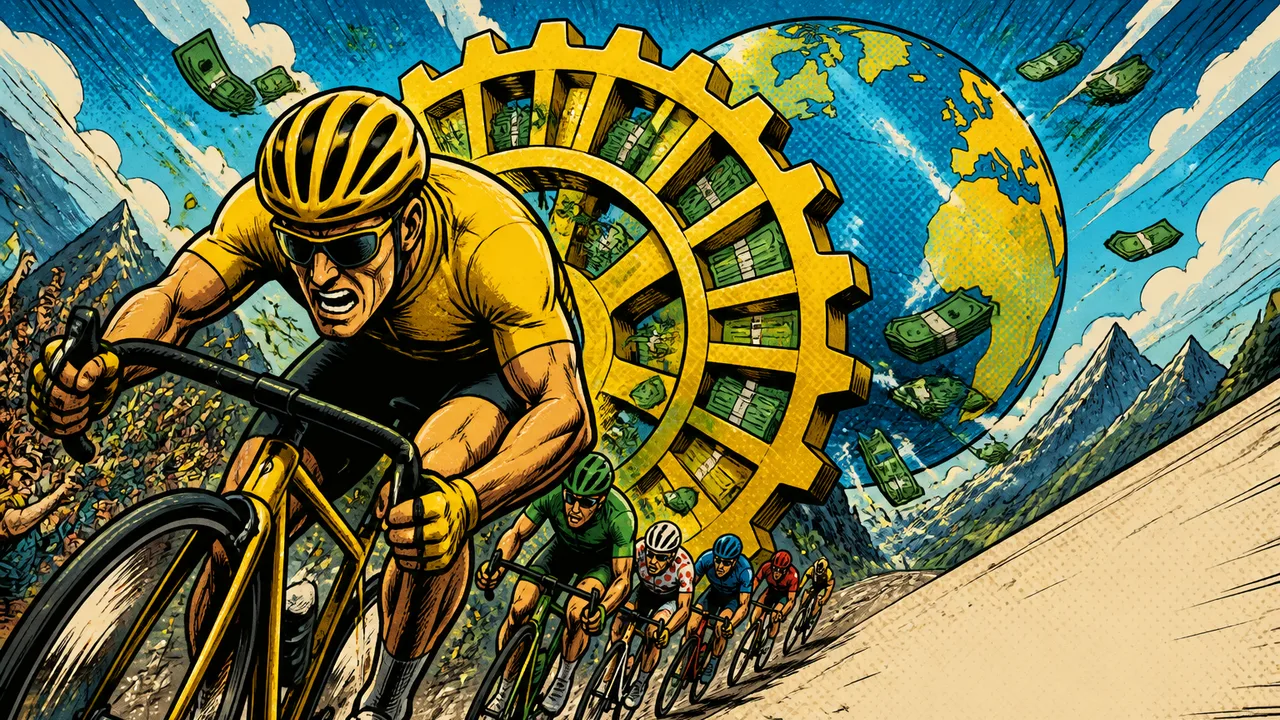
Jean-François Mignot, a demographer who has spent years studying the economics of cycling, has a line that cuts through the romance with surgical efficiency. "The Tour de France exists to make money," he told The Hustle. "It's a commercial race, and it's owned by people whose main goal is to make money off of it."
That observation shouldn't be surprising. The surprising part is how rarely it gets treated as the starting point for understanding what the Tour actually is. Every July, the race is narrated as a cultural ritual — the Alps, the cobblestones, the yellow jersey — and the commercial machinery underneath gets soft-focused into the background. But that machinery is the story worth examining, particularly right now, as the Tour's owner, Amaury Sport Organisation, continues to extract value from a race that is simultaneously a French national institution and one of the more shrewdly constructed media properties in global sports.
A Race That Was Built to Be Sold
The Tour de France turns 123 years old in 2026, and its origins were nakedly commercial from the beginning — it was invented by a newspaper, L'Auto, as a circulation stunt. ASO, the event's current owner and a division of the French media group Amaury, inherited that instinct and professionalized it.
According to PedalSure, ASO's pivot to commercial dominance happened at precisely the right moment: as television broadcasting technology advanced, the organization recognized it was sitting on a visually spectacular, naturally compelling product that required almost no arena infrastructure. The road was the stadium. ASO's task was distribution, and it executed. That early investment in building a global broadcast audience compounded over decades. Today the Tour reaches viewers across more than 190 countries, a footprint that very few annual sporting events can match.
The financial architecture that supports this reach rests on three main pillars: media rights, sponsorship, and a fee structure tied to host towns and regions that want a stage start or finish on their territory. That last mechanism is structurally unusual for a sports event, and worth pausing on. Municipalities essentially bid for the economic exposure that comes with hosting a Tour stage — local tourism boards calculate the broadcast minutes and the visitor spending and write checks accordingly. The race literally sells the French countryside back to the French countryside, and to anyone else who can pay for the backdrop.
Sponsorship, Tiered and Engineered
The sponsorship model is where ASO's commercial architecture becomes most visible. According to SportsPro, the Tour operates a three-tier sponsorship structure that serves two distinct markets simultaneously: French companies buying association with a piece of national identity, and multinational brands purchasing access to a global marketing platform. The same event sells patrimony and reach, sometimes to the same buyer.
This tiered approach mirrors what major sports leagues have normalized — presenting partners, official partners, suppliers — but the Tour's version has an unusual asset embedded in it: the caravan. That procession of branded vehicles that precedes the peloton distributes millions of branded items to roadside spectators each year, generating a retail-fair intimacy that you simply cannot replicate in a stadium or arena. It is fan engagement as logistics operation, and it has been running in essentially the same form for decades.
Team sponsorship operates as a parallel economy. As Untaylored notes, cycling teams are almost entirely dependent on corporate sponsors to cover operating costs, including rider salaries and staff. This creates a fundamental distinction from sports like soccer or basketball where a franchise owns its revenue streams and employs athletes under collectively bargained agreements. In professional cycling, the team is essentially a sponsored promotional vehicle. The brand gets the jersey. The rider gets a contract — typically without the kind of structural labor protections that come with a functioning players' union and a negotiated CBA.
That dependence is worth naming plainly: the commercial success of the Tour de France does not automatically translate into economic security for the athletes who make it watchable. ASO's revenue model is sophisticated. The labor market for the riders inside that model is not.
Marketing the Landscape
Marketingino.com frames the Tour's enduring appeal as the product of intentional brand construction: "At its core, the Tour de France sells a potent mix of athleticism, drama, stunning landscapes, and national pride." That framing is accurate, but it undersells the operational work behind the image. The Tour's marketing strategy leans heavily on its archive — on the accumulated weight of century-old heroics — while simultaneously using technology to deliver that heritage to audiences who consume sport primarily through digital platforms.
According to Frederik Today, aggressive year-round marketing campaigns keep the Tour visible between editions, building the kind of sustained audience attention that sponsors pay premiums to reach. That continuity matters: the Tour isn't selling a single event, it's selling a year-round brand that happens to have a three-week live event as its anchor. The distinction affects how rights fees are structured and how sponsorship packages are priced.
Technology integration has extended this model. Real-time GPS tracking data, detailed power output metrics, and broadcast innovations have made the race more comprehensible to casual international viewers who don't have the background knowledge to follow a six-hour stage on pure athletic drama. Making the sport legible to an audience that doesn't already love it is one of the harder commercial problems in sport, and the Tour has invested meaningfully in solving it.
What the "Blueprint" Framing Gets Wrong
The brief I'm working from suggests the Tour's model "could serve as a blueprint for other sporting events." That framing is common and worth examining critically, because the Tour's commercial success rests on a set of structural advantages that aren't easily transferable.
First, the route. ASO controls an event that traverses public roads, generates enormous local economic activity, and costs the organizer nothing in facility rent. Most sports events don't have that luxury — they depend on stadium deals, arena leases, and host agreements that immediately complicate the economics.
Second, the heritage. The Tour's marketing power is inseparable from 120-plus years of accumulated narrative. That archive can't be purchased or reverse-engineered. Events trying to replicate the model from a standing start are missing the single most valuable asset.
Third, the labor structure. The Tour's commercial margins are partly a function of the fact that riders don't collectively negotiate a share of event revenue the way players in major North American leagues do. Professional cycling has no equivalent of an NFLPA or NBPA — no mechanism through which athletes can systematically capture a percentage of the commercial value they generate. For event organizers, that's an attractive feature of the model. For the athletes, it's the part of the "blueprint" that deserves the most scrutiny.
The 2026 Tour de France route is already mapped — Defector's stage guide has the breakdown — and the commercial apparatus will unspool exactly as it has for decades. Sponsors will wrap their vehicles. Broadcasters will pay for carriage. Municipalities will have cut their hosting checks.
What won't change, absent organized collective action by riders, is who actually captures the upside when the world tunes in.
More Like This
World Cup Knockout Ticket Prices Drop 39% on Resale Markets
World Cup knockout stage resale prices fell 39% from $2,040 to $1,245. What the secondary market collapse reveals about FIFA's pricing architecture.
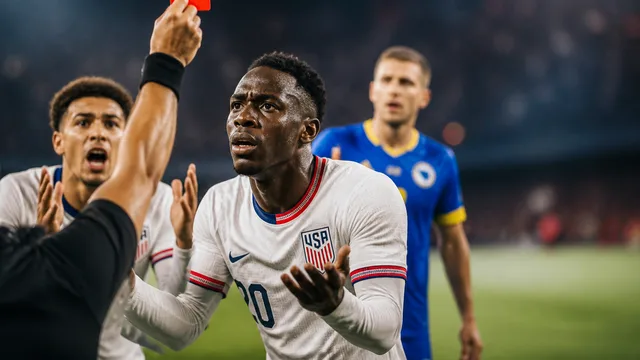
USMNT Beats Bosnia, Advances Despite Balogun Red Card
The USMNT beat Bosnia 2-0 to reach the World Cup Round of 16, despite Folarin Balogun's controversial red card. Here's what it means on and off the field.
The Giants' Walk Rate Is Historically Bad in 2026
The SF Giants have a 5.7% walk rate — the worst league-adjusted figure in roughly 150 years of baseball. Here's what the numbers actually mean.
US Soccer Builds a Commercial Engine for 2026 and Beyond
US Soccer executives outline a $1.2B commercial foundation and long-term growth strategy as the 2026 FIFA World Cup approaches North America.
Marathon Running's Rise as a Commercial Powerhouse
From shoe sales to title sponsorships, marathon running has become a serious commercial enterprise. Here's who's profiting—and what the growth costs.
Exploring Baseball's Complex Steroid Era
A deep dive into baseball's Steroid Era, its cultural impact, and MLB's growth amid controversy.
French Culture Explained: Habits, Values, and Identity
From strikes to baguettes to café culture, what actually defines French identity — and what it means for travelers trying to understand it.