Claude for Small Business: Powerful Tool or Liability Risk?
Anthropic's Claude for Small Business automates payroll and bookkeeping—but who's liable when AI misclassifies a transaction under IRS audit?

Written by AI. Samira Barnes

Photo: AI. Lev Zolotov
Anthropic's pitch for its new Claude for Small Business platform is straightforward: stop bouncing between a chat window and your accounting software, and let the AI do the actual work. Connect QuickBooks. Connect PayPal. Connect HubSpot. Toggle one switch inside Claude's desktop co-work environment, and fifteen pre-built workflows handle everything from payroll forecasting to monthly close reconciliation to marketing campaign generation.
The product, launched in May 2026 and covered here alongside earlier integration work on Slack, Canva, and Figma, represents Anthropic's clearest bid yet to move Claude from conversational assistant to operational layer inside small businesses. The capability jump is real. The questions it raises are sharper than the launch materials suggest.
What the product actually does
The core mechanism is a permissions-based connector architecture. Claude links to your existing tools—QuickBooks, PayPal, HubSpot, Canva, DocuSign, Google Workspace, Microsoft 365, Slack—and executes workflows that pull data across them. The payroll workflow, for instance, reads your QuickBooks cash position, checks incoming PayPal settlements, constructs a 30-day forecast, flags overdue items, and drafts reminder emails for your approval before anything sends.
The monthly close workflow is the more consequential one: Claude reconciles your books against PayPal settlements, flags anomalies, writes a P&L narrative in plain English, and exports a close package forwarded directly to your accountant through QuickBooks.
The approval gate is the product's central trust mechanism. Nothing executes without owner sign-off. Anthropic also states—in its own documentation, which constitutes a vendor assertion rather than an independently verified commitment—that it does not train on customer data under team and enterprise plans.
The compliance question no one in the launch coverage is asking
Here is where the product brief ends and the harder analysis begins.
When Claude reconciles your books and flags "anything weird," it is performing a function with direct tax liability implications. A misclassified transaction isn't a workflow error—it's a potential Schedule C problem. Under IRS audit standards, the business owner is responsible for the accuracy of their books, full stop. The AI that produced the reconciliation has no legal standing in that proceeding. The question of whether an owner can demonstrate reasonable reliance on an automated system as a defense against accuracy penalties is, to put it charitably, untested territory.
The payroll workflow carries its own exposure. A 30-day cash flow forecast that incorrectly accounts for payroll tax obligations—FICA withholding, state unemployment insurance, quarterly estimated payments—doesn't just produce a bad plan. It can produce a tax shortfall that accrues penalties before anyone notices. Businesses operating above certain revenue thresholds carry additional obligations: internal control documentation requirements that exist in the shadow of Sarbanes-Oxley, contractual audit-trail requirements embedded in financing agreements, state-level fiduciary obligations if the business holds client funds.
None of this means the workflows are dangerous by default. It means the approval gate that Anthropic advertises as the safety mechanism places a burden on the owner that the product's marketing does not fully surface: you can only meaningfully approve what you can meaningfully evaluate. If you understood the reconciliation well enough to catch Claude's errors, you arguably didn't need Claude to do it.
The data privacy claim deserves more than a shrug
Anthropic's statement that it doesn't train on data under team and enterprise plans is the kind of assurance that sounds definitive until you examine the regulatory environment it inhabits.
The California Consumer Privacy Act and its 2020 amendments establish rights over personal data that extend to business contexts involving California residents—which, for most small businesses with any national customer base, is nearly universal. Several states have enacted or are advancing their own AI-specific liability frameworks that contemplate exactly this scenario: a third-party AI system processing sensitive financial and operational data on behalf of a business that has no independent means of verifying what happens to that data downstream.
The FTC has been explicit, in enforcement actions and guidance documents stretching back several years, that data practice representations made at the point of customer acquisition are actionable if they don't hold. "We don't train on your data" is a claim that would require substantiation in an FTC investigation. It is not self-executing. Small business owners integrating their QuickBooks and PayPal data into this system are making a bet on Anthropic's contractual integrity and its own security posture—reasonable bets, perhaps, but bets nonetheless, and ones they're making without the enterprise legal resources that would normally scrutinize a vendor's data processing agreement before signing.
The strategic framing, and where it stops being legitimate
The gap between big-company AI adoption and small business AI adoption is genuine. The SBA has documented—with methodology variations that make precise percentages contested—that small businesses, which account for a substantial share of private-sector economic activity, have adopted AI tools at significantly lower rates than larger enterprises. The resource disparity is real: large companies have in-house AI teams; a five-person agency has a founder who's already wearing seven hats.
Claude for Small Business is designed to close that gap without requiring technical sophistication. The architecture—pre-built workflows, approval-gated execution, connector-based integration—is a reasonable translation of enterprise AI deployment patterns for the SMB context.
But the framing that small businesses have been "stuck" while big companies "race ahead" quietly elides the fact that big companies also have compliance infrastructure that absorbs the legal risk of AI-assisted financial operations. They have general counsel reviewing vendor data agreements. They have controllers signing off on reconciliation methodology. They have audit committees asking the questions that a solo agency owner running Claude's monthly close package has no organizational structure to ask.
A free AI Fluency course, co-developed with PayPal and taught by small business owners—bundled with a one-month Claude Max trial for workshop attendees—is useful onboarding content. It is not a substitute for understanding your liability exposure. And the FTC's longstanding concern about the customer acquisition implications of bundling free educational content with subscription trial periods is a question worth sitting with when evaluating how that bundle is structured.
The jurisdiction question
If Claude's payroll workflow produces a forecast error that causes a business to miss a tax deposit, the IRS doesn't adjudicate against Anthropic. If Claude's reconciliation misclassifies a disputed PayPal transaction and that misclassification survives into a tax filing, the exposure belongs to the business owner. If Claude's contract reviewer misses a liability clause in a DocuSign document and the business signs it, that's a legal problem between the business and its counterparty.
Current U.S. law has no coherent framework assigning AI liability in commercial settings at the SMB level. The EU AI Act creates obligations for high-risk AI deployments, but financial workflow automation for small businesses doesn't fit neatly into its risk tiers. State-level AI liability bills in California, Colorado, and Texas are moving through legislative processes at different speeds and with different scopes. What exists now is a gap: sophisticated capability, real operational consequences, and no clear regulatory accountability mechanism if something goes wrong at scale.
That gap is not Anthropic's invention, and it's not unique to this product. But Claude for Small Business is, by Anthropic's own framing, the first serious attempt to bring AI-mediated financial operations to businesses that lack the resources to manage legal exposure on their own. The regulatory framework that should accompany that ambition doesn't exist yet.
The product may work exactly as described. The workflows may execute cleanly, the reconciliations may be accurate, the approval gates may catch the errors that slip through. But "may work" is not a compliance posture, and no one in the current policy environment—not the IRS, not the FTC, not the state AGs developing AI liability frameworks—has yet clarified who answers for the ones that don't.
More Like This
Claude Code Routines: AI That Audits Your Code While You Sleep
Anthropic's new Claude Code Routines automate security audits and code improvements on schedule. We tested it on a to-do app and found 75 vulnerabilities.

Ruflo Turns Claude Into an Agent Swarm. Here's the Reality
Ruflo promises to turn Claude into a 100-agent autonomous swarm. We break down what the demo actually shows—and what it quietly skips over.
Anthropic's Claude Gets 11 Plugins That Target Jobs
Anthropic released 11 role-specific plugins for Claude that package AI capabilities for sales, legal, finance, and more—bundling skills, commands, and connectors.
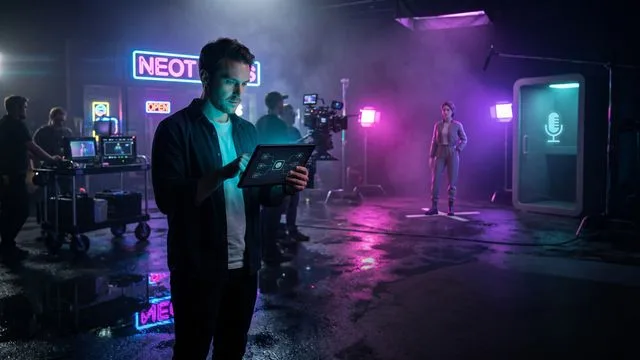
Claude's AI Video Stack and the Disclosure Gap
Claude can now orchestrate entire AI video workflows in minutes. The tech works. The legal framework governing disclosure doesn't exist yet—and that gap has real consequences.

Claude for Microsoft Word: Useful Tool, Real Data Risks
Claude's Word add-in is genuinely useful—but before you paste that contract in, you need to know what happens to your data. A privacy correspondent's take.

Higgsfield CLI Brings AI Studio Into Claude
Higgsfield's new CLI embeds generative AI directly into Claude and Cursor. Here's what it does, what the law says about face-cloning, and what regulators should be watching.

AI Chip Smuggling and the US-China Tech Divide
FT's Eleanor Olcott investigates the black market for Nvidia AI chips reaching China despite US export controls — and what it reveals about the tech race.
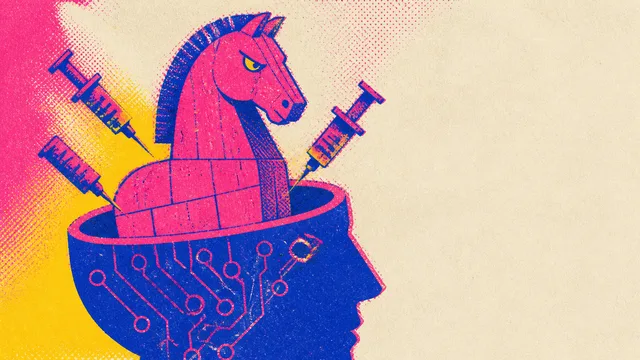
Promptware: When AI Agents Become Attack Vectors
Prompt injection attacks on AI agents follow a structured kill chain — and existing legal frameworks have almost nothing to say about who's liable when it works.