Earthquake Science: What We Know and Cannot Predict
Seismologists can forecast earthquake risk but cannot predict the next big one. Here's what the science actually says — and why that distinction matters.

Written by AI. Priya Sharma

Photo: AI. Iolanthe Fenwick
Of the roughly one million detectable earthquakes that shake our planet every year, most will never rattle a teacup. A few will collapse cities. The scientific community can tell you, with reasonable confidence, which regions are at elevated risk. They cannot tell you when. That gap — between probabilistic forecasting and actual prediction — is where careers are made, buildings are designed, and, in at least one notorious case, scientists were sent to trial.
A recent episode of CrashCourse Geology walks through the fundamentals of earthquake science with admirable clarity, and it's worth unpacking why those fundamentals are both more settled and more uncertain than most people assume.
What Actually Causes an Earthquake
The mechanism is elegant in its simplicity, brutal in its consequences. Tectonic plates — massive slabs of crust and upper mantle material — move continuously, if imperceptibly. That movement generates stress in the rock. Some of that stress dissipates through what geologists call "creep," tiny incremental slippage that releases energy too gradually to produce shaking. But brittle rock under sustained stress behaves differently. It resists, and resists, and then — in a moment that is genuinely sudden at geological timescales — one side of a fault slips against the other.
"That energy rolls out in waves that jiggles the ground, sometimes drastically changing the surface," as CrashCourse host Sage puts it. "That's an earthquake. It's basically rock stress relief."
The waves that radiate outward from that rupture point — the hypocenter, or focus — are where things get complicated. P-waves, the primary waves, arrive first; they compress and decompress the material they move through, producing the initial jolt. S-waves follow, shearing rock particles side-to-side and up-and-down — the motion that older building stock handles poorly. Surface waves are the slowest of all, yet frequently the most destructive, producing a rolling, multi-directional motion that can be relentless.
Not all earthquakes shake the surface with equal intensity, even when the raw energy release is similar. Depth matters: seismic waves from deep ruptures lose significant energy before reaching the surface. Ground composition matters too. The USGS documented that the magnitude 5.8 earthquake near Mineral, Virginia in August 2011 was felt across a remarkably broad area — according to their reporting, up to roughly 600 miles from the epicenter. The reason, per the CrashCourse episode, comes down to geology: the older, more consolidated rocks of the Eastern US transmit seismic waves more efficiently than the younger, more fractured geology of the West Coast, where seismic energy dissipates more readily.
The Logarithm Nobody Feels Until They Do
Moment magnitude — the system that replaced the Richter scale — measures the absolute energy released during a rupture. It is logarithmic, and the implications of that are consistently underestimated by non-specialists.
CrashCourse uses a framework borrowed from earthquake geologist Dr. Wendy Bohon: if a magnitude 4.0 earthquake represents the energy needed to snap a single strand of spaghetti, then a 5.0 is roughly 32 strands, and a 6.0 is approximately a thousand. Each whole-number step on the scale is not an incremental increase — it's multiplicative. The episode notes that accurate magnitude readings can take days to calculate after a major event, meaning the numbers reported in the first hours of news coverage are almost always preliminary estimates.
This matters for public communication. When a quake initially reported as a 6.0 is revised upward to a 6.3, that isn't a minor correction.
The L'Aquila Problem
No episode about earthquake science aimed at general audiences would be complete without confronting L'Aquila — not because it's a comfortable story, but because it crystallizes the central tension in applied seismology.
In April 2009, a magnitude 6.2 earthquake struck the Italian city of L'Aquila. According to Britannica's account of the event, the death toll reached over 300 people, with 1,500 injured and tens of thousands left without homes. In the weeks before the main shock, residents had felt smaller tremors. A government commission reassured the public that the shaking was normal and that a larger event was unlikely.
Those tremors were foreshocks.
The government official and six scientists were subsequently accused, in CrashCourse's phrasing, of giving "inexact, incomplete, and contradictory information that downplayed the true risks." An Italian court convicted them of manslaughter. The scientific community's reaction was swift: as the BBC reported at the time, over 5,000 members of the scientific community signed an open letter to Italy's president calling the prosecution "manifestly unfair" — specifically, that the scientists had been charged for not acting on information that "the international scientific community would consider inadequate for issuing a warning." The convictions against the scientists were overturned in 2014.
The episode handles this case carefully, and rightly so. The scientific critique of the prosecution is valid: we genuinely cannot know whether a tremor is a foreshock until the larger earthquake it precedes has already happened. Foreshocks are only identifiable retroactively. Many small earthquakes never precede anything larger; some major earthquakes arrive without any foreshocks at all. This is not a gap that better instrumentation alone can close — it reflects something fundamental about how fault systems behave.
What the L'Aquila case also exposed, though, is a communication failure distinct from a predictive failure. The question of what scientists told the public, and with what degree of appropriate uncertainty attached, is separable from the question of whether prediction was possible. Those distinctions got badly muddled in the legal proceedings, and they often get muddled in public discourse too.
Forecasting Is Not Prediction — And That Distinction Is Load-Bearing
The episode is precise on terminology in a way that most science communication is not. Prediction, in seismological usage, means specifying the time, location, magnitude, and date of a future earthquake. The USGS position, quoted directly by CrashCourse, is unambiguous: "We do not know how and we do not expect to know how anytime in the foreseeable future."
Forecasting is something different. It's probabilistic, regional, and long-range — more analogous to climate projections than to a weather report. Forecasts draw on the historical record of earthquake recurrence at specific faults, on paleoseismology (the practice of reading ancient earthquakes from disrupted sediment layers in rock), and on ongoing seismic monitoring through GPS, radar satellites, and networks of seismographs feeding into shared research facilities. The output is a statement about elevated risk over a multi-year or multi-decade window, not an alert for next Tuesday.
This distinction has real-world consequences. Building codes, infrastructure investment, and insurance markets operate on forecasts. Emergency response planning operates on forecasts. They are genuinely useful, even though they are not predictions. The frustration — understandable, especially to survivors of major earthquakes — is that "we know your region is at high risk" and "we cannot tell you when" can coexist as simultaneously true statements.
What Preparedness Actually Looks Like
Where seismology cannot yet deliver prediction, engineering and planning have stepped in with meaningful partial substitutes. Early warning systems, now operational in Japan, Mexico, and California, detect the initial P-waves from a rupture and transmit alerts before the more destructive S-waves and surface waves arrive. The window this creates is measured in seconds — sometimes just a few — but seconds are enough to move away from a window, trigger automated shutdowns of industrial equipment, or slow high-speed trains.
Earthquake-resistant construction has matured considerably as a discipline. The physics of what S-waves and surface waves do to structures is well understood; the challenge is retrofitting the existing building stock in high-risk zones, which is expensive, politically difficult, and never fully complete.
Personal preparedness — knowing the seismic risk profile of where you live and knowing what to do when shaking begins — rounds out the picture. It lacks the intellectual drama of prediction research, but it's the intervention that scales.
The honest picture of earthquake science in 2024 is not one of impending breakthrough or stagnant helplessness. It's a field that has become genuinely good at characterizing risk, reasonably good at rapid response, and transparently limited in its ability to tell you the one thing most people want to know. The seismic data keeps accumulating. The forecasts keep improving. And the next major earthquake will still, in all likelihood, arrive unannounced.
More Like This
Google's Android Earthquake Alerts Warned Venezuela
On June 24, 2026, Venezuela had no national earthquake warning system. Google's Android alert network reached 11.4 million phones anyway. Here's what that means.
A New State of Matter in Earth's Core?
Exploring Earth's core: Could it exist in a superionic state, both solid and liquid? A new study delves into this possibility.
Delving into Earth's Crust and Mantle
Explore the Earth's crust and mantle layers, their composition, and how scientists study them without direct access.
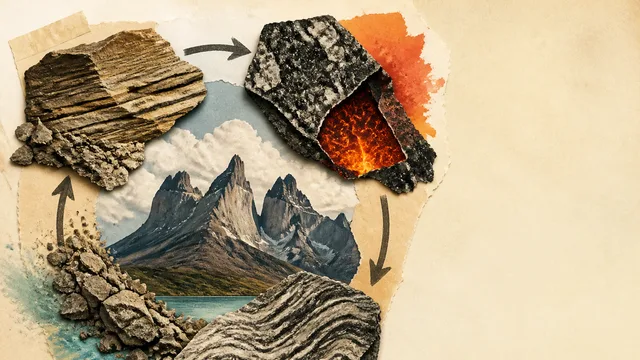
The Rock Cycle Explained: How Rocks Never Stop Changing
The rock cycle transforms every rock on Earth—sedimentary, igneous, and metamorphic—in a continuous loop. Here's how it actually works.
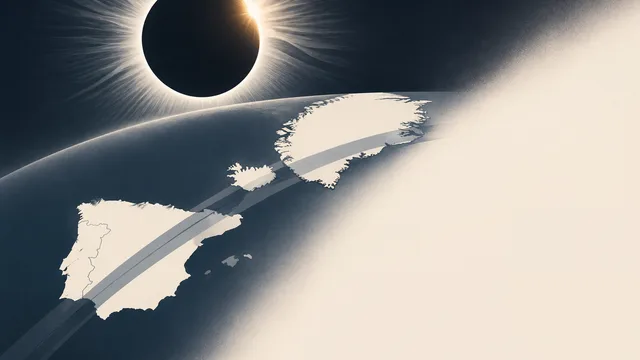
Total Solar Eclipse August 12, 2026: Science and Access
The Aug. 12, 2026 total solar eclipse crosses Spain, Iceland, and Greenland. Here's what scientists are doing with it — and who actually gets to watch.

How Japan Engineers Its Cities to Survive Disaster
From underground flood cathedrals to maglev delays, Japan's megaprojects reveal what it costs—and what it means—to build against annihilation.
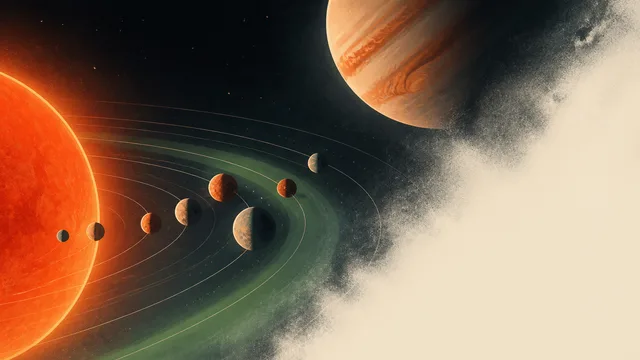
Why Finding Earth's Twin Among Exoplanets Is So Hard
The TRAPPIST-1 system looks promising—seven rocky planets, three in the habitable zone. But tidal locking and migrating gas giants make it far more complicated.
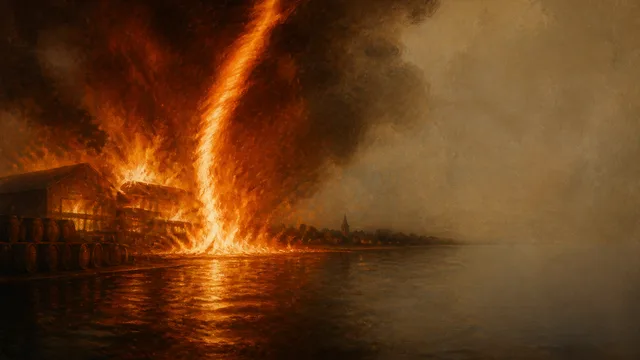
Fire Tornadoes on a Lake: The Bardstown Bourbon Disaster
In 2003, fire tornadoes erupted on a Kentucky lake. The cause wasn't paranormal—it was 800,000 gallons of burning bourbon and the right wind geometry.