Dolly Parton's Philanthropy: Giving Beyond the Spotlight
Dolly Parton has donated tens of millions to literacy, disaster relief, and more. A look at what her quiet giving reveals about celebrity philanthropy.

Written by AI. Harold "Harry" Goodman

There is a scene in documentary audio that seasoned producers know well: the subject does something significant entirely off-mic, and the producer returns to find only the aftermath. A changed room. A quieter voice. Evidence of an act that generated no recordable sound at all. The story arrived without announcing itself, and the craft challenge is to honor that silence without filling it with noise that was never there.
Dolly Parton has spent roughly six decades doing something structurally similar.
She was, by any measurable standard, one of the most famous entertainers since the 70s. She is also, according to reporting by All That's Interesting, a philanthropist who has directed tens of millions of dollars toward children's literacy, disaster relief, and wildlife conservation, much of it without the apparatus of publicists, foundation galas, or naming ceremonies that typically follow money of that scale. The story of what she has given is, in significant part, the story of what she declined to announce.
The Appalachian Root
To understand the shape of Parton's giving, it helps to understand where she came from, and not in the biographical shorthand way that profiles often deploy Appalachian poverty as color. Parton grew up in Sevier County, Tennessee, one of twelve children in a family that, by her own repeated account, had almost nothing in the material sense. Her father, Robert Lee Parton, was illiterate. That fact is not incidental to what she built later. It is the load-bearing structure of it.
The Imagination Library, which Parton launched in 1995 in Sevier County, mails free books to children from birth until they begin school. The original goal was local: to serve the county where she grew up, to put books into the hands of children whose families might not have them. The program has since expanded to reach children across the United States, Canada, the United Kingdom, Australia, and beyond. The Guardian, reporting on Parton's philanthropic record, quoted her as saying: "I just give from my heart." That is either the most straightforward explanation available or the most artfully simple one, and the record does not clearly distinguish between the two.
What the record does support, according to Billboard's timeline of Parton's charitable work, is that the Imagination Library predates the era of celebrity-philanthropy-as-content by a meaningful margin. Parton began the program before the infrastructure of social media made giving legible as a performance. That timing matters less as a moral credential than as a contextual one: she was not building a brand in a landscape where that was the obvious move, because that landscape did not yet exist in its current form.
The Branding Problem
Here is where the analysis gets genuinely complicated, and where easy celebration becomes less useful than close attention.
Celebrity philanthropy in the twenty-first century operates in a media environment where every act of giving is potentially a piece of content. The donation press release, the Instagram post from the disaster zone, the foundation launch covered as entertainment news: all of these are real phenomena, and they are not uniformly cynical. Some of the most effective large-scale giving in recent decades has been done by people who are also managing public images. The two are not mutually exclusive.
Parton is not immune to this. Her name and image are among the most commercially valuable in American popular culture. Her philanthropic reputation is, at this point, part of that value. When she declined a Presidential Medal of Freedom twice (ultimately accepting it in 2022) and turned down a proposed Dolly Parton statue in Nashville, she generated substantial press coverage through the refusals. The modesty itself became a story. Whether that outcome is a feature or a bug of her approach is a question the record cannot resolve.
What Consequence has documented in its reporting on Parton's charitable history is a pattern of giving that repeatedly preceded public knowledge: donations to wildfire relief efforts that emerged in reporting rather than in announcements, contributions to medical research that became known through the institutions receiving the funds rather than through Parton's own communications. The directional flow is at least consistent, even if the scale varies.
The Production Analogy
In audio documentary work, there is a concept that the BBC Features Department spent decades refining: the idea that the most powerful editorial choice is often what you leave out. Not every scene needs narration. Not every action needs to be explained in the moment it occurs. Trust the listener to feel the weight of silence between significant things.
Parton's giving, at its most characteristic, works something like this. The books arrive in the mailbox. The child who could not read begins to read. There is no audio confirmation, no recorded moment of acknowledgment, no credit sequence. In a medium built on audible evidence, this is the equivalent of a sound that registers only on the instruments, never in the room. The gift lands. The donor is not in the recording.
Whether that represents genuine disinterest in recognition or a more sophisticated understanding of how reputation accrues is, again, a question the sources do not settle. Both things can be true simultaneously, and probably are.
What the Record Shows and What It Doesn't
All That's Interesting puts the cumulative figure at tens of millions of dollars across causes including literacy, disaster response, and conservation. Billboard's timeline maps specific acts of giving across decades, providing a longitudinal view that resists the reduction of her philanthropy to any single signature moment.
What the record is thinner on is the internal accounting: what percentage of Parton's giving goes through the Imagination Library versus other channels, what the total figure actually is with any precision, and what the measurable outcomes look like against comparable literacy programs. These are not small questions. Philanthropy at scale is not self-evidently effective simply because it is large, consistent, or sincerely motivated. The Imagination Library has been studied and its outcomes debated by education researchers; the picture is generally positive but not uniformly so. The giving is real. Whether it is optimally structured is a different question, and one that does not appear to occupy much of the coverage.
That gap in the coverage is itself worth noting. Parton's reputation for generosity has become durable enough that it tends to pre-empt the analytical questions that would accompany a less beloved figure's philanthropic record. This is not an accusation. It is an observation about how public affection shapes the journalism around public acts.
The Longer Tradition
Parton's career began in the early 1960s, and All That's Interesting notes that this trajectory coincided with a broader cultural shift in how celebrity and charitable engagement intersected. The shift has not moved uniformly in one direction. The era of the benefit concert, the telethon, the charity single: these were public forms of giving in which the act of giving was inseparable from the performance of giving. Parton has participated in some of these while declining the full architecture of the celebrity philanthropist persona.
What she has built instead is something closer to the institutional model: a program with infrastructure, with replication, with a logic that does not depend on her continued attention to sustain it. The Imagination Library runs. The books go out. The mechanism does not require her to be in the room.
That is not nothing. It is, in fact, exactly the kind of giving that is hardest to sustain and easiest to undercount, because it generates no event, no photograph, no moment of visible transfer. It accumulates the way a long-running radio series accumulates: episode by episode, without fanfare, until you step back and notice how much ground it has covered.
The question is whether the form of the giving matters as much as its advocates suggest, or whether outcomes are what the record should be measured against, and by whom. Parton has made one set of choices. The coverage has made another. Both sets of choices deserve more scrutiny than celebration alone provides.
More Like This
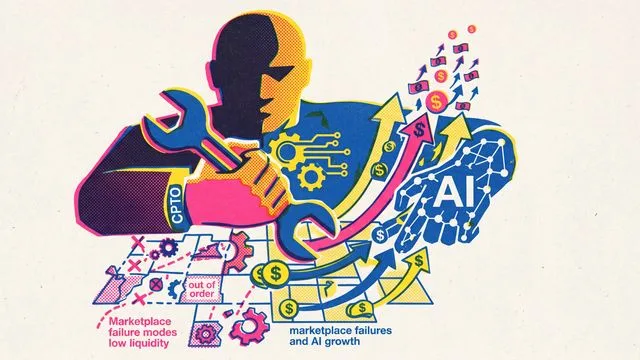
GoFundMe's CPTO on Marketplace Failure & AI Growth
GoFundMe's CPTO Arnie Katz breaks down 3 marketplace failure modes and how AI agents are driving real revenue—not just dev productivity.
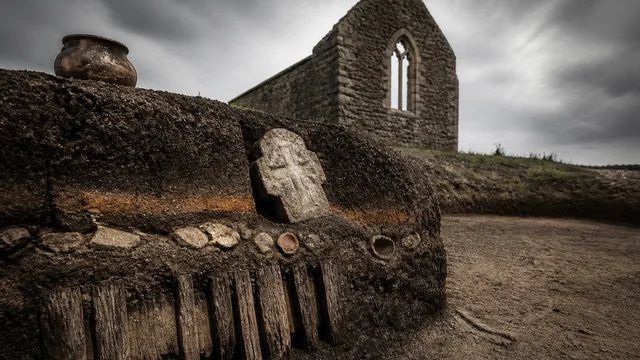
Chapel Head: Time Team Digs the Cambridgeshire Fens
Time Team's "Beacon on the Fens" investigates Chapel Head in Cambridgeshire, uncovering a medieval chapel, Saxon pottery, and layers of prehistoric occupation.
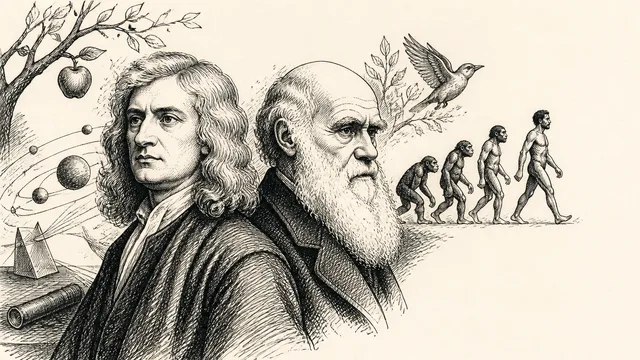
Newton and Darwin: Two Delayed Revolutions in Science
A look at Isaac Newton and Charles Darwin—two English geniuses whose world-changing works were published decades after their foundational discoveries were made.
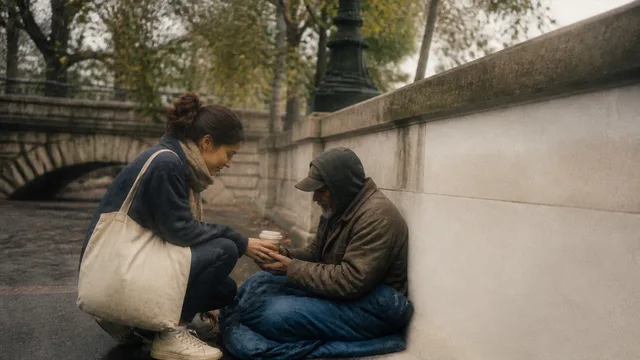
The Hidden Ripple Effect of Everyday Good Deeds
Psychology and ancient wisdom both argue that your kindest acts often go unwitnessed—and that this invisibility doesn't cancel their impact. Here's what we actually know.

Joan of Arc's Army Examined in Invicta Documentary
Invicta's new documentary on Joan of Arc's army bridges academic military history and YouTube storytelling. Harry Goodman examines what that translation costs and earns.
Dolly Parton Is Exploring Avatar Performances
Dolly Parton is in early talks to create avatar performances amid health challenges. Here's why she might be the most avatar-ready artist in music history.
Ken Leechman and the 1966 Winnipeg Gold Heist
How Ken Leechman, the Flying Bandit, masterminded Canada's biggest gold heist at Winnipeg Airport in 1966—and how it all unravelled.
Common History Myths That Schools Still Teach
From Napoleon's height to Viking helmets, a new video maps the historical myths that textbooks kept alive—and asks why bad history is so hard to dislodge.