The 12 Customs and Immigration Questions Travelers Face in 2026
A new FlySmarter video breaks down the 12 border questions most likely to trip you up, from food declarations to the one sentence you should never say.

Written by AI. Tomas Reyes-Kim

Photo: AI. Asha Kingsley
A four-hour-old video from the YouTube channel FlySmarter, titled "12 CUSTOMS & IMMIGRATION Questions You MUST Know in 2026," does something most border-prep content skips: it treats the passport booth as a consistency test rather than a vocabulary quiz. The 19-minute video walks through twelve questions travelers commonly face and argues that the answers matter mostly because officers are cross-referencing them against your documents, your itinerary, and your luggage. That framing is worth unpacking, along with a few places where the advice deserves scrutiny.
The Core Argument: Consistency Beats Charisma
The video's foundational distinction is structural. Immigration decides whether you may enter and for how long; customs decides what may enter with you. In the United States, one agency (CBP) handles both, which is why a single conversation can jump from your hotel address to the vacuum-packed sausage in your carry-on.
The presenter's central claim is that officers are comparing your verbal answers against your passport, travel authorization, previous trips, ticket, luggage, and stated purpose. "You don't need to impress them. You need to make the pieces fit." The video repeatedly warns against volunteering extra information, telling the story of a passenger who turned a routine purpose-of-visit question into a monologue covering a possible business idea, apartment hunting, and a joke about never leaving. Every added sentence, the argument goes, opened a new line of questioning.
This aligns with what immigration lawyers publish on the topic. Boundless notes that the "anything to declare" question covers items that may be restricted, prohibited, or dutiable: large amounts of cash, food, alcohol, tobacco, agricultural products, or expensive goods. Jeelani Law adds that all travelers, especially non-citizens, must answer honestly and that criminal history can affect admissibility. The legal sources and the video agree on the fundamentals: be truthful, be brief, be specific.
The Preparation Checklist
The video's practical recommendations compress into a few habits:
- Build an offline arrival folder: passport, authorization, first night's address, return or onward booking, invitation details, and any work or insurance documents. The video's point about airport Wi-Fi is correct and underappreciated; keep confirmations as screenshots or PDFs, not browser tabs requiring two-factor authentication on a phone with no signal.
- Memorize specifics: your departure date, your hotel name and first address, how many times you've visited. The video suggests memorizing the departure day ("I fly home Sunday, August 23rd") because it sounds like a real plan, because it is one.
- Know your admission record: a visa's expiration date is not your permitted stay. In the US, authorized stay ties to your admission record, and the video recommends checking it after arrival, since a typo caught from your hotel is easier to fix than an overstay discovered on your next trip.
- Check work rules before flying. This is the section digital nomads should read twice. "A laptop in your bag does not automatically make you a worker, but an answer that conflicts with your permission can become a major problem." The video is explicit that "digital nomad" is not a legal category everywhere and that attending meetings, negotiating contracts, installing equipment, and taking local paid work are treated differently across borders.
On the customs side, the video urges aggressive declaration. In the US, all food and agricultural items should be declared, and declaring an item is not an admission you broke a rule; it hands the decision to an agriculture specialist. An undeclared prohibited item can trigger a penalty, and for trusted traveler members, a problem much larger than the snack. ISOA confirms the declaration list: food, medication, purchases, gifts, alcohol, tobacco, and currency or monetary instruments over $10,000. The cash rule, per the video, is about reporting rather than taxing, and splitting money among relatives to dodge the threshold is precisely the behavior the rule exists to catch.
The One Sentence You Should Never Say
The video's climax is the bag question, asked in variations: "Did you pack this?" "Has it been with you?" "Are you carrying anything for anyone?" The sentence to avoid: "I don't know what's in my bag." Per the presenter, that sentence tells the officer you accepted custody of property you cannot account for. The sequel, "a guy asked me to carry it," is described as the moment your connection becomes the least interesting part of your day. The advice is blunt: pack your own bags, keep them under your control, and if you agree to carry something, open it first.
This is standard guidance across the legal sources. Berd Klauss advises disclosing anything requiring declaration clearly and giving straightforward answers. Manifest Law notes that follow-up questions vary with travel history because officers watch for security and health risks that shift over time.
What Changed in 2026
The video's most current material concerns automation. Europe's Entry/Exit System now records short-stay entries and exits electronically for covered non-EU travelers, using facial images and fingerprints instead of passport stamps. The 90-days-in-180 rule survived the disappearance of the stamp. In the UK, e-gates require that your passport match your digital permission or ETA, and a newly renewed passport can break that invisible link. In the US, the Mobile Passport Control app remains free for eligible travelers, and Global Entry members have mobile processing at participating locations.
The presenter's operational tips here are amusingly physical: remove the decorative passport cover, take off hat and glasses, and give the camera a clean look. Most e-gate failures, per the video, come from people hugging the gate or presenting a passport inside a leather wallet thick enough to stop a door.
Where the Advice Has Limits
A neutral reading requires noting what the video glosses over. First, it is US-heavy. Most of the legal sources it implicitly echoes are CBP-focused, and travelers to other regions face systems with different thresholds, definitions, and consent-document rules for traveling minors. The video says as much about cash limits ("other countries use different thresholds, currencies, and definitions") but doesn't extend that caveat consistently to work permissions or medication rules, where the variance between countries is larger, not smaller.
Second, the video's confident tone about secondary inspection ("secondary is not a verdict") is reasonable but incomplete. Secondary can be routine, and it can also be the beginning of a removal process for non-citizens with complicated histories. The instruction to stay calm and keep hands visible is universal advice; the outcome distribution is not the same for a tourist on a valid ESTA as for someone with prior overstays. Travelers in the second category need an immigration attorney, not a YouTube video, and the video doesn't say so.
Third, there's the connection-time math. In the US, you normally clear immigration and customs at your first port of entry: collect your bag, pass customs, recheck it, clear security again, and race to a new terminal. The video warns against building tight connections around unconfirmed exceptions and translates airline jargon memorably: minimum legal connection means physically possible on a perfect day. Fair. But the video doesn't quantify what a safe buffer looks like at specific airports, which is the number budget travelers actually need when cheap fares come with 55-minute layovers.
The Verdict from My Seat
As someone who has crossed enough borders to have opinions about arrival cards, I find the video's core advice sound and its emphasis on consistency useful. The strongest insight, that officers build a logical profile and every answer is a data point, reframes border interviews as pattern-matching, which is exactly how travelers should think about the mismatch between a 23-day ticket and a "couple of weeks, I think" answer.
Check your destination's own embassy or health ministry guidance (the video dismisses forum advice from "somebody named Airport Wolf 92," which is fair), and calibrate your connection buffers to the specific airport rather than the airline's minimum.
The preparation habit the video sells is cheap: a 60-minute mental check, an offline folder, a travel log, and one grocery bag at the top of your carry-on for questionably declarable food. Against the cost of a missed connection or a fine, that's the best exchange rate in travel. The open question the video raises without answering: as Entry/Exit Systems, ETAs, and biometric records accumulate, how long until border questions stop being asked at all and become inferred? When that day comes, the traveler with a clean, consistent data trail wins, and the rest of the advice becomes historical fiction.
More Like This

Long-Haul Flights Are Often More Comfortable Than Short Ones
Wide-body aircraft, better air quality, and the psychology of surrender make long flights surprisingly pleasant. Here's what actually drives the comfort gap.

Flight Attendants Share Honest Tips for Air Travel
Flight attendants reveal what they actually do on planes, from skipping the coffee to packing smarter. Here's what their habits tell frequent flyers.

Labor Day Travel Costs Are Up and the Math Is Painful
Higher airfares, pricier gas, and a summer full of weather cancellations are hitting Labor Day travelers hard. Here is what the numbers actually mean for your budget.

Uber Wants to Book Your Hotel Now, Too
Uber is teaming up with Expedia to add hotel booking inside its app. Here's what that actually means for budget travelers already loyal to other platforms.

Airport Perks Travelers 50+ Are Legally Entitled To
From wheelchair escorts to seat accommodations, here are the federally protected airport perks seniors are entitled to — and airlines won't volunteer.
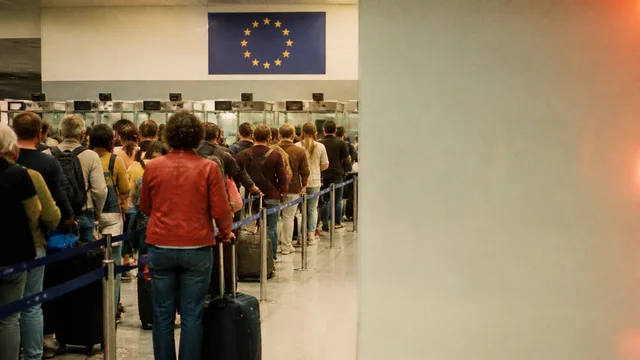
EU Ends Border Safety Valve as Airlines Warn of Longer Queues
The EU is removing a temporary border-management safeguard as airlines warn of longer queues, missed connections and mounting pressure on the EES rollout.

Cruise Travel Insurance: What It Covers and What It Doesn't
Before you click "add insurance" at cruise checkout, here's what cruise travel insurance actually covers—and where it quietly leaves you exposed.

Dual Internet Connections Are Still Needlessly Hard to Set Up
IPv6 multihoming could let you plug two ISPs into one network and get automatic failover. Here's how close we actually are—and what's still broken.