Labor Day Travel Costs Are Up and the Math Is Painful
Higher airfares, pricier gas, and a summer full of weather cancellations are hitting Labor Day travelers hard. Here is what the numbers actually mean for your budget.

Written by AI. Tomas Reyes-Kim
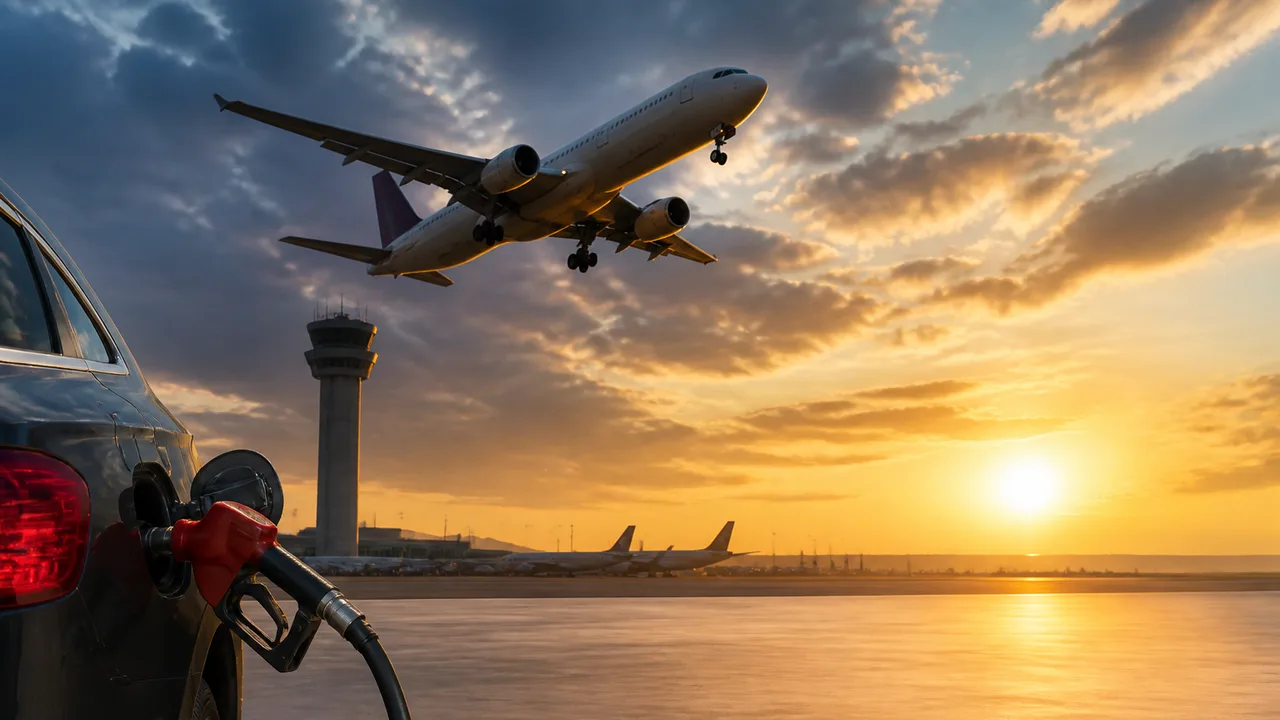
Photo: AI. Asha Kingsley
CBS News senior transportation correspondent Kris Van Cleave reported live from LAX this morning, and the picture he painted was not pretty: higher costs across the board, 17 million people trying to travel during the holiday week, and weather systems sitting over the Midwest, Northeast, Texas, and California all at once, like the atmosphere decided to make it personal.
The segment, covered in full on YouTube, laid out a summer that Van Cleave described as "more challenging than really the last two summers when you crunch the data." The data backs him up. Between June 1st and the end of August, more than 36,000 flights were cancelled nationwide. That's 2% of all summer flights, and thousands more cancellations than the same period last year.
Some airports got hammered worse than others. LaGuardia saw 7.1% of its flights cancelled. Reagan National, 6.4%. JFK, nearly 5%. If you flew out of the New York or DC metro area this summer, the anonymous traveler Van Cleave interviewed put it plainly: "I haven't had one on-time flight out of probably a dozen this summer." That quote is from a broadcast segment and the person was not named, but it lines up with every DM I've gotten from readers trying to connect through EWR since June.
Airline industry analyst Henry Hartvelt called it bluntly: "The summer has been brutal to airlines in terms of bad weather across the country."
The cost side of this is where your budget actually feels it
The CBS segment cited increases in both airfares and gas prices compared to last year, attributed to the broadcast report. I'm not going to paste specific percentages here because the segment didn't name the underlying data source for those figures, and my job is not to launder unattributed numbers into your decision-making. What I can tell you is that every person I know who booked domestic flights this summer paid more than they expected to, and that tracks with what Van Cleave and Hartvelt described.
Gas is up from last year too, per the same CBS report. A 500-mile round trip that cost you $60 in fuel last Labor Day costs more now. The math compounds fast when you're on a fixed travel budget.
Here's the squeeze that the sticker shock numbers don't fully show: you're paying more for a product that is less reliable than it was two summers ago. You spend more on the ticket, and you get a worse-than-average chance of actually leaving on time. An anonymous traveler missed a dozen on-time flights this summer. American Airlines is flying more than 3.5 million people this Labor Day weekend, with departures every 14 seconds, all of it running through an air traffic control system that American Airlines itself acknowledged is aging and not designed for the weather volatility that's now standard.
What Van Cleave's advice actually means for someone with a tight budget
The practical guidance from the segment: book flights early in the day and fly direct if you can.
I know, I know. Direct flights cost more. Morning flights sometimes cost more. You're being told "reduce your delay risk" at the exact moment when the cheaper options are the ones with the higher delay risk. That's the trap.
Here's how I'd think about it if I were booking right now on a tight budget. A delay of over an hour, which Van Cleave reported as the current average when delays happen, can cascade into a missed connection and a full day lost. If a direct flight costs $40 more than a connection, and the connection has a 45-minute layover in Atlanta in peak storm season, the $40 is insurance, not luxury. If the direct option is $100 more and you literally don't have $100, then you book the connection and you give yourself the longest possible layover you can find, you don't check a bag, and you fly in the morning when delay stacking hasn't built up yet.
Morning flights get delayed less because they're the first ones to use that aircraft. By 4pm, a plane that started in Boston may have been rerouted twice and is running two hours behind before it even gets to your gate. Book the 7am. Yes, it is painful. Set two alarms.
The part about the ATC system deserves more scrutiny
Transportation Secretary Sean Duffy, quoted in the CBS segment from a separate interview last month, said this about the billions being spent to upgrade the air traffic control system: "I think you'll see next summer a much more reliable, we won't be done, but you'll see a marked improvement next summer versus this summer."
Okay. So the plan is: the government is going to fix the infrastructure that makes flights work, and the timeline for that fix is next summer. If you are making travel decisions right now for the next 12 months, you are doing so with the same creaking system that just produced 36,000 summer cancellations. Duffy's answer is essentially "hold on," delivered to people who already held on through three months of weather chaos and are now standing in a more expensive airport.
I don't think Duffy is lying. Infrastructure upgrades are slow. The ATC system is old and the funding is real. But "next summer will be better" is a promise that requires you to book next summer's flights on faith, in a market where airfares are higher than last year right now. Budget for delay buffers. Don't book the last flight of the night for anything that actually matters. And check whether your credit card has trip delay coverage before you assume it doesn't, because some cards at the $95-annual-fee tier include it and most people don't know.
How to calibrate for next year's budget
The smart move for anyone planning travel between now and next summer is to treat 2025 as a data point, not an anomaly. Costs are elevated. Cancellations are elevated. Weather disruptions are elevated and the aviation industry is explicitly scheduling around the expectation that "abnormal weather situations" are now normal. An American Airlines executive said as much in the CBS segment.
What that means for your budget math: add a 15-20% buffer to whatever airfare you'd have expected to pay based on 2025 prices. Build one extra travel day into any trip where missing a flight would cost you money, whether that's a hotel deposit, a cruise departure, or a work meeting. And if you're driving long distances, model your fuel costs at current prices, not last year's.
Duffy says the ATC improvements will show up by next summer. If he's right, cancellation rates should drop, and with more reliable operations, airlines have less reason to hold artificially high fares as a buffer against disruption costs. That's the scenario where 2027 summer travel gets cheaper and more predictable simultaneously. If he's wrong or if the upgrades take longer, you're looking at a third consecutive rough summer with a price tag that keeps climbing.
Book refundable or changeable tickets wherever the price difference is under $30. That's not a philosophy, it's a threshold. Under $30 to protect yourself from a summer that just cancelled 36,000 flights is the cheapest insurance on the menu.
More Like This

Uber Wants to Book Your Hotel Now, Too
Uber is teaming up with Expedia to add hotel booking inside its app. Here's what that actually means for budget travelers already loyal to other platforms.
Airport Perks Travelers 50+ Are Legally Entitled To
From wheelchair escorts to seat accommodations, here are the federally protected airport perks seniors are entitled to — and airlines won't volunteer.
Delta's 2026 Profit Bet Rides on High Airfares Holding
Delta reaffirmed its 2026 earnings forecast despite fuel volatility—but the plan depends on keeping fares high for customers it says can afford it.
JetBlue Buys Spirit's LaGuardia Slots for $58.5M
JetBlue won 22 Spirit Airlines LaGuardia slots for $58.5M. Here's what it means for fares, Frontier, and travelers who depended on cheap Northeast flights.

American Airlines Offers 1,205 Flight Attendants Unpaid Leave
American Airlines is offering unpaid leave to 1,205 flight attendants this September. Here's what the numbers reveal about labor, fuel costs, and the post-summer sky.

Global Hotel Industry in 2026: Growth Masks a Fracture
RevPAR is up, occupancy is flat, and the Middle East just fell off a cliff. Here's what the H1 2026 hotel data actually means for travelers.

Dual Internet Connections Are Still Needlessly Hard to Set Up
IPv6 multihoming could let you plug two ISPs into one network and get automatic failover. Here's how close we actually are—and what's still broken.

Travel Spending Is Rebounding—But Read the Fine Print
Travel spending rebounded in June and agents are booking again—but the data tells a messier, more interesting story than the headlines suggest.