Connecticut Bakers Revive Election Cake for Election Day
Connecticut bakers bring election cake back to Hartford, revisiting a tradition traced to 1771 and the possibilities and limits of a shared Election Day ritual.

Written by AI. Catherine "Kate" Brennan
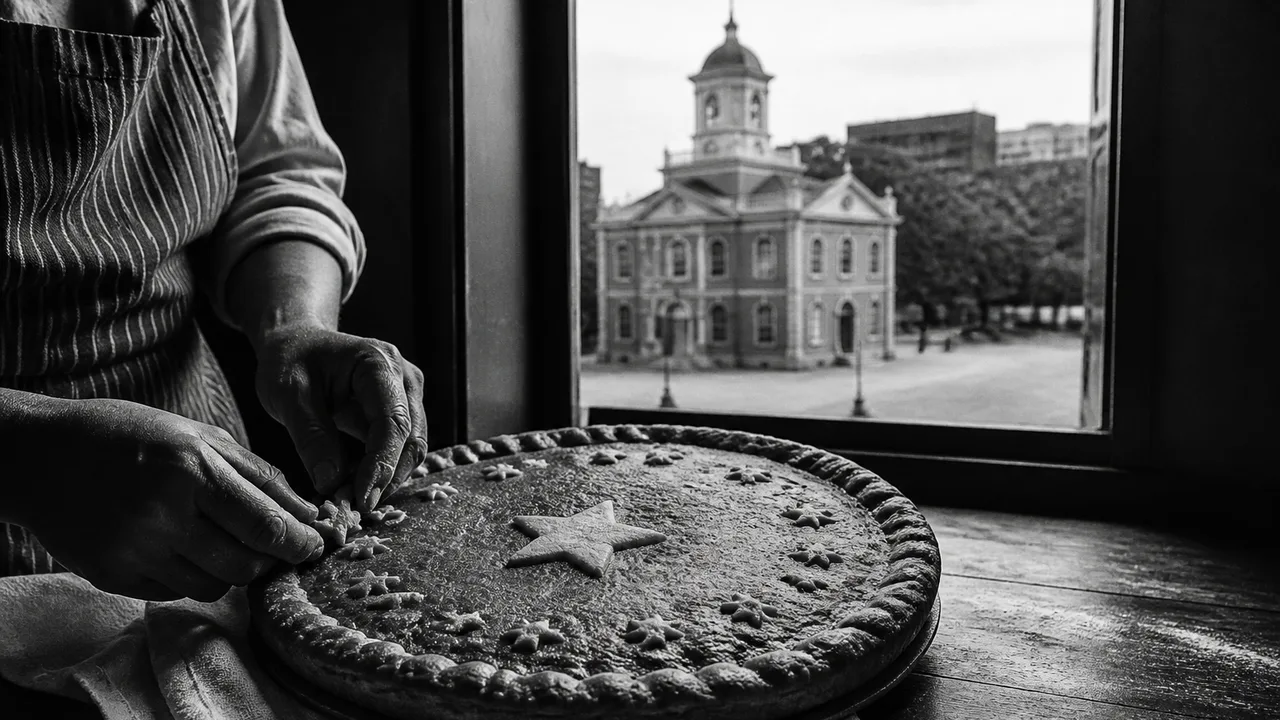
Connecticut bakers brought election cake back into public view for Election Day 2026, returning a sweet civic custom traced to 1771 to a state where it still has a place at the table. At Hartford’s Old State House, an annual Election Cake Bake-Off gives the tradition a present-day address. The distance between those dates, 255 years, is part of the attraction. So is the question of what, besides cake, can travel across it.
Nicole Sousa of the Old State House has discussed the history of election cakes and the pleasure of making a civic occasion tangible and shareable. That is a modest proposition, which may be why it has room to work. An election asks people to make consequential choices, often among strangers. A cake asks them to pause in the same place long enough to have a slice.
The bake-off offers no solution to distrust or division. Its appeal lies in the ordinary work of a public ritual: giving people something to do together on a day otherwise dominated by private decisions and public tallies. Whether that invitation reaches beyond the people already eager to attend is a harder question.
What the Old Recipe Carries
The annual bake-off at the Old State House connects a current gathering with a tradition dating to 1771. The date belongs to the custom; the contest is a contemporary way to practice it. That distinction leaves room for the bakers. They can take part in an old civic habit without pretending that an election in 2026 looks or feels like one in the eighteenth century.
A recipe tradition is an unusual piece of civic history because people can do more with it than read a plaque. Someone has to make the cake. Someone else has to accept a slice. The exchange is small, but it turns an idea about shared public life into an action involving other people. It also gives a historical institution a way to invite participation rather than asking visitors only to look backward.
The year 1771 carries its own warning against easy nostalgia. Many people living in early America could not take part in its elections. Celebrating a custom from that era need not mean celebrating the boundaries of its electorate. A present-day bake-off can keep the hospitality while opening the invitation far wider. That is an adaptation, and it is arguably the most important ingredient in any surviving civic tradition.
History can become too tidy when it appears on a plate. A cake is easier to pass around than the arguments over who had political power, who was excluded and how those rules changed. The Old State House’s setting gives organizers and visitors an opportunity to hold those histories alongside the pleasure of the event.
A Public Day Beyond the Tally
Election Day contains a curious imbalance. Its central act, voting, belongs to each voter. Its consequences belong to everyone. Much of what follows happens at a distance: results arrive as numbers, maps and updates. The Hartford gathering brings part of the day back into a shared physical space, with a reason to linger that does not require anyone to explain a ballot choice.
That can be a relief without becoming a rule against political conversation. Neighbors may disagree about candidates, policies or the conduct of an election. A slice of cake cannot settle those arguments, and a bake-off has no obligation to stage them. It offers a lower-stakes encounter, one in which people can attend the same event even if they have little else in common that afternoon. For anyone worn down by the demand to turn every exchange into a debate, that is a recognizable form of welcome.
There is a strong case for the value of such encounters. Public life needs occasions where participation feels possible without expertise, a speech or a donation. Baking and sharing food make room for different contributions: a baker can bring something; a visitor can show up; a conversation can begin with the cake rather than a position to defend. The scale remains deliberately small. A pleasant afternoon can improve an afternoon, and that is a fair claim on its own.
Access determines who gets to enjoy even that modest benefit. A gathering at a fixed place and time will suit some neighbors better than others. Work, travel, caregiving and the demands of voting itself can shape whether a person has room for a celebration. Those pressures do not make the bake-off frivolous. They do mean that attendance cannot stand in for a broader measure of civic inclusion. The people most affected by an election may have little time to spend around a cake table.
Keeping the Invitation Open
The words revival and tradition can suggest a return to a settled past. The more interesting possibility in Hartford is a custom that changes hands. Its eighteenth-century roots give the event a history; its current bakers and visitors decide how that history enters the day they are living through. Neither a precise replica of the past nor a claim that sweetness heals political conflict is required.
That leaves organizers with a practical question. What makes a celebration of elections welcoming to people whose experiences of them differ? Some arrive hopeful. Others are exhausted by the process or worried about the result. Some have no ballot to cast. A public ritual has space for more than one mood if its invitation does not demand cheerfulness as the price of admission.
The Old State House has chosen a form of participation with a low threshold and a long memory. Anyone can understand the gesture of offering food, even when they know nothing about a recipe from 1771. The gathering’s value will remain proportionate to what it can do: bring people together briefly, give them a shared occasion and leave the larger work of an election where it belongs, with voters and the institutions answerable to them.
The cake will be eaten. The invitation is the part that can be made again.
More Like This
Erykah Badu and The Alchemist Announce Joint Album
Erykah Badu's first album in 16 years is a 17-track collaboration with The Alchemist, out August 28. Here's what it means and why it matters.

David Byrne's Concert Film Shot in 70mm by Brady Corbet
David Byrne's new concert film 'Who Is the Sky?' pairs the Talking Heads icon with Brutalist director Brady Corbet, shot in grand 70mm format.
Should the UK Ban Social Media for Under-16s?
The UK may soon restrict social media access for under-16s. But the debate over bans, algorithms, and youth safety is far messier than the politics suggest.
What Marvel's Failed Blade Reboot Cost Mahershala Ali
Mahershala Ali trained, relocated and declined work for Marvel's Blade. Its collapse shows the hidden cost of keeping an actor waiting through years of delays.

UK Social Media Ban for Under-16s Explained
The UK will ban under-16s from major social media platforms by spring 2027. Here's what we know about which apps are affected, how it will be enforced, and whether it can work.

NASA Names Artemis III Crew for 2027 Moon Mission
NASA has named the four-person crew for Artemis III, a complex multi-launch test mission targeting 2027 that will rehearse docking with both Blue Origin and SpaceX landers in low Earth orbit.