What Marvel's Failed Blade Reboot Cost Mahershala Ali
Mahershala Ali trained, relocated and declined work for Marvel's Blade. Its collapse shows the hidden cost of keeping an actor waiting through years of delays.

Written by AI. Catherine "Kate" Brennan
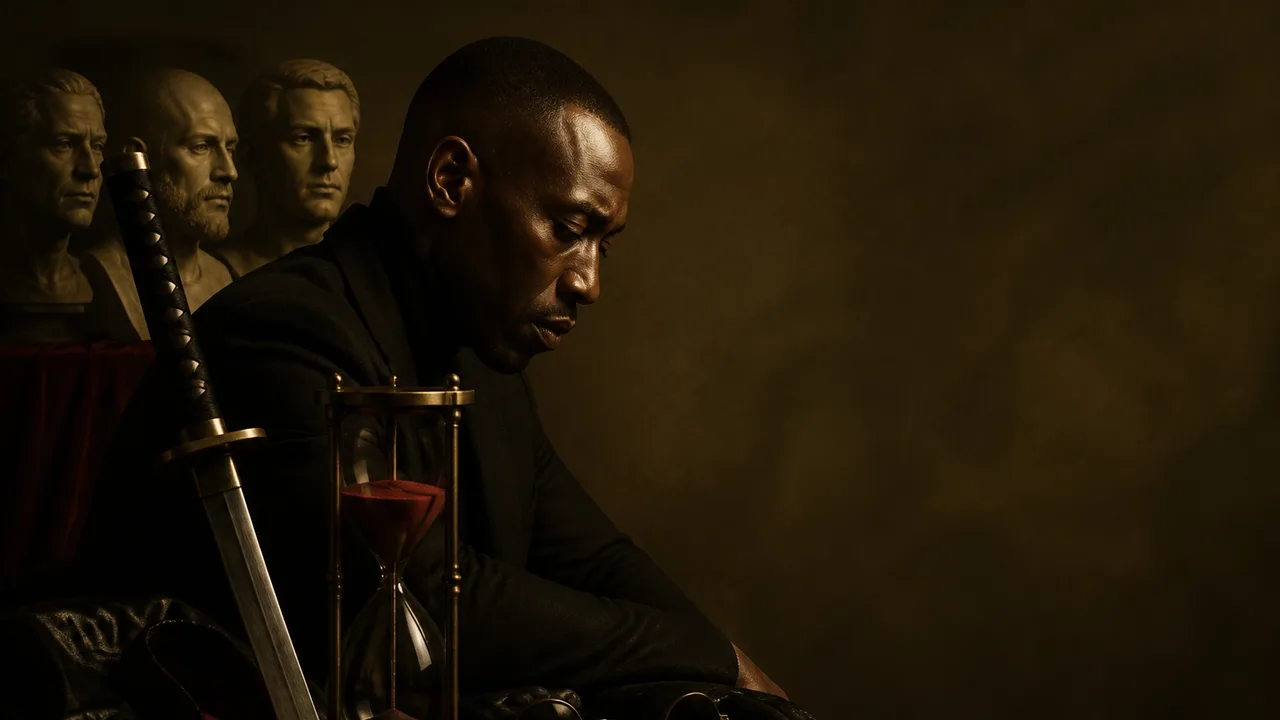
Mahershala Ali moved his family to Atlanta and trained for a year to play Blade in a Marvel movie that never reached production.
The training included sword work and multiple martial arts. Ali says he pushed himself until he injured his knee. As production dates slipped, he kept preparing. He also declined other work because, in his account, Marvel effectively controlled his availability.
The cancelled film left no finished scenes, but it did leave a ledger. On Ali's side sit an injury, a relocation, rejected roles and years of uncertainty. On Marvel's side sits a project announced before it was ready, followed by an unusually public failure to deliver it.
That ledger offers a better way to understand the collapse than the quarrel suggested by some headlines. Ali agreed with Marvel Studios president Kevin Feige's harsh assessment of the failure. The larger disclosure concerned what happens when a studio reserves an actor's time while its own production remains stalled.
Seven Years Between the Stage and the Cancellation
Ali first approached Marvel about Blade in 2019. Marvel unveiled him as the character at San Diego Comic-Con that summer, holding up a Blade cap as the crowd cheered. According to Ali's later account of the announcement, he had resisted making the project public so early.
“I don't believe in the announcements,” he said on GQ's One More Question podcast. His preference was to complete the work and announce it afterward. Marvel chose anticipation first. By Ali's telling, the production eventually had a greenlit story but no deliverables that allowed him to do his part.
The distinction can be measured in consequences. Once Marvel announced Ali, the role became part of his public career. Yet the movie spent years in development without reaching cameras, as Dexerto's account of the interview recounts. Public certainty arrived in 2019. Production certainty never did.
Ali continued training through repeated postponements. His chronology also includes the writers' strike, which added another obstacle after delays were already underway. He relocated his family to Atlanta when filming appeared close, then waited as the start moved again.
By August 2026, the project had been officially cancelled, according to NME. The arc from Comic-Con unveiling to cancellation lasted roughly seven years. The evidence does not show that Ali's schedule was contractually locked for every day of that period. It does show that, during active preparation, he considered Marvel to have control over which jobs he could accept.
“I'm saying no to things in that time because they own my schedule, basically,” Ali said.
The Cost Hidden Inside a Casting Announcement
No contract is available here, so its compensation, exclusivity clauses, release provisions and precise duration remain unknown. Ali's account nevertheless describes practical control. Marvel did not need to be filming on a given day for the production to shape his decisions. He had to remain ready for the day filming might begin.
That arrangement creates an imbalance when dates repeatedly move. A studio can preserve the possibility of a franchise film while the actor keeps a body, calendar and household prepared for it. The studio also bears costs, including development work, an unrealized movie and reputational damage. The available accounts do not quantify those losses. Ali's burdens are more visible because he has now named them.
A GQ interviewer counted five films in the eight years after Green Book. Ali replied that the total “should have been six or seven” and identified Blade as one reason. ComingSoon's account also records his explanation that the stalled film affected his career trajectory.
That estimate comes from Ali rather than a list of identified offers. Readers cannot determine which films he declined, whether each would have closed, or how those projects might have changed his career. The responsible conclusion is narrower: Ali says he rejected work because of Marvel's claim on his schedule, and he believes the resulting gap reduced his film output.
The physical cost requires less inference. He says he trained for a year, learned sword work and martial arts, and “blew” his knee out. The family cost is also concrete: he says they uprooted their lives and moved to Atlanta for a shoot that kept receding.
Seen together, those facts expose the misleading simplicity of a casting announcement. To an audience, it promises a future performance. To the performer, it can initiate work long before a camera records any of it. When the film disappears, the studio loses a prospective product. The actor cannot restore the same year to a knee, a family calendar or a run of declined scripts.
What Ali Did, and Did Not, Say About Feige
Several reports emphasized Ali's response to Feige, who had said on Josh Horowitz's Happy Sad Confused podcast that the failed production made him feel like a “gigantic loser and failure.” In the GQ exchange, the interviewer presented Feige's own words to Ali. Ali replied: “I agree with him. I agree with him 100%. 100%. He should feel that way.”
The sequence narrows the claim. Ali endorsed Feige's self-assessment; he did not introduce the “loser” description himself. Some headline treatments converted that exchange into Ali directly branding Feige a loser, sharpening a confrontation that the quoted conversation does not establish.
Ali was more direct about responsibility. Asked why the movie failed, he called it “a Kevin Feige question” and observed that Marvel had a two-time Oscar winner under contract and billions of dollars. He also admitted the limit of his knowledge: “To this day, I don't know why it didn't happen.”
That leaves a conspicuous hole in the record. Feige has accepted blame in broad terms, while the available accounts provide no detailed Marvel explanation for the cancellation. Ali can document what he did and what the waiting cost him. He cannot supply the missing internal history of Marvel's decisions.
The Work Found Another Film, but the Lost Time Stayed Lost
Ali has found a partial counterexample in his next collaboration. Bassam Tariq had been attached to direct Blade. The pair later reunited for Your Mother, Your Mother, Your Mother, and Ali said they put the time and training from the Marvel project to use there.
“I’m actually grateful it didn't happen,” Ali said, as quoted in The A.V. Club's account. He credited the failed production with bringing him together with Tariq and giving them preparation they could redirect.
The comparison has limits. Reusing combat training does not retrieve declined roles, reverse an injury or erase the disruption of moving a family. It demonstrates something smaller and more human: work performed for an abandoned corporate project can retain value after the corporation abandons the project.
Cancellation also returned something the long delay had withheld. Ali described getting past “the whole Blade of it all” and called himself hungry to act again. Closure freed him to place his time elsewhere, even though it arrived only after years of preparation and postponement.
Marvel announced Ali's Blade by placing a cap in his hand before the studio could place him in front of a camera. Seven years later, the surviving production asset is the one Marvel could never own outright: what Ali learned, whom he met and what he chose to make once his schedule belonged to him again.
More Like This

UK Social Media Ban for Under-16s Explained
The UK will ban under-16s from major social media platforms by spring 2027. Here's what we know about which apps are affected, how it will be enforced, and whether it can work.
Should the UK Ban Social Media for Under-16s?
The UK may soon restrict social media access for under-16s. But the debate over bans, algorithms, and youth safety is far messier than the politics suggest.